Mulch Palette: Amber Leaves as a Cozy “Duvet” 🍂🛌
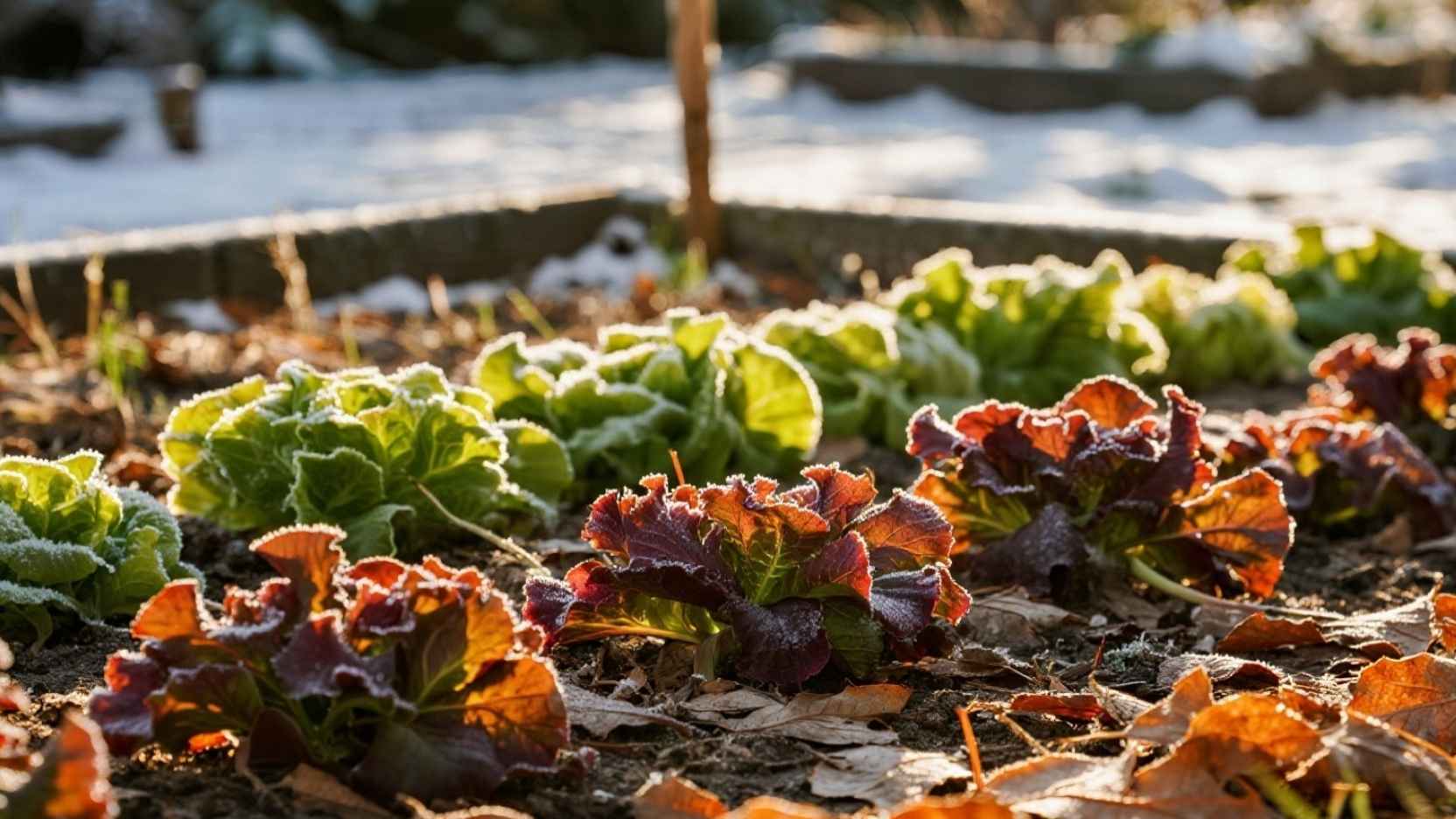
Amber leaf-mulch works like a breathable duvet: it traps radiant heat, slows evaporation, and keeps soil life active through cold snaps. Aim for a fluffy, settled depth of 2–3 inches; too thin won’t insulate, too thick can smother crowns. Shred or crumble leaves so they knit without matting, and tuck them loosely around seedlings to avoid collar rot.
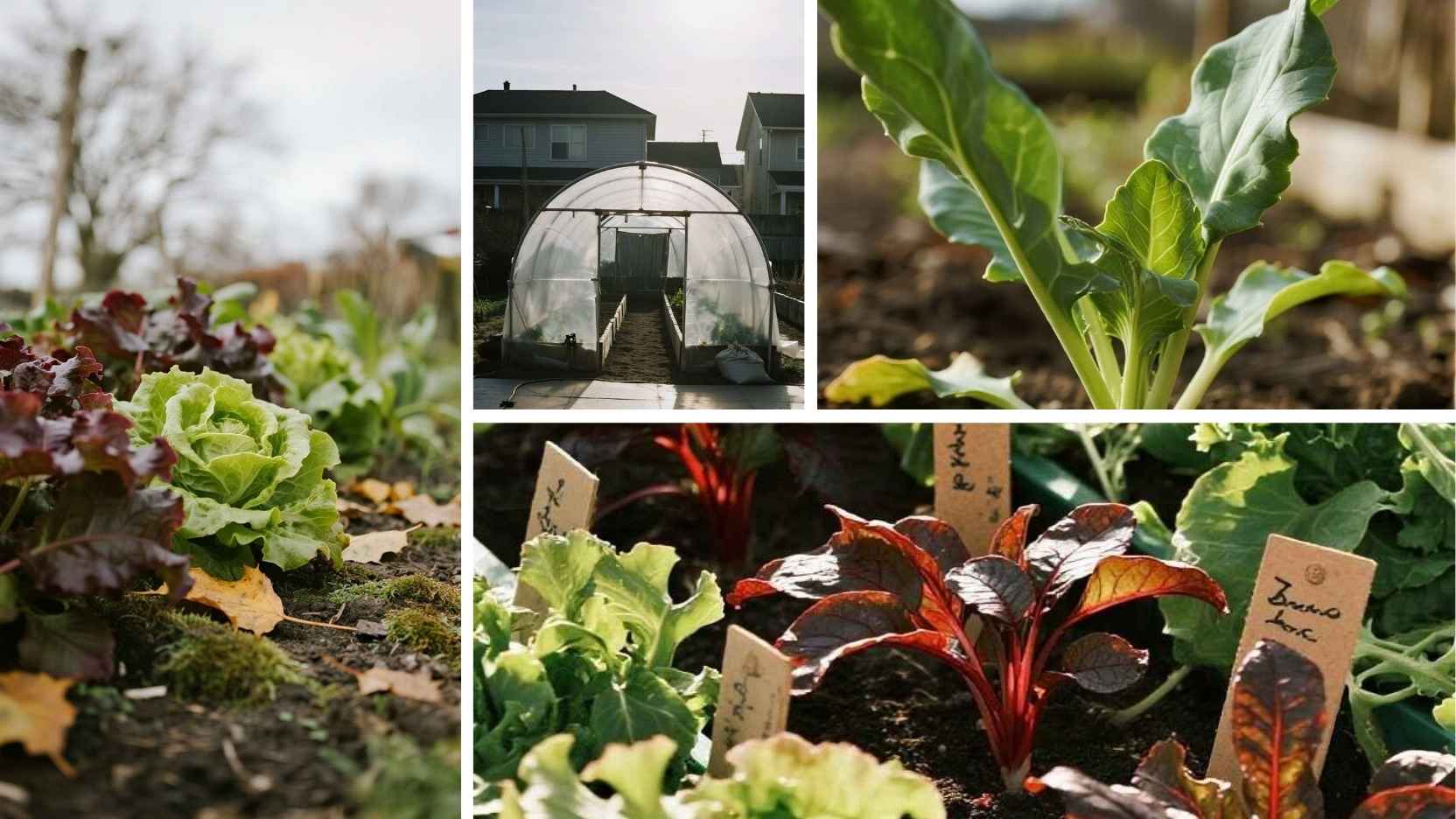
Choose a warm palette on purpose—maple, oak, and beech leaves dry to golds and russets that brighten bare beds. Under that glow, worms and microbes convert leaves into gentle nutrients, so spring soil wakes up faster. Refresh high-traffic zones after heavy rain or harvest days so insulation stays even and effective.
Plant Bands: Mossy Lettuces + Burgundy Mustards 🎨🌿
Think bands, not blocks: alternate “moss” (butterhead, oakleaf, mini romaine) with “burgundy” (mustards, beet greens, red kale) for both texture and heat capture. Dark pigments sip a touch more sun, while dense lettuce canopies calm wind at soil level. This staggered edge reduces frost bite on tender margins and makes the bed look designed, not crowded.
Spacing is your paintbrush: 6–8 inches for lettuces, 8–10 inches for mustards, with a narrow maintenance lane every 18 inches. Tuck shallow-rooted scallions between bands as frost-proof markers and quick garnishes. Keep band widths consistent (e.g., 10–12 inches) so row covers drape cleanly when weather turns.

When to Add a Low Tunnel or Cold Frame 🛡️❄️
Use floating row cover (0.9–1.0 oz/yd²) when forecasts dip below 24–26°F; double it for brief plunges below 20°F. Low tunnels with clear poly or a cold frame step in when nights threaten 10°F—especially for mustards and young lettuces. Vent on sunny days above 45°F to prevent damp, leggy growth and tipburn.
If your bed is wind-exposed, add hoops earlier since windchill dehydrates leaves faster than air temp suggests. In sheltered courtyards, you might delay covers 3–5°F lower thanks to stored masonry heat. Always secure edges with sandbags or soil “snakes” so warm air doesn’t leak and covers don’t abrade foliage.

Sidebar: Microclimate Beats the Broad Zone When Lows Hit 5–10°F 🧭🌡️
USDA zones describe average minimums, but your bed lives in a microclimate—a pocket shaped by wind, walls, slope, and reflected light. South-facing brick, fences, or stone can add 2–6°F on radiant evenings, while open fields lose heat to the sky. A bed near water or under tall hedges often avoids the sharpest radiational frosts.
Hardy greens tolerate surprising lows with the right cover:
- Mâche (corn salad) and spinach: handle to ~10°F uncovered; add row cover for 5–10°F stretches.
- Sorrel and kale: shrug off teens; protect new growth below ~10°F for leaf quality.
- Asian greens (tatsoi, mizuna, komatsuna): prefer cover below ~20°F; switch to tunnel/cold frame as you approach 10°F.
Take notes for one winter: record low temp, wind, and what you used for cover, then map the “warm” and “cold” corners of your plot. That one page of data will save you plants and guesswork next year. When the forecast threatens 5–10°F, pre-water lightly, mulch crowns, and close tunnels by mid-afternoon to trap stored heat.
Quick Harvest Plan: Cut Small, Cut Often 🧺✂️
Harvest with a “graze and regrow” rhythm: take outer leaves after late morning thaw, leaving centers to power back. Small, frequent cuts keep sugar high and texture tender, especially for spinach and tatsoi. If a deep freeze is coming, do a pre-cold “insurance pick,” then seal covers tight.
Bundle tasks: vent at 10 a.m., pick at noon, re-cover by 2 p.m., and brush snow off tunnels before sunset. Keep a sharp knife and dry tote waiting at the bed edge to minimize trampling and heat loss. Label rows by maturity so you rotate picking and never stall a band’s recovery.