Introduction: Why “Living” Beats Cut Stems 🌱
Living bulb baskets deliver weeks of color, not days, because the plants keep drawing energy from their bulbs. You get the same Easter charm—soft pastels and fresh fragrance—minus the rapid wilt of cut flowers. After the holiday, those bulbs graduate to your garden, turning a weekend centerpiece into next year’s blooms.
They’re also budget-wise because one purchase performs twice: first as décor, later as landscaping. With sturdy roots and intact bulbs, daffodils, hyacinths, muscari, and primrose transition outdoors with minimal fuss. Think of it as seasonal décor that compounds like interest—prettier over time.
Choosing Your Plants: The Best Small Bulbs For Baskets 🌷
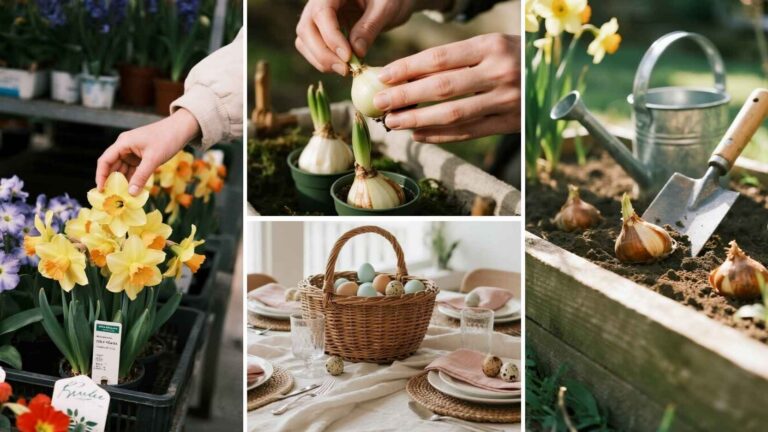
Go for compact varieties: mini daffodils (Narcissus ‘Tête-à-Tête’), grape hyacinths (Muscari), hyacinths, and primroses (Primula). These have short stems, tight leaf rosettes, and punchy color that reads clearly from across a table. Buy pots with visible buds and some closed flowers so your display lasts longer.
Healthy plants should have firm bulbs, bright leaves, and damp—not soggy—soil. Avoid lanky or flopping stems, which signal low light or overwatering. If fragrance matters, hyacinths are strongest; if longevity matters, daffodils win the marathon.

Materials & Prep: What You’ll Need 🧺
Gather a basket or ceramic bowl, nursery-pot bulbs, sheet moss, and a liner (plastic saucer or compostable bag with drainage holes). Choose a vessel 2–3 inches wider than the pots to allow airflow and hiding space for moss. Protect tabletops with a waterproof tray under the basket.
Keep bulbs in their nursery pots for easy post-holiday transition. Lining the basket keeps surfaces safe and prevents leaks without suffocating roots. Pre-moisten moss so it drapes neatly and doesn’t shed debris.
Assembly: Nesting Pots For A “Spring Nest” Look 🪺
Place the liner in your basket, then “dry fit” the potted bulbs until the heights look tiered, tallest in the center, shortest near the rim. Keep pots snug but not crammed; small gaps prevent mildew and allow air to circulate. Once you like the layout, tuck sheet moss around and over pot rims to hide plastic and create a soft nest.
Rotate labels inward so nothing distracts from the mossy meadow vibe. Finish with a gentle spritz to settle moss fibers and add a pastel ribbon if you want a festive touch. Step back and check sightlines so guests can converse without peeking around blooms.

Styling: Colors, Textures, And Table Height 🎨
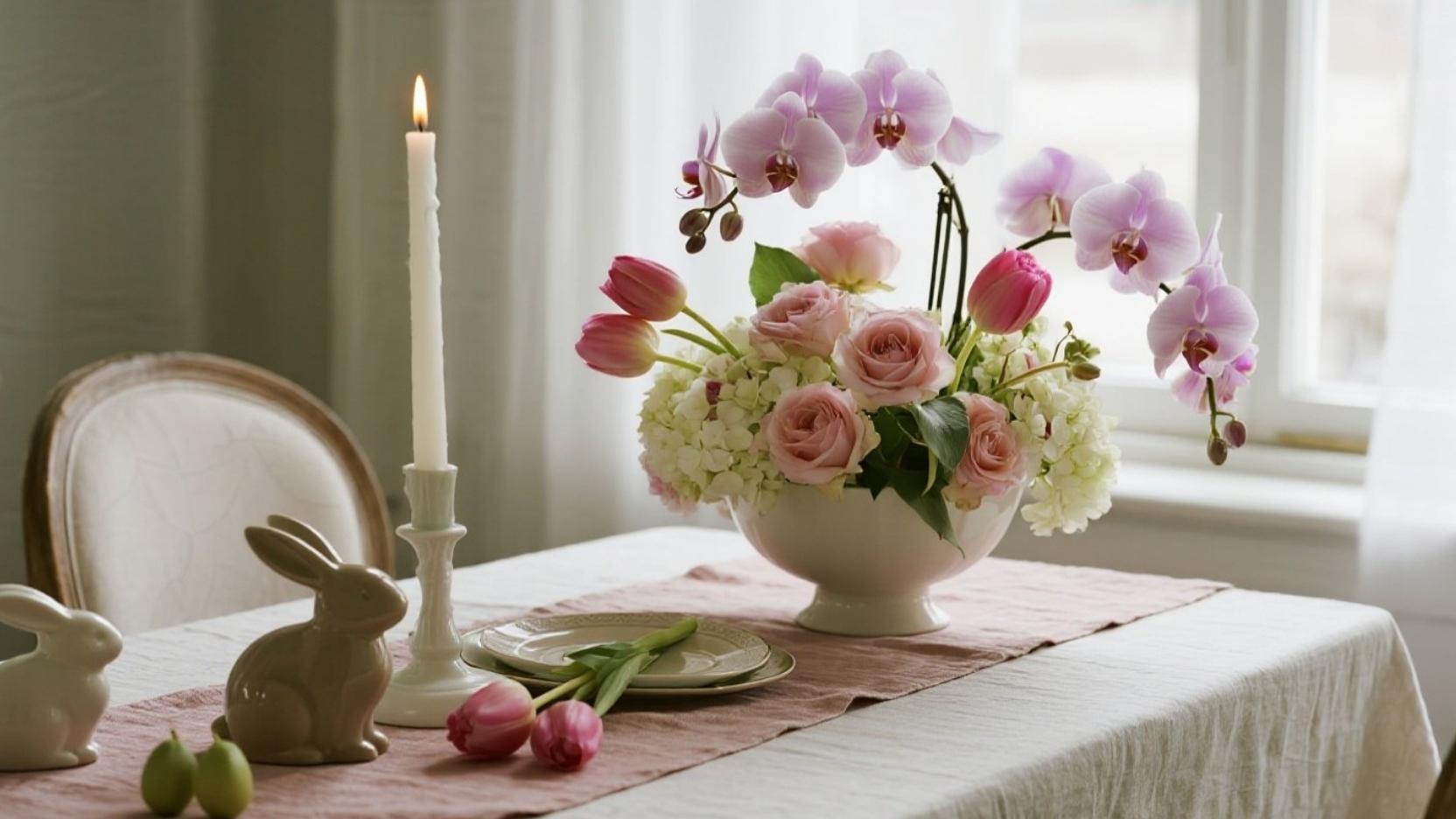
Anchor with the basket’s warm, natural weave, then layer pastels like butter-yellow, blush, lilac, and sky blue. Use one bold accent—say deep hyacinth purple—to keep the palette from feeling washed out. Repeat that accent in napkins or candles for cohesion.
Mind height so faces aren’t blocked: aim for 8–10 inches tall on dining tables, taller is fine for consoles or mantels. Echo textures—rattan placemats, linen runners, ceramic bowls—to tie the vignette together. A tiny scatter of faux eggs or quail-speckled accents delivers Easter charm without clutter.

Indoor Care During Easter: Light, Water, And Temperature 💧
Set the basket in bright, indirect light; cool rooms (15–18°C / 59–64°F) slow bloom fade. Rotate daily to keep stems straight and flowers even. Keep bulbs away from heating vents and direct midday sun.
Water when the top 2–3 cm (about an inch) feels dry, pouring slowly into the potting mix—not onto the moss. Empty any standing water from the liner to avoid root rot. Deadhead spent blooms to stay tidy and conserve plant energy.

Transition Plan: Hardening Off Before The Garden 🚪
Start hardening off 7–10 days after Easter or when nights are consistently above 4–7°C (40–45°F). On Day 1–2, place the basket outdoors in shade for 1–2 hours, then bring it back in. Add 1–2 hours daily, introducing dappled morning light from Day 3 onward.
Protect from wind and rain while acclimating; bulbs dislike sudden swings. If temperatures dip, pause the schedule rather than rushing. By Day 7–10, plants should handle a full day outdoors in their intended light conditions.
Planting Out: Beds, Containers, And Watering Cadence 🌿
Choose a well-drained spot: daffodils and muscari thrive in full sun to part sun, while primrose prefers part shade with evenly moist soil. Plant bulbs at roughly 2–3 times their bulb height; for potted, simply slip the root ball into a hole at the same depth. Space clumps to allow air movement and natural spreading.
Water in deeply after planting to settle soil, then keep evenly moist for two weeks while roots establish. After that, water when the top few centimeters feel dry—roughly weekly in mild spring, more often in warm or windy spells. Add a light sprinkle of bulb fertilizer (low nitrogen, higher phosphorus/potassium) after flowering to recharge bulbs for next season.

Aftercare & What To Expect Next Year 🗓️
Let foliage yellow naturally; leaves are solar panels that refill the bulb. Only cut foliage when it comes away easily, usually 4–6 weeks after bloom. In warm regions, consider lifting and chilling hyacinths if winters are too mild for strong re-bloom.
Daffodils and muscari often naturalize, returning in broader clumps each spring. Primrose can flower again with afternoon shade and steady moisture. Mark planting spots to avoid disturbing bulbs during summer gardening.
Troubleshooting: Common Pitfalls And Quick Fixes 🛠️
If flowers flop indoors, shift to brighter, cooler conditions and rotate daily. Mushy bulbs signal overwatering—improve drainage, trim damaged parts, and reduce frequency. Pale leaves? Increase light and ensure you’re not over-watering.
Outdoors, poor re-bloom typically traces to insufficient post-bloom foliage time or heavy shade. Amend soil with compost to improve drainage and fertility, and avoid high-nitrogen feeds. For critter pressure, consider daffodils—they’re generally deer and rodent resistant.
Conclusion: Décor Today, Garden Tomorrow 🌸
A living bulb basket is the rare holiday piece that keeps paying dividends. You enjoy fragrance and color now, then a second act outdoors as your spring beds expand. It’s sustainable, economical, and remarkably simple.
By choosing compact bulbs, building a moss “nest,” and following a gentle hardening-off routine, you bridge the gap between tablescape and terrace. Next year’s blooms will feel like a thank-you note from this Easter. Start once, and you’ll never go back to cut stems again.