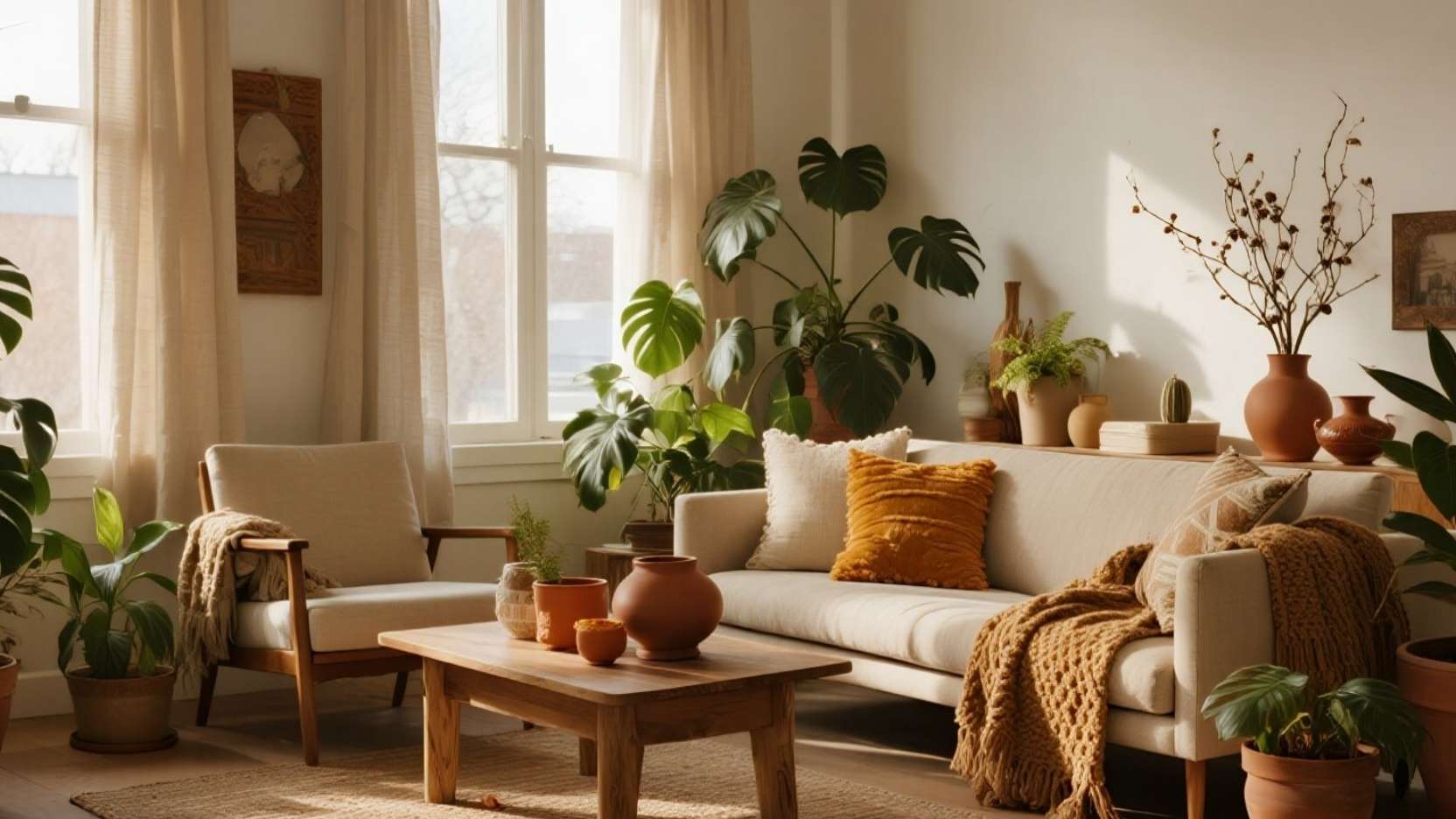
When a room feels “off,” it’s often not the furniture—it’s the color chaos. The One-Rug Rule solves that by choosing one autumn rug as your anchor and letting everything else gently echo its tones. Instead of buying more decor, you’re simply orchestrating what you already have so the space feels warm, calm, and intentional. 🧡
Autumn colors are naturally comforting because they sit in the warm side of the spectrum—think rust, caramel, ochre, and forest green. When these shades repeat across textiles, pots, and plant foliage, the eye reads the room as cohesive rather than cluttered. With a clear palette and a few smart plant placements, you get atmosphere, not overwhelm. 🌿✨
Rug as palette map: Your autumn color anchor 🍁
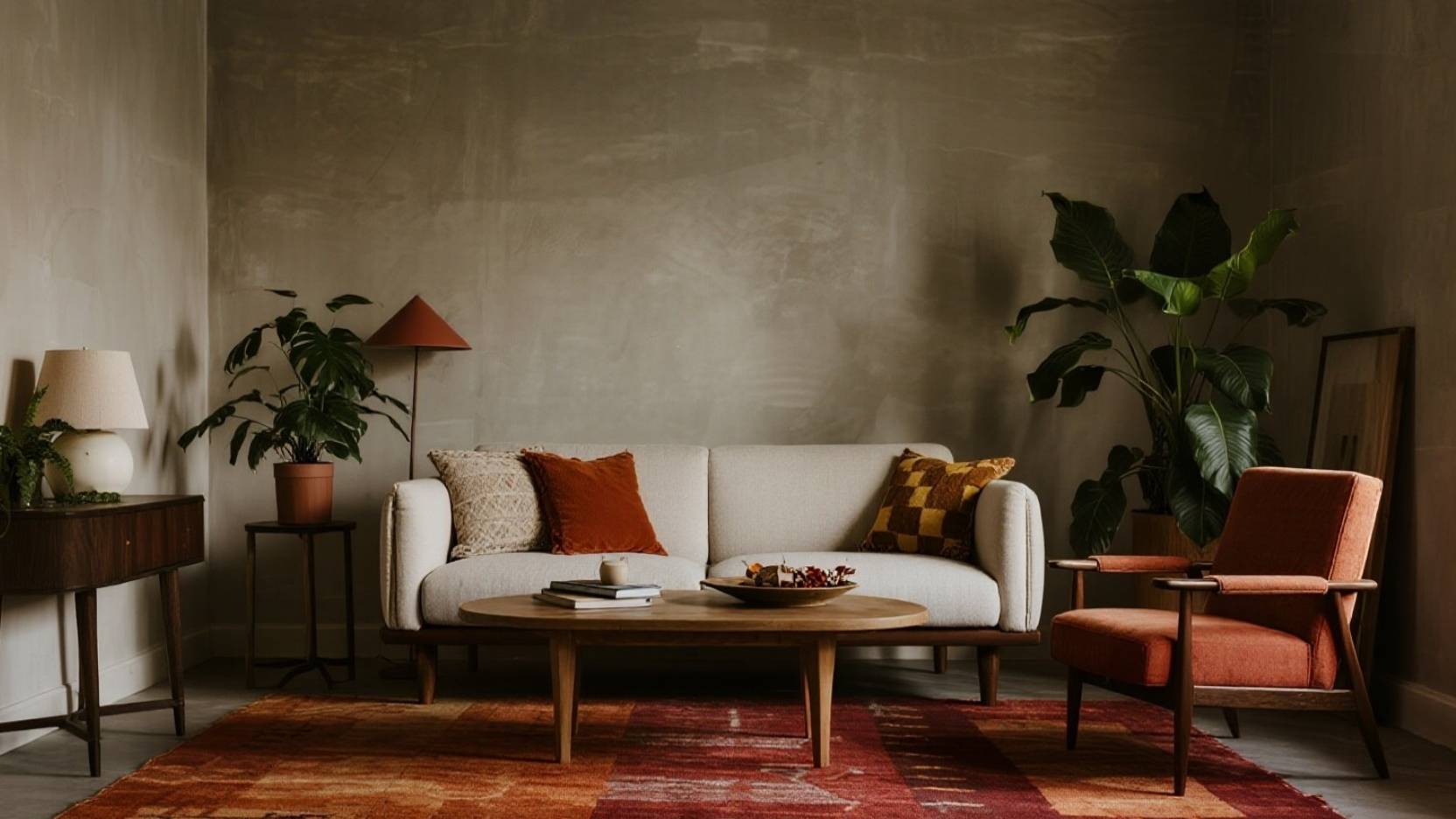
Start by choosing one rug that clearly shows the autumn story you love: maybe rust and cream stripes, or a Persian-style pattern with gold, burgundy, and moss. Treat this rug as your “color map,” picking out two to three main tones and one accent shade. These become your guide for every other decor decision in the room. 🎯
If your rug is busy or patterned, keep everything else simpler so the room feels curated instead of noisy. For a solid rug, you can introduce subtle pattern in cushions or throws, as long as the colors still come from that rug. The goal is to let the floor quietly tell the story, then repeat it in softer whispers around the room.
Soft-textile echoes: Curtains, throws, and cushions 🧶
Once your rug is chosen, curtains, throws, and cushions become your echo points. Take your main rug color and use it in the largest textile—often the curtains or a big sofa throw. Use the secondary tones for cushions or a smaller blanket, so the palette feels layered without turning into a rainbow. 🧣
For example, a rug with rust, cream, and olive could translate as rust throw, cream curtains, and olive cushions. Keep prints simple: maybe one patterned cushion that mixes all three colors and the rest in solids. This repetition calms the eye, making the plants feel like part of the palette rather than random green accents. 🌱

Pot swap: Clay, cocoa, and sand tones 🏺
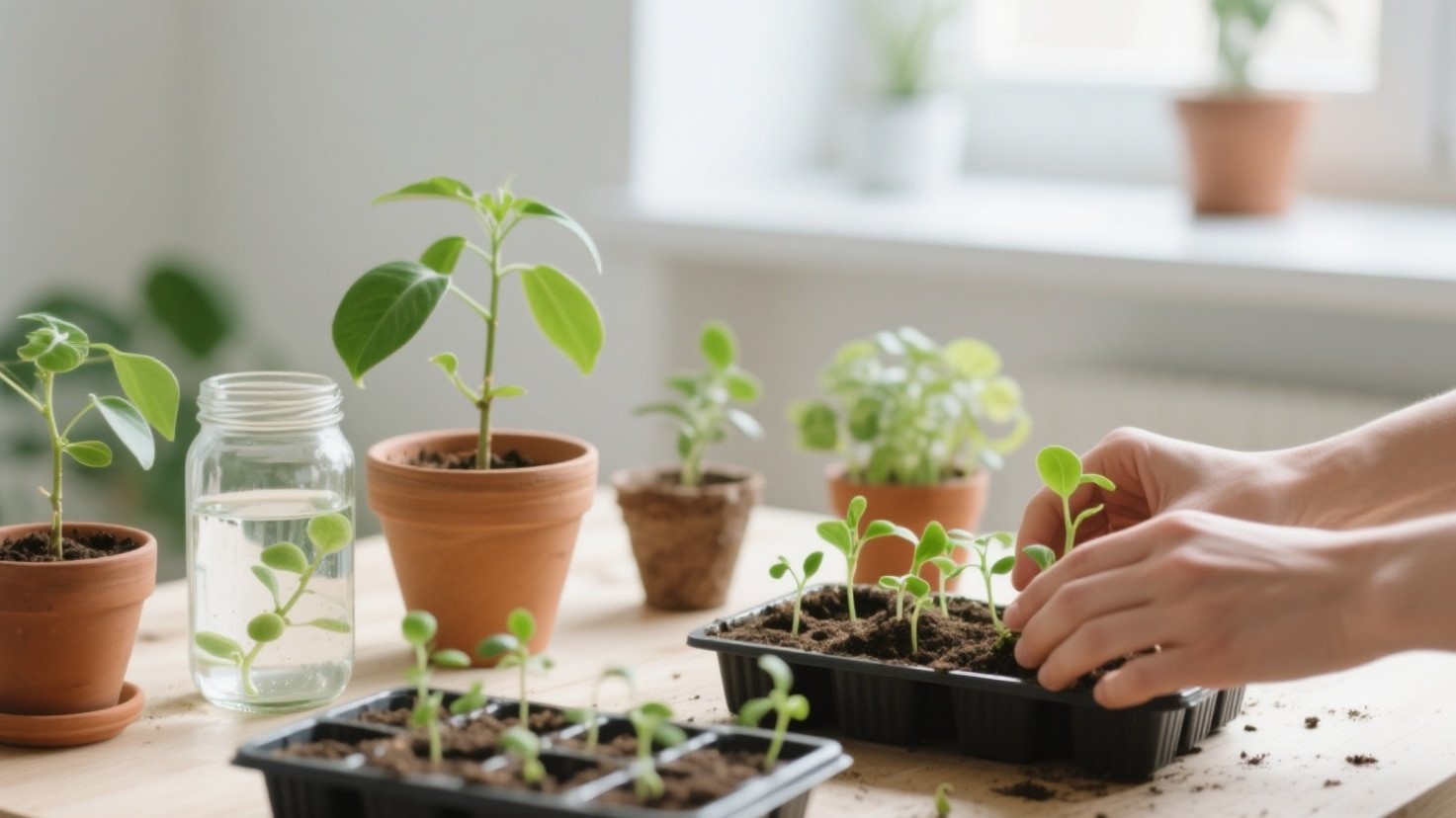
Next, look at your plant pots and quietly “autumn-ize” them. Swap bright plastic or pure white pots for clay, cocoa, sand, or stone finishes that mirror your rug’s warm undertones. Terracotta, matte beige, and soft brown instantly read as cozy and grounded. 🤎
You don’t need to change every pot at once; start with the most visible ones—coffee table, sideboard, and floor plants. Aim for a mix of textures rather than colors: one terracotta, one textured sand-toned ceramic, one deep cocoa glaze. These earth tones sit beautifully under autumn foliage and tie your greenery to the rest of the room’s warmth.

Plant layering: Floor, mid, and shelf heights 🌿
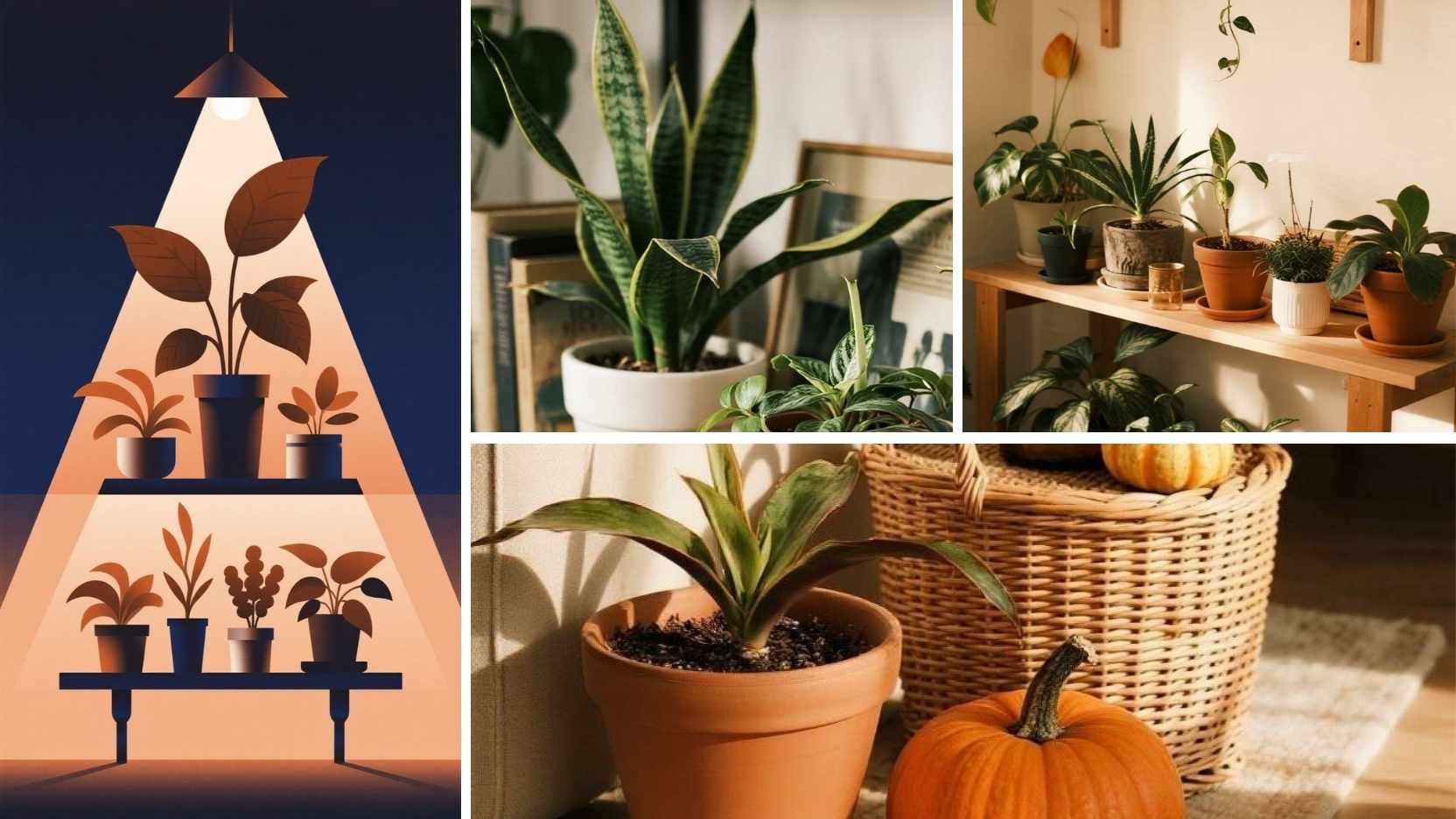
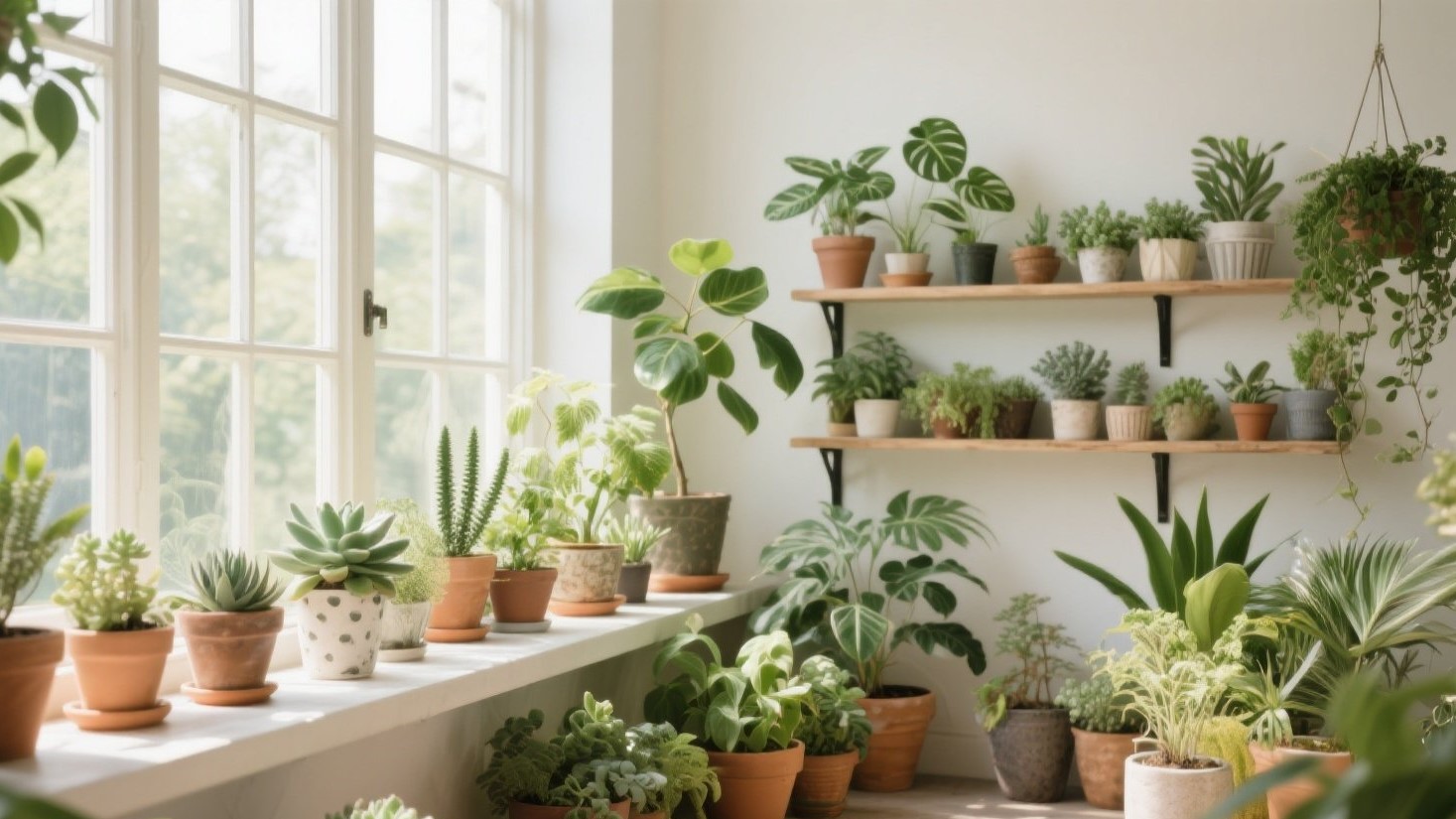
Now use layered heights to make your plant corner feel intentional, not messy. Think in three levels: floor plants, mid-height (stools or side tables), and shelf or window ledge plants. This creates a gentle “green gradient” that draws the eye upwards without clutter. 🌱📐
Place your largest, simplest plant on the floor in a warm-toned pot that matches one of the rug’s deeper shades. Mid-height plants can show more texture—trailing vines, feathery ferns, or upright stems that echo the rug’s movement. On shelves, keep it light and airy with smaller pots and more negative space so the composition feels sculpted, not crowded.

Stop points: Warm but minimalist 🚦
The secret to warmth without clutter is having clear stop points. Decide in advance: one main plant corner, one textile cluster on the sofa, and one styled surface like a console or coffee table. If you add something new, remove something old so the total visual weight stays the same. 😊
Use a quick check: when you walk into the room, your eye should land on two or three focal zones, not ten. If the space starts to feel “busy,” strip back one cushion, one small plant, or one decorative object. Your rug and coordinated colors will keep the room feeling full and cozy, even with fewer items out on display.

Bringing it all together: Your One-Rug autumn ritual 🍂
The One-Rug Rule isn’t about buying more decor; it’s about editing with intention. Your rug chooses the story, textiles echo it, pots ground it, and plants add life and texture. When those elements are aligned, warmth appears almost automatically. ✨
Each season, you can refresh the room by tweaking just one layer—swap a throw, rotate a plant, or change a couple of pots. The rug stays, the palette stays, and your space remains calm instead of chaotic. Over time, this becomes a simple ritual that makes your home feel like a soft, autumn hug whenever you walk in. 🧡