Introduction
A heat mat is like a warm cup of tea for seeds—comforting at first, but too much and things get sloppy. The goal is steady soil warmth for sprouting, then a quick hand-off to lights and mild room heat. This keeps roots compact, stems sturdy, and fungal problems at bay. 🌱✨
Think of your seed station as a minimalist studio: one tidy mat, a reliable thermostat, and trays that move off heat the moment seeds pop. After that, a gentle ambient temperature (about 20–22 °C) from a small space-heater maintains growth without boiling roots. Simple setup, beautiful results, fewer gnats and mess. 🧼🧊
Why Bottom Heat Works—And When It Doesn’t
Most warm-season seeds germinate best with soil in the 24–29 °C range; cool-season seeds prefer 18–24 °C. A heat mat lifts the root-zone temperature, speeding enzyme activity and even germination. The catch: after sprouting, that same heat can overstimulate and dry the mix, encouraging legginess and damping-off. 🌡️🌿
Overheated trays often show algae films, floppy stems, or roots circling shallowly near the warmth. If your probe reads great numbers but seedlings still stretch, the problem may be constant bottom heat rather than light. Turn the mat off after emergence and switch to bright, close lighting with modest room warmth. 🚫🔥

The Minimal Seed Station Layout
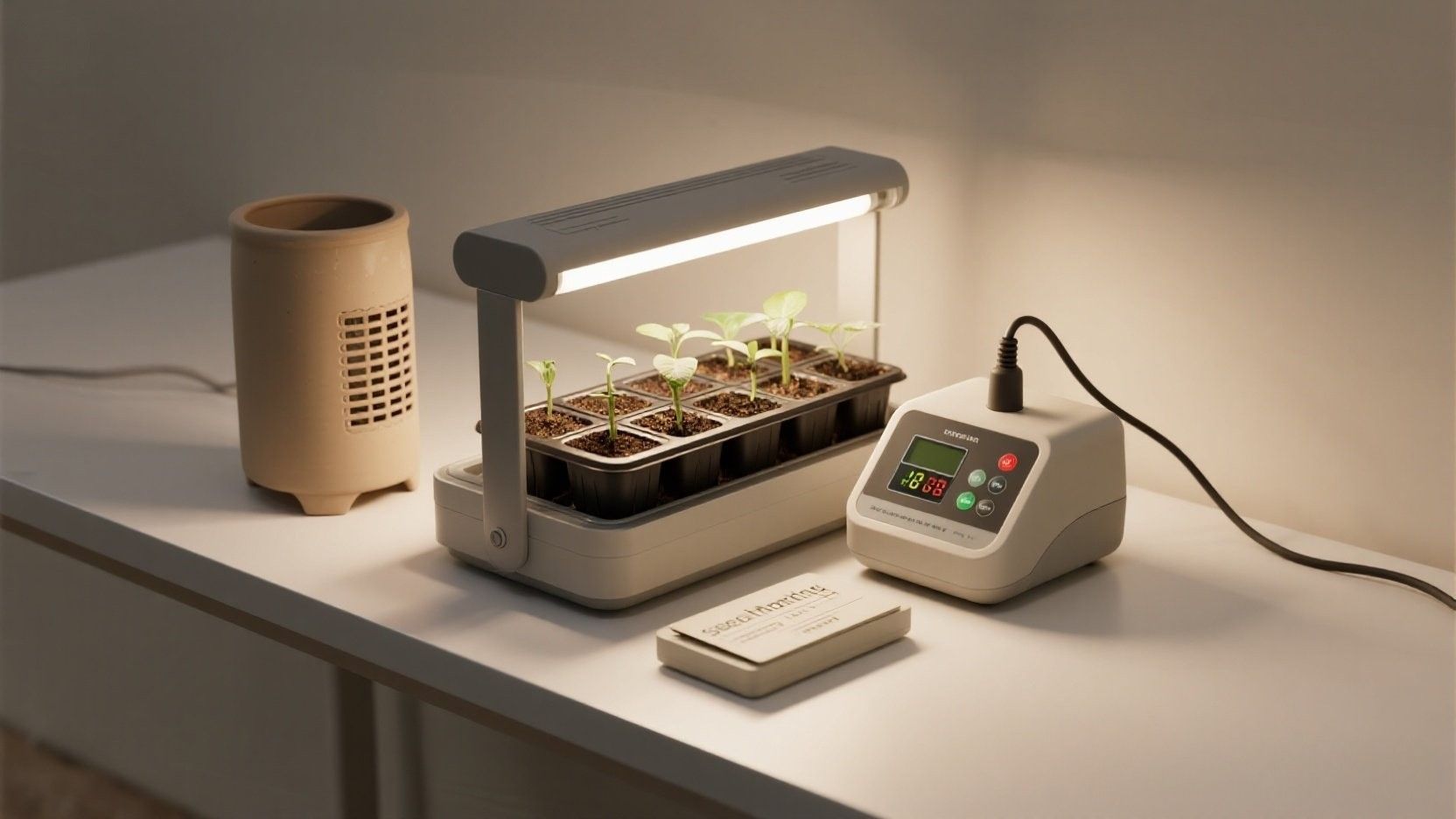
Build a calm, compact station: (1) one heat mat with a digital thermostat, (2) a single tray with humidity dome, and (3) a bright, height-adjustable LED. Place the thermostat’s probe at seed depth in a control cell to read true soil temperature. Label trays and keep a small notecard with target temps. 🧪🗂️
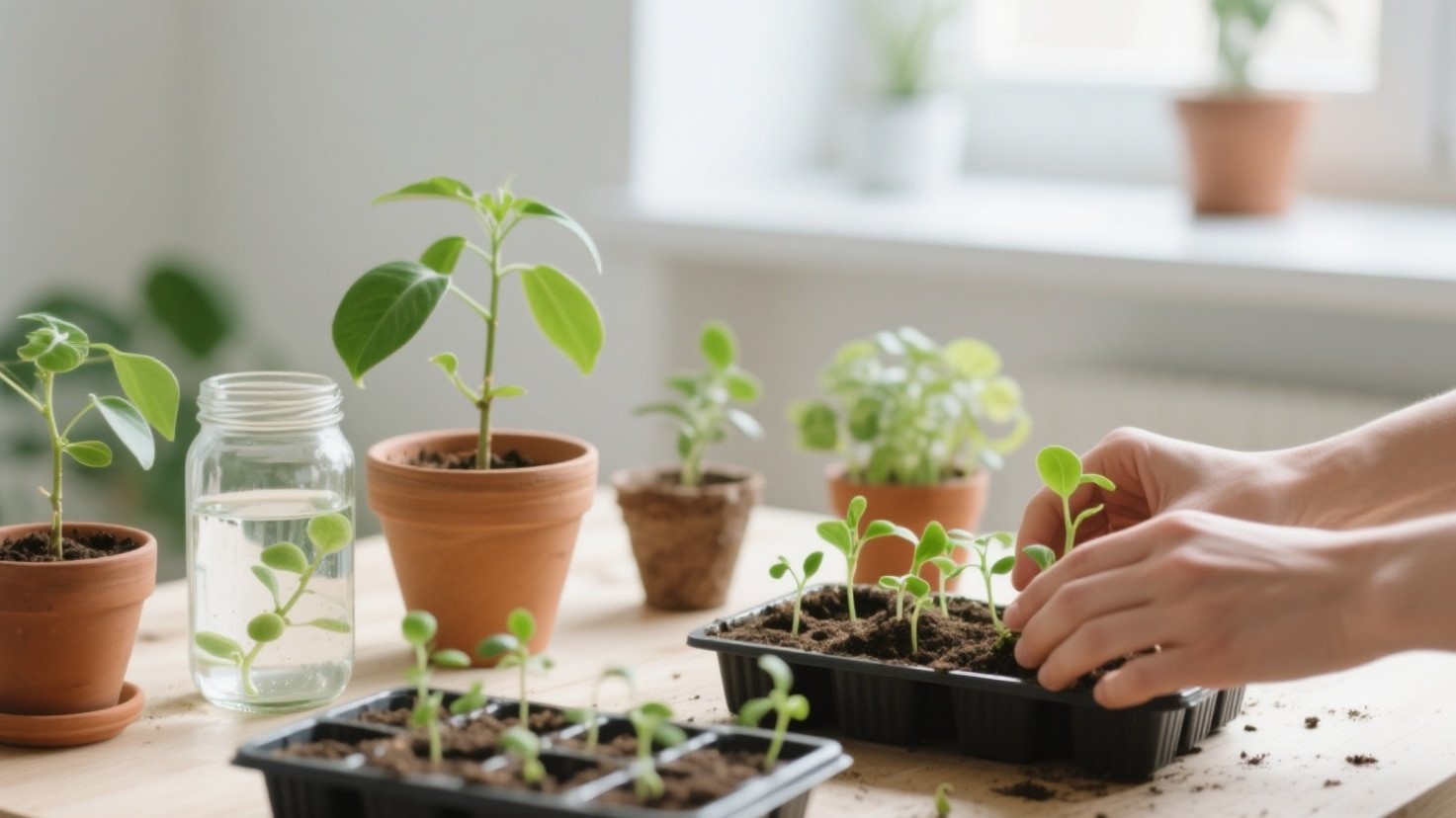
Once you see the first hooks (radicles/cotyledons), remove the dome, move the tray off the mat, and slide it under lights. Keep lights 5–10 cm above seedlings to prevent stretch. Maintain 20–22 °C ambient using a small, tip-safe space-heater—not bottom heat. 🔆🧯
Step-by-Step: Dialing In Temperatures by Crop
- Peppers & Tomatoes: Set the thermostat to 26 °C target (allow 24–28 °C). Expect pops in 3–10 days; move off heat as soon as 25–50% of cells have emerged. Shift to lights and hold room 20–22 °C; avoid domes unless mix is drying unusually fast. 🍅🌶️
- Brassicas & Lettuces: Use a milder 20–22 °C soil target; many brassicas sprout even at room temp. Remove heat immediately at first emergence to keep stems stout. Lights close, gentle airflow, and slightly drier surface deter damping-off. 🥬💨
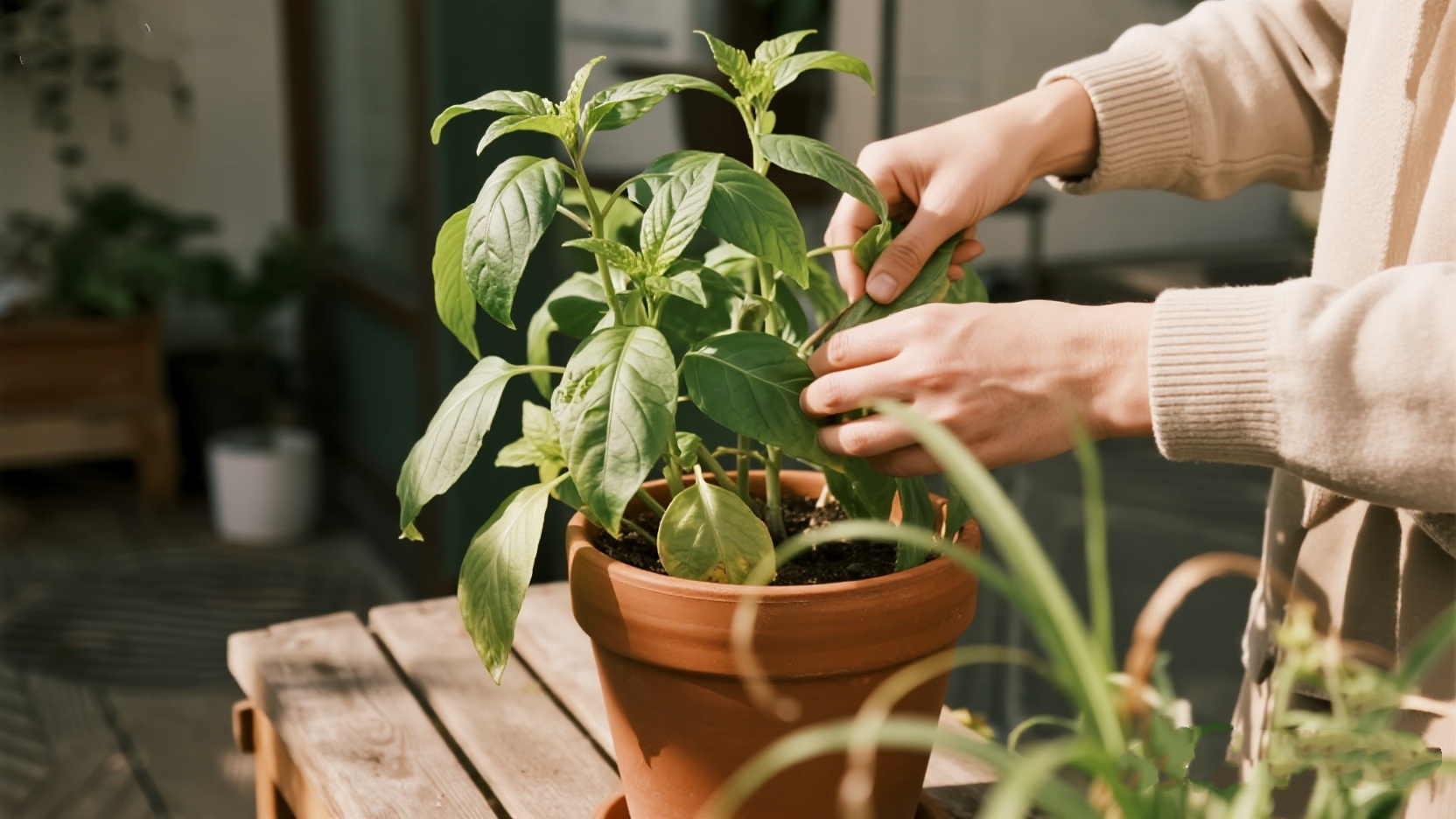
- Herbs (Basil, etc.): Aim 24–26 °C for quick starts. Basil loves warmth for germination but prefers off-mat growth under bright light. Keep the surface just moist, never glossy wet. 🌿💡

When to Turn Heat Off — Quick Checklist Card
- You see the first sprouts (hooks/cotyledons visible).
- 50% of the tray has germinated—or earlier if stretch begins.
- Humidity dome off to reduce condensation and fungus risk.
- Tray moves under lights, 5–10 cm clearance, strong brightness.
- Ambient warmth on, small space-heater to ~20–22 °C.
- Probe out of the tray or mat unplugged to avoid accidental reheating. ✅

Ambient Warmth > Constant Bottom Heat
A compact, tip-safe space-heater provides even room warmth that roots and leaves share, preventing “hot feet, cool tops.” Set it on low with a built-in thermostat and keep clearances per the manual. This balances moisture so the top layer isn’t permanently damp. 🏠🌤️
Place a small digital thermometer/hygrometer near plant height for honest readings. Combine with a circulation fan on low for sturdy stems and dry leaf surfaces. The result is calmer moisture, fewer fungus gnats, and cleaner shelves. 🌀📉

Troubleshooting: Signs You’re Overheating
Leggy, pale seedlings usually mean too much heat or too little light. Algae, gnats, or sour smells signal a chronically wet, warm surface. Fix by moving off the mat, raising airflow, and watering from below with short soaks. 🚨🪴
If germination is slow, check the probe placement and measure at seed depth, not on the mat’s surface. Use smaller batches so you can pull sprouted cells off heat earlier. Avoid stacking trays on one mat; that creates hot/cold zones. 🧲📏
Care & Maintenance: Clean, Label, Reset
Between rounds, unplug, wipe mats and domes with dilute soapy water, and air-dry. Replace cracked cell packs and keep cords routed with clips to prevent snags and spills. A tidy station reduces cross-contamination and makes temperature control predictable. 🧽🧷
Keep a one-page log: crop, thermostat setpoint, sprout day, off-heat day, and light height. You’ll quickly learn that peppers liked 26 °C while your lettuce thrived with only room warmth. Repeat winners, prune the rest—just like a good content calendar. 🗒️📊
Final Thoughts
Bottom heat is a starter pistol, not a lifestyle. Use it to wake seeds swiftly, then let light and gentle ambient warmth do the growing. Your reward: compact roots, sturdy stems, and a seed station that looks as good as it performs. 🌟🌿
The minimalist approach saves time, prevents pest pressure, and keeps surfaces dry and photogenic. With a thermostat, timely tray moves, and that small space-heater, you avoid the hot-mess spiral. Fewer problems, better sprouts, calmer workflow. ✅