Introduction: Why “Thirst” Beats Theme 🌱💧
Succulent displays last longer when you group plants by similar water needs, not just by matching colors. Leaf thickness is your easy visual cue: thick, armored leaves usually drink less often than thinner, softer leaves. Start with physiology and you’ll water confidently, then layer color and accessories for Easter charm. 🪴✨
Most “mixed” bowls fail because aloes/haworthias want longer dry periods while delicate echeverias prefer gentler cycles. Cacti complicate things further since many need even longer droughts and sharper drainage. Keep these families separate, and your arrangement stays lively beyond the holiday weekend. 🌤️
The Design Principle: Group by Thirst First 🧠🌵
Think of each pot as a “watering schedule”, not a color wheel. Plants with similar thirst tolerate the same intervals, so your whole container gets watered together without casualties. This removes guesswork and stops rot from overloving tender rosettes. ✅
Thick, fibrous, or spiky leaves (aloes, haworthias, gasterias) store more water and enjoy deeper drying between drinks. Softer rosettes (echeverias, graptopetalums, pachyphytums) like fast-draining soil but steadier, lighter sips. Cacti usually want the longest dry-down and the sunniest seat—park them in their own vessel. 🌞
Leaf Thickness as a Quick Sorting Tool 🧐🍃
Use the “pinch test”: if the leaf feels firm and springs back, it’s likely a slower drinker. If it dents easily or feels thin and tender, it probably wants gentler, more frequent watering. This tactile cue is a reliable stand-in for taxonomy at the garden bench. 👌
Blue waxy leaves often mean higher sun tolerance and slower water use, while bright lime or soft pastels can prefer filtered light and a steadier cadence. Rosettes with powdery bloom (farina) bruise easily, so place them where you water at soil level. Quick observations like these improve placement and longevity. 🌈
The Framework (Then Color): Three “Thirst Families” 🎯🎨
- Family A – Slow Sippers: Aloes, haworthias, gasterias; thick leaves, tolerate longer dry-downs.
- Family B – Moderate Rosettes: Echeverias, graptopetalums, pachyphytums; still succulent, but appreciate steadier light sips.
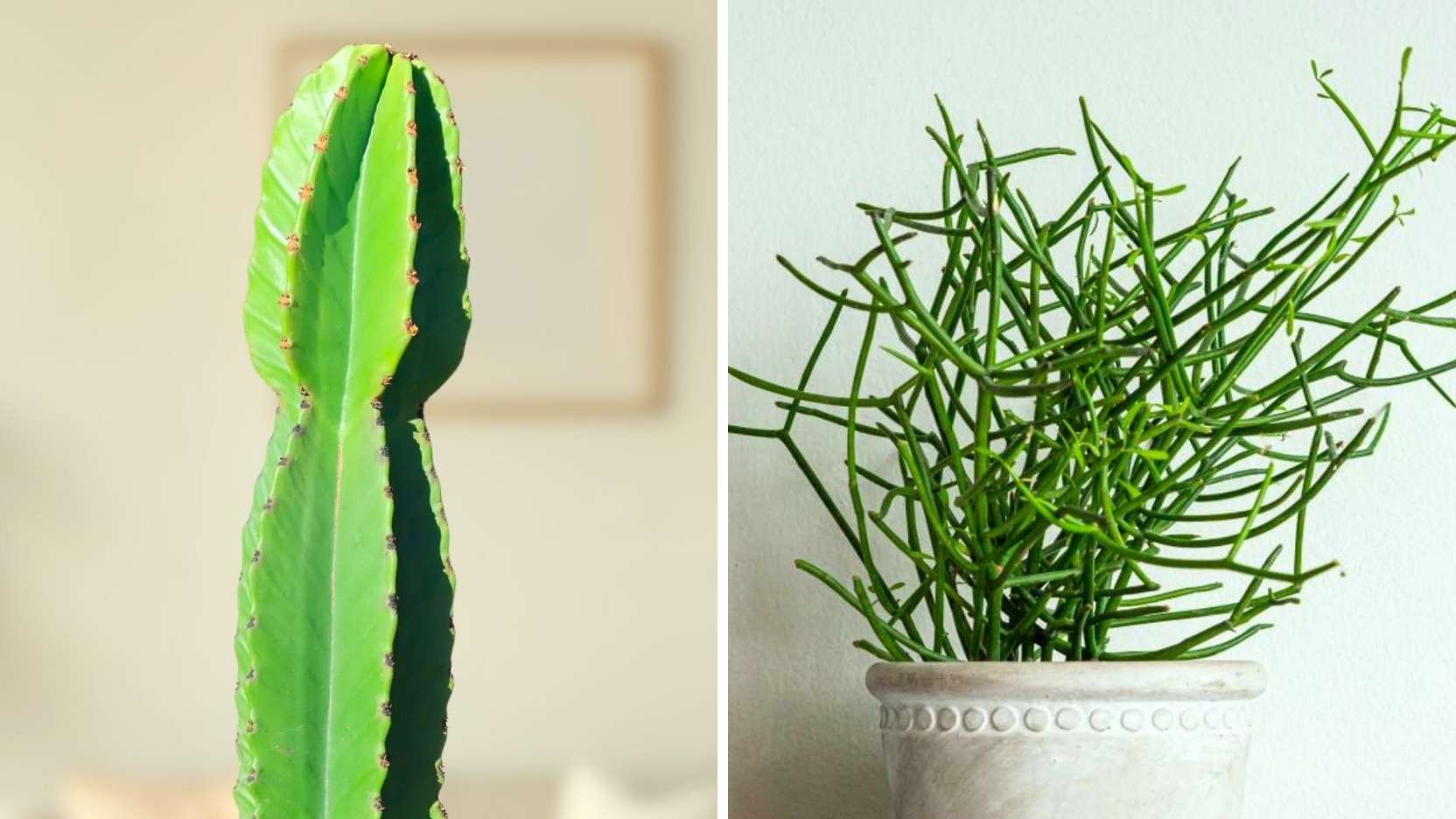
- Family C – Desert Specialists: Cacti; longest droughts, brightest spot, very sharp drainage. 🌵
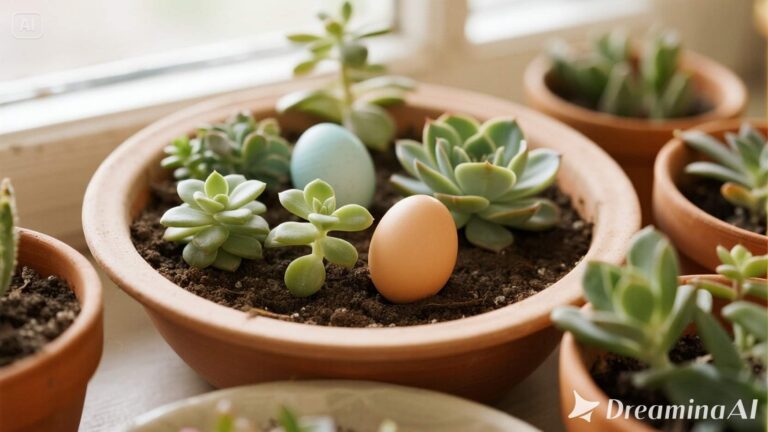
Build containers by family first, then blend tones. Add accent stones, pastel ceramics, or speckled eggs last to keep care rules uncompromised. You’ll get both Easter sparkle and a layout that thrives through summer. 🐇✨
Indoor Mix (East-Window Recipe) 🪟🌤️

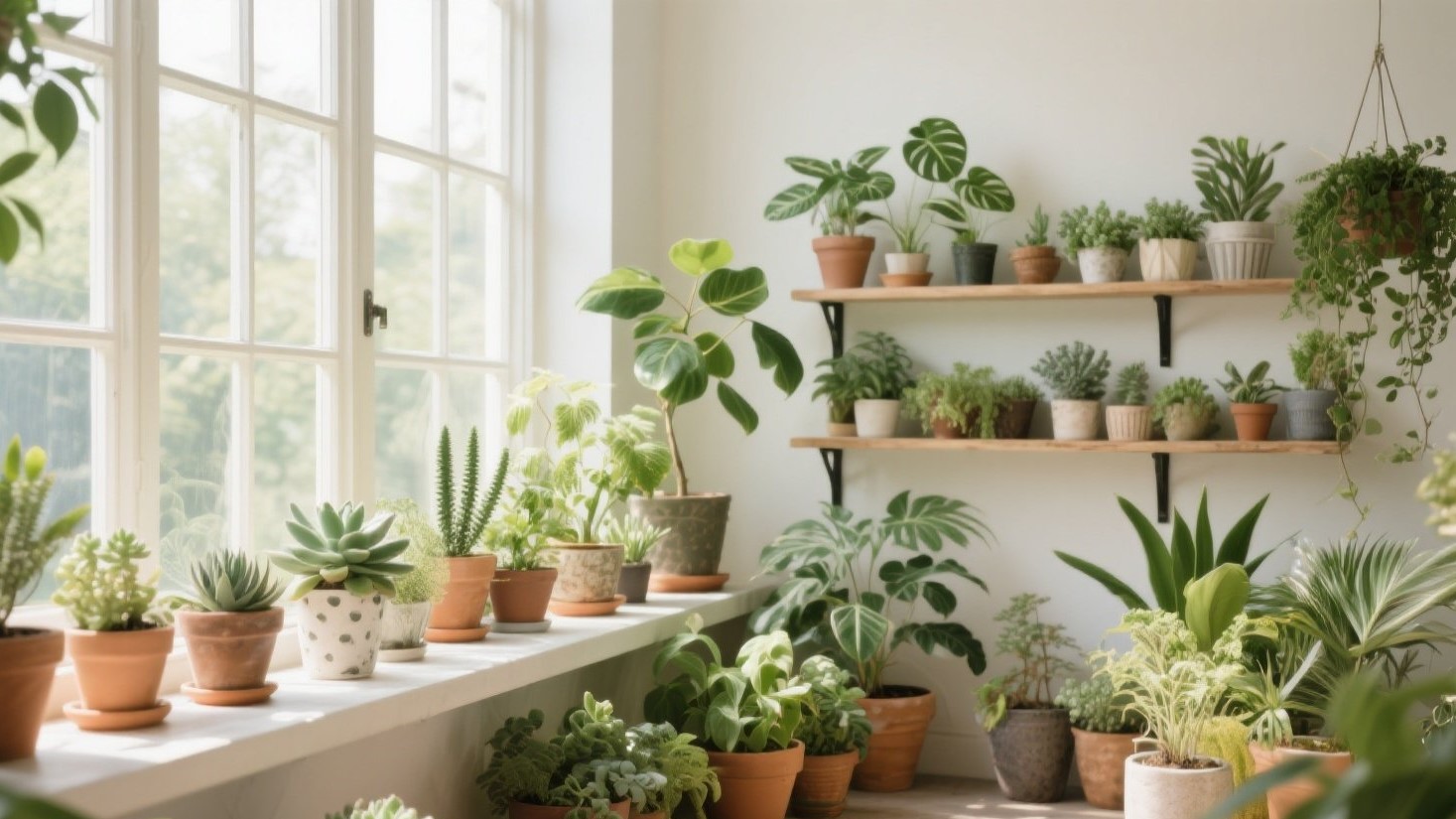
Use Family B rosettes for the hero bowl and tuck a small Family A cluster in a separate pot nearby. Aim for bright, indirect morning sun from an east window with afternoon protection. Keep air moving and avoid trapped humidity under glass domes. 💨
Soil should be gritty: try 1 part high-quality potting mix, 1 part pumice or perlite, and 1 part small orchid bark. Water when the top 2–3 cm are bone dry, then let excess drain completely. Infrequent, thorough watering beats frequent spritzing. 💦
Outdoor Mix (Bright Shade Patio) 🏡⛅

On a bright, shaded patio, go bigger with Family A aloes/haworthias for sculptural texture. Pair with a separate bowl of Family B if your patio is warm and breezy to prevent moisture hang-time. Morning sun and afternoon bright shade protect pastel rosettes from scorch. ☀️➡️🌑
Use quick-drain soil and elevate pots on feet to avoid soggy bases. Terracotta helps wick moisture, stabilizing roots. Water deeply, then allow full dry-down; outdoor airflow usually shortens the interval between drinks. 🧱
Avoiding the “Gift Bowl Trap” (No Drainage Fixes) 🎁🚫

If you’re stuck with a decorative bowl without a drain hole, nest an inner nursery pot with holes inside it. Fill the outer bowl’s bottom with a few spacers to keep the inner pot’s base above any runoff—never rely on “just gravel” as a fix. This liner system lets you water thoroughly and lift out excess. 🪣
Water sparingly and measure, not guess: add water until a few drops exit the inner pot, then dump any collected runoff from the outer shell. Use a moisture meter or skewer at root depth to verify dryness. Consider switching to a drilled pot later for plant health. 🔧
Watering Cadence: Deeper, Less Often 🗓️🫗
Watering schedules should respond to dryness, not the day of the week. Probe soil at root depth; if it’s dry and the plant looks perky, water fully and drain. If lower zones are still cool or damp, wait. ⏳
Expect indoor Family B to drink every 10–21 days in spring, while Family A might stretch longer. Outdoors with airflow, intervals shorten but dry-down is more complete. Always prioritize pot weight, probe tests, and leaf feel over fixed calendars. 🧪
Light Placement: Gentle Morning, Filtered Noon 🌞🕶️

Morning sun builds color without scorching; afternoons should be bright but filtered for tender rosettes. Rotate bowls weekly so all sides color evenly and avoid lopsided growth. If leaves stretch, nudge plants closer to light; if they crisp, step back a half-meter. 🔄
Cacti thrive in stronger sun than most rosettes and aloes—give them their own sunny ledge. Blue, waxy, or spiny species tolerate more intensity, but acclimate slowly. Light changes should be gradual to prevent shock. ⚠️
Color After Care: Layer Easter Accents Thoughtfully 🐣🎀

Once thirst groups are set, add color with topdress gravels, pastel ceramics, or a few seasonal ornaments. Keep decorations on the soil surface, not wedged between leaves, to avoid rot and airflow issues. Neutral gravels make succulent colors pop while preserving dryness. 🪨
Use repetition—three bowls, three hues, three textures—to create calm rhythm. Contrast leaf shapes (spiky vs. smooth) within the same family to keep watering unified. The result reads festive yet low-maintenance past Easter. 🎉
Common Mistakes & Quick Fixes 🧯🪴
If lower leaves mush while the soil stays wet, you’re overwatering or lacking drainage—switch to a gritty mix and extend dry time. If leaves wrinkle and the pot is bone dry, water deeply and consider upsizing the pot slightly. Persistent stretch means increase light or move to an east window. 🧰
Mixed bowls failing? Separate by Family and repot each into its ideal medium. You’ll often “save” the whole display by giving each group the water and light it truly wants. 🛠️
Two Ready-to-Copy Recipes (Fast Wins) 📝💡
- “East-Window Rosettes” (Indoor): Echeveria ‘Lola’, Graptopetalum paraguayense, Pachyphytum oviferum; shallow ceramic with inner liner; substrate 1:1:1 potting mix : pumice : small bark; water when top 2–3 cm are dry. Rotate weekly. Light: bright AM, filtered PM. 🌤️
- “Patio Texture Bowl” (Outdoor Bright Shade): Haworthia cooperi, Gasteria ‘Little Warty’, small Aloe brevifolia; terracotta; substrate 2:1 mineral (pumice/perlite) : potting mix; water deeply, let fully dry; raise pot on feet. Morning sun, airy afternoons. 🌬️
Final Thoughts: Easter-Pretty, Summer-Ready 🌷✅
When you design by thirst, care becomes simple and displays last beyond the holiday. Group families, pick the right soil, and match light to leaf; color and decor come after. This small shift takes your centerpiece from “weekend cute” to a season-long showpiece. 🌟
Succulent success is strategy, not luck—use leaf thickness as your compass, and keep cacti in their own camp. With drainage handled and watering cues dialed in, you’ll enjoy stress-free spring color. Happy Easter, and happy growing! 🐰🌿