Introduction: Design Your Beds Like a Room 🧣🌿
Fall prep works best when you think like a stylist: start with a solid base, add a supportive mid-layer, then finish with accents. This approach keeps soil protected, feeds future crops, and makes beds look intentional through winter. The bonus is less spring chaos because you already set the stage. ✨
Healthy soil is your “flooring,” moisture is your climate control, and living roots are your décor. Each layer you add changes structure, temperature moderation, and biology in predictable ways. That’s how you get beauty and resilience at the same time. 🧑🌾
The Base Layer: Finished Compost = Your Foundation 🧱
Lay 1–2 inches of finished, mature compost over cleared beds to create a nutrient-rich base. Compost improves cation exchange capacity, which helps soil hold nutrients for spring seedlings. It also buffers pH swings and boosts beneficial microbes that outcompete disease. 🌱
Spread evenly without digging to protect soil aggregates and fungal networks. No-dig placement reduces weed seeds surfacing and preserves earthworm channels. Water lightly afterward so the compost “settles” like fresh underlayment. 💧

The Mid-Layer: Shredded-Leaf Mulch = The Cozy Throw 🧺
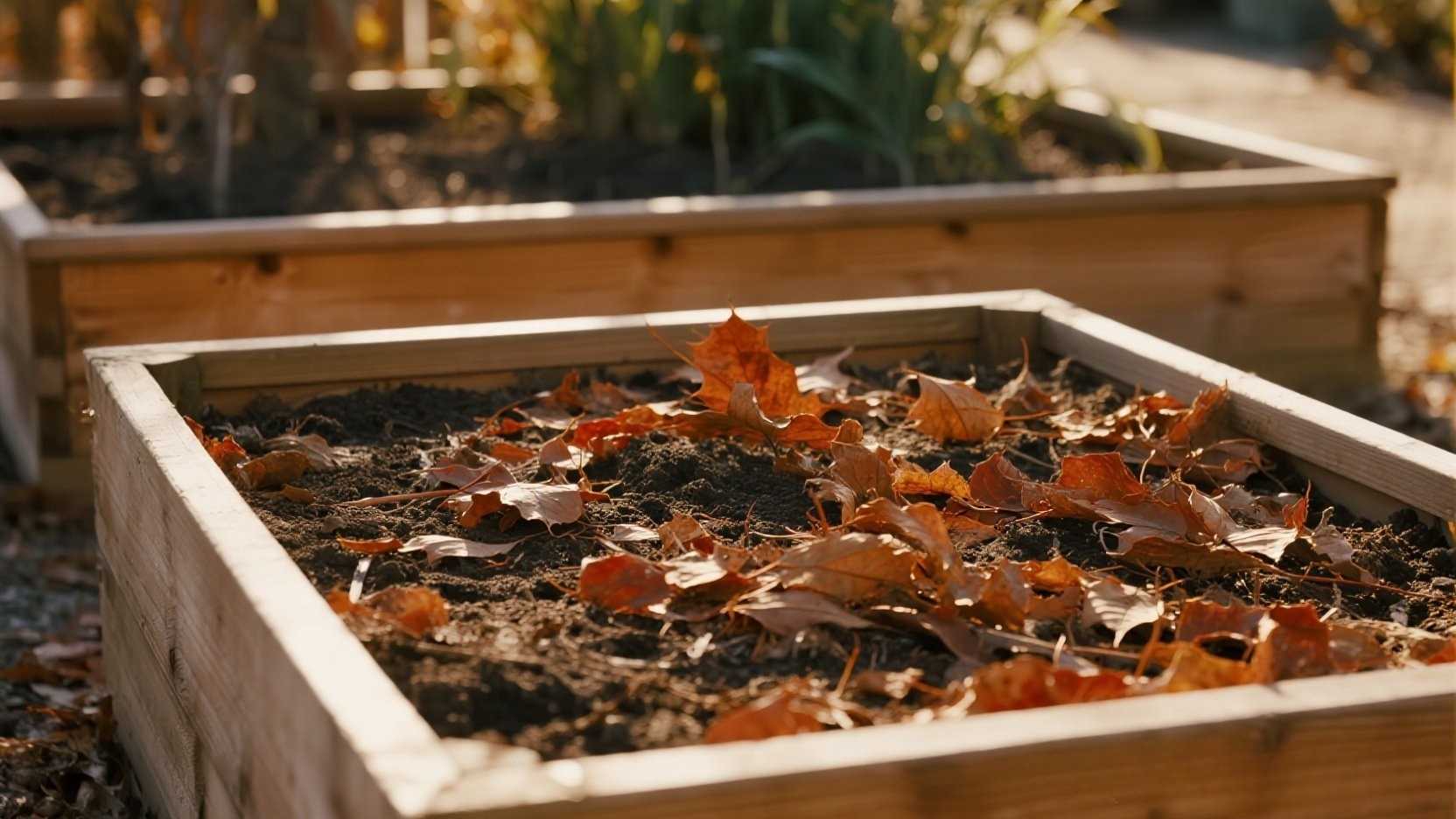
Top the compost with 2–3 inches of shredded leaves to lock in moisture and prevent erosion. Shredding increases surface area, helping microbes convert carbon to stable humus faster. It also keeps winter rains from sealing soil pores, preserving airflow. 🍂
Choose a light, even coverage that still allows air and water to pass. If your beds are windy, use mesh hoops or light netting for the first week to keep mulch in place. Expect gradual settling as leaves knit into a protective quilt. 🌬️

The Top Accents: Cover Crops = Living Color & Texture 🌾
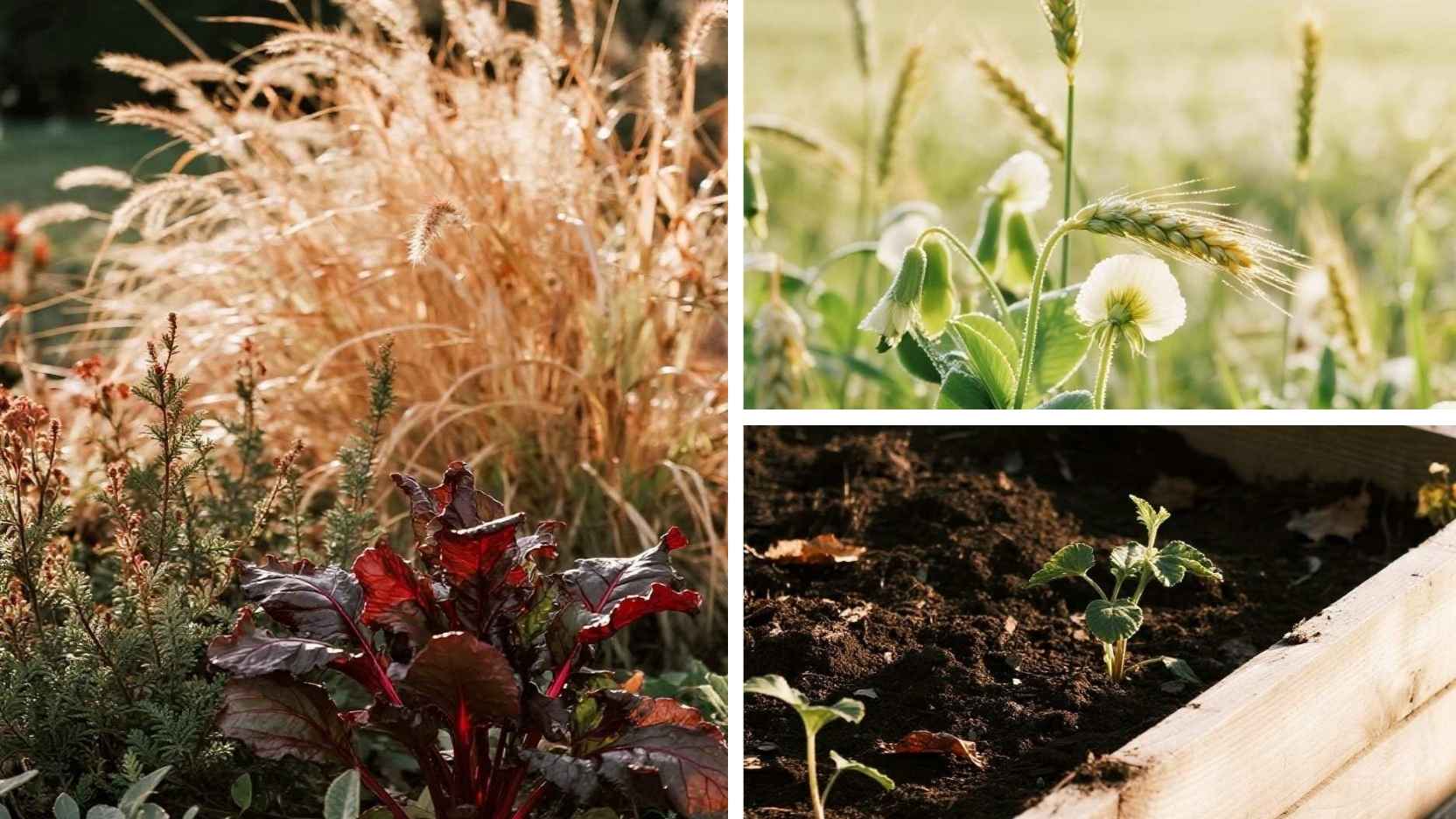
Sow a simple blend of barley + field peas + clover for structure, nitrogen, and winter charm. Barley adds upright “linen” lines, peas fix nitrogen with rhizobia, and clover forms a soft, lush underlay. This trio stays attractive into early frosts and feeds soil for spring. 💚
Broadcast seed into leaf mulch that’s been parted to expose compost, then rake lightly for seed-to-soil contact. Water to germinate and keep evenly moist for 7–10 days. Mow or crimp in late winter before flowering to return biomass as a green mulch. 🔄

Leaf Mold: The Warm, Ochre “Rug” That Invites Worms 🐛
Pile extra leaves in a ventilated corner to make leaf mold, then top up beds mid-winter. As it breaks down, leaf mold holds water like a sponge while staying airy, which is ideal for roots. Its structure encourages fungal pathways that communicate nutrients across the bed. 🍁
Earthworms love the steady moisture and crawl upward to graze, leaving castings behind. You’ll notice crumbly, coffee-ground texture by spring and fewer crusted surfaces after rain. Think of it as a self-warming carpet underfoot for your soil life. ☕️

Palette Guide: Rust, Burgundy, Evergreen—Winter That Looks Intentional 🎨
Plant a winter palette that reads “curated,” not “empty.” Rust-toned ornamental grasses frame the scene, burgundy chard adds luxe color, and evergreen herbs like rosemary, thyme, and sage give year-round form. This trio pairs beautifully with the green velvet of clover and the ochre leaf rug. 🌲
Group in threes for rhythm: a grass clump, a chard fan, an herb tuft. Keep heights layered front-to-back so beds feel deep even when growth slows. Add small paths or stepping stones to make maintenance feel like a stroll through a designed room. 🧭

Maintenance & Timing: When to Set Each Layer ⏱️
Aim to lay compost and shredded leaves 4–6 weeks before your region’s first hard frost. This gives microbes time to “wake” and roots time to explore. Sow cover crops immediately after mulching for best germination. 📆
Once established, water deeply but less often; let biology do the insulation work. Avoid frequent digging so layers stay intact and carbon stays in place. In late winter, chop-and-drop cover crops and pull mulch back only where you plant. 🔧
Tools & Materials: Your Simple Kit 🧰
You only need a rake, a broadfork or garden fork for aeration (not turning), pruning shears, and a hose with a gentle nozzle. Add a leaf shredder or mower for fast processing and a breathable bin for leaf mold. Keep a bucket of inoculated compost or finished vermicast for kick-starting biology. 🪣
Bag and store dry leaves during peak fall so you can replenish mid-winter. Label cover-crop seed jars for quick blends when a bed opens up. A lightweight hoop and mesh help tame wind while seedlings root. 🪟
Conclusion: Beauty Now, Fertility Later 🌤️
Designing beds with base, mid-layer, and accents gives you winter beauty and spring performance. Compost feeds, leaves protect, and cover crops dress the room with living texture. By March, you’ll lift the “throw blanket” and reveal soil that’s rested and ready. 🌼
Your winter garden becomes a space you actually want to look at, not hide. That steady pleasure is what helps you stay consistent through the cold months. Consistency is how gardens—and gardeners—grow. 🌟