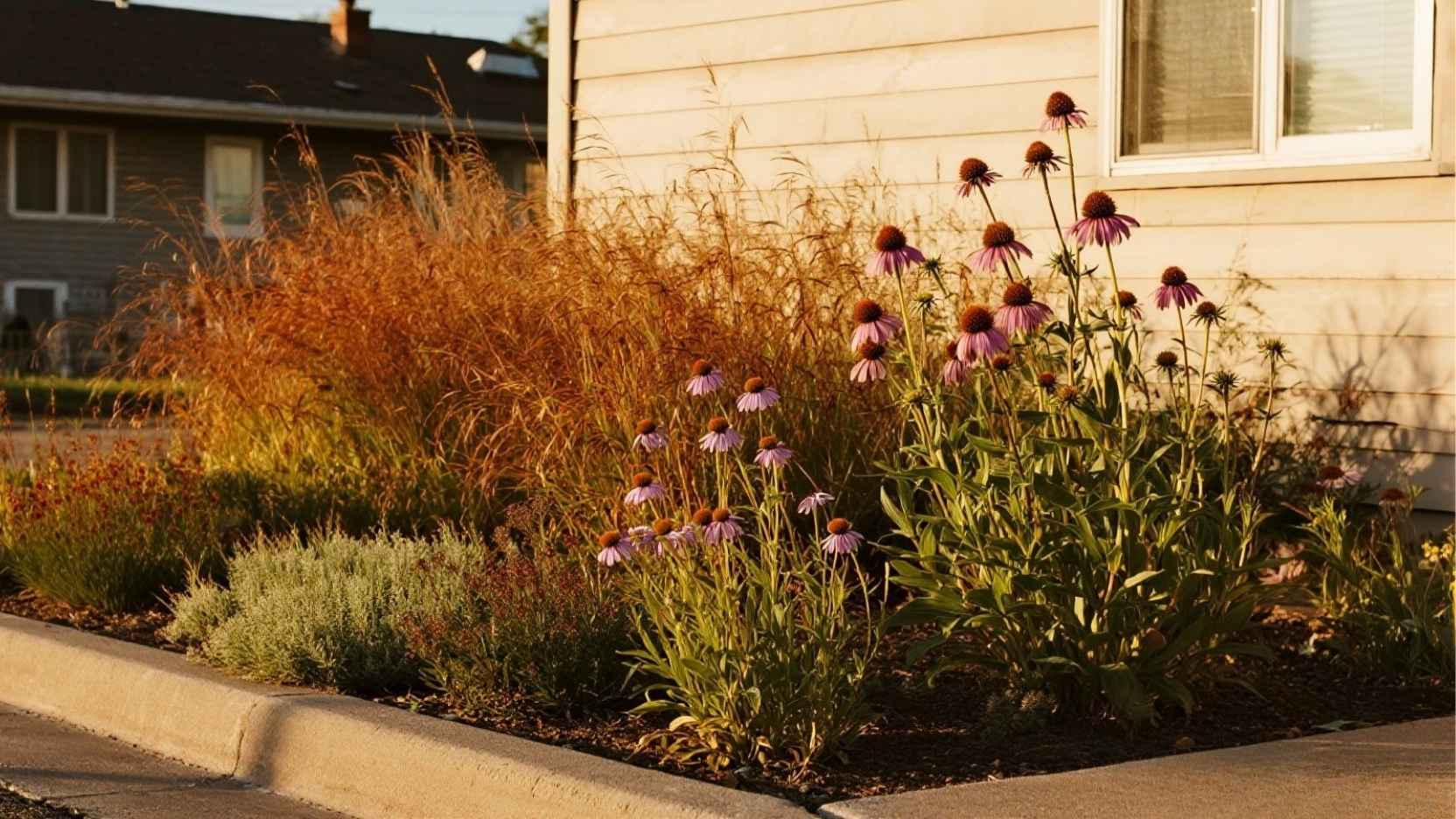
Introduction: Why a Small Prairie Patch Works 🌾
A prairie-style bed compresses the drama of open grasslands into a tidy, low-input space. By mixing upright “structural” grasses with broadleaf flowers, you get movement, color, and wildlife value through three seasons. The secret is a simple matrix: grasses provide the frame; forbs add seasonal highlights and seed for birds.
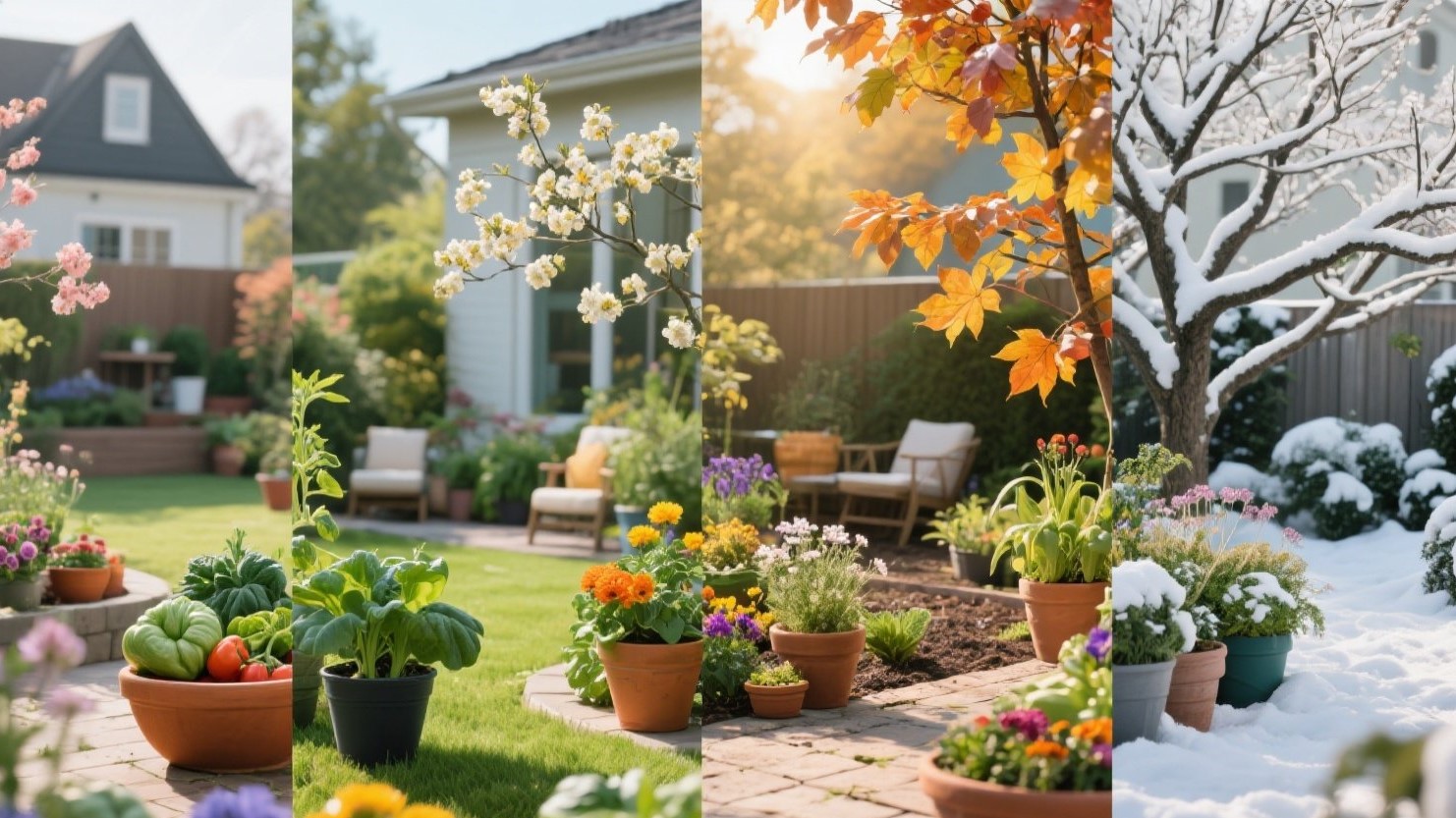
This approach also fits urban lots because it asks for full sun, average soil, and modest irrigation once established. Instead of weekly fussing, you work in seasonal bursts—spring resets and fall leave-standing. The payoff is coppery texture in autumn, snow-caught seedheads in winter, and pollinators all summer. ✨
Structure first: Little Bluestem for Verticals + Prairie Dropseed for Fine Texture 🧱
Let your grasses do the heavy lifting by covering at least 60–70% of the planting. Little bluestem (Schizachyrium scoparium) offers upright, blue-green summer blades that turn copper-rust and wine in fall. Prairie dropseed (Sporobolus heterolepis) adds low, fountain-like mounds that read as a soft, fragrant haze at ankle height.
Space little bluestem at ~18–24 in (45–60 cm) centers and prairie dropseed at ~12–18 in (30–45 cm) to knit a living mulch. Both thrive in full sun, tolerate lean or sandy soils, and once established need only deep, infrequent watering. Expect little bluestem to reach 24–40 in (60–100 cm) and dropseed 12–24 in (30–60 cm), creating layered structure with minimal inputs. 🌤️
Summer bloomers: Pale Purple Coneflower that Ages Beautifully into Seedheads 🌸
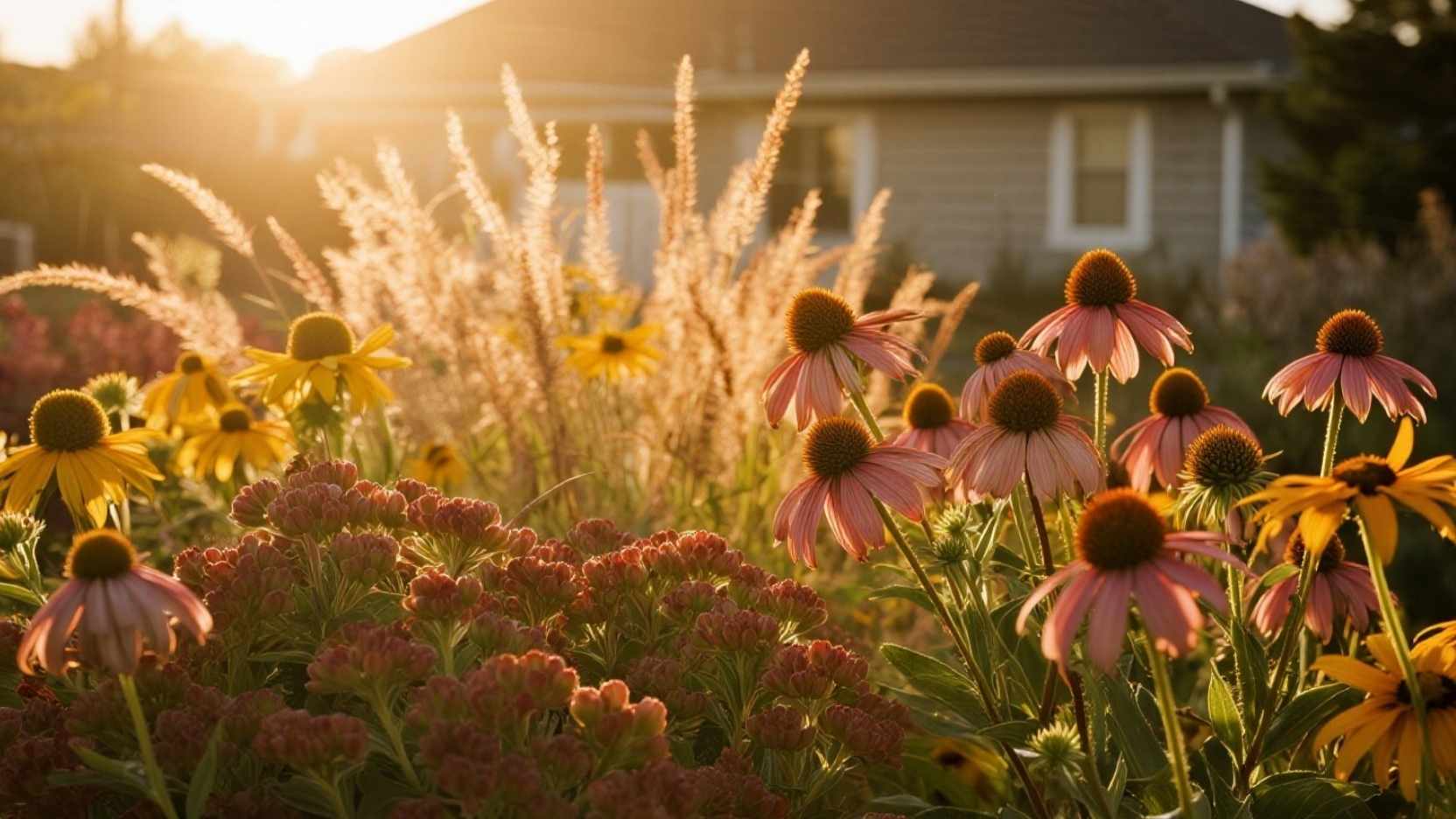
Pale purple coneflower (Echinacea pallida) flowers from early to mid-summer with drooping, mauve-pink petals and prominent cones. As petals fade, the spiky centers persist as sculptural seedheads, feeding goldfinches and adding winter silhouette. Tuck them in clumps, 3–5 per drift, between grass mounds to keep the matrix readable.
Deadhead lightly only if you need a tidier look, but leave plenty to set seed for birds and self-sown surprises. In average soils and full sun, plants reach 24–36 in (60–90 cm) and rarely flop within a grass matrix. Pair with a few late accents—like Solidago sphacelata ‘Golden Fleece’—if you want extra fall glow without breaking the “compact” brief. 💛

Maintenance cadence: Spring Cut-Back, Fall Leave-Standing for Birds 🔁
Think in two simple pulses: a March/early-April cut-back and a November “hands-off.” In spring, shear everything to 3–5 in (8–12 cm) to warm soil, spark fresh growth, and return chopped stems as mulch. In the growing season, spot-weed early while the matrix knits—five minutes now saves hours later.
In fall, resist the urge to tidy; seedheads feed birds and hollow stems shelter overwintering beneficials. The coppery bluestem and tawny dropseed catch low sunlight, giving you a sunset palette until snow. If lodging occurs, tie a subtle jute loop around a clump or two rather than cutting—structure matters most in shoulder seasons. 🐦

Putting It Together: A Compact Planting Plan & Quick Tips 🧭
For a 6×10 ft (1.8×3 m) bed, anchor with 8–10 little bluestem, weave 12–14 prairie dropseed, and insert 7–9 coneflowers in two drifts. Stagger plants in a loose triangle pattern to avoid rows and to close gaps by year two. Mulch lightly the first season, then let the grass matrix replace mulch as living cover.
Water deeply but infrequently the first summer to drive roots down, then taper off. Avoid rich fertilizers; lean soil preserves upright habit and keeps maintenance low. Add a narrow edit in year three—remove any overly vigorous volunteers to protect the crisp, compact look. ✅