The 3-Item Formula
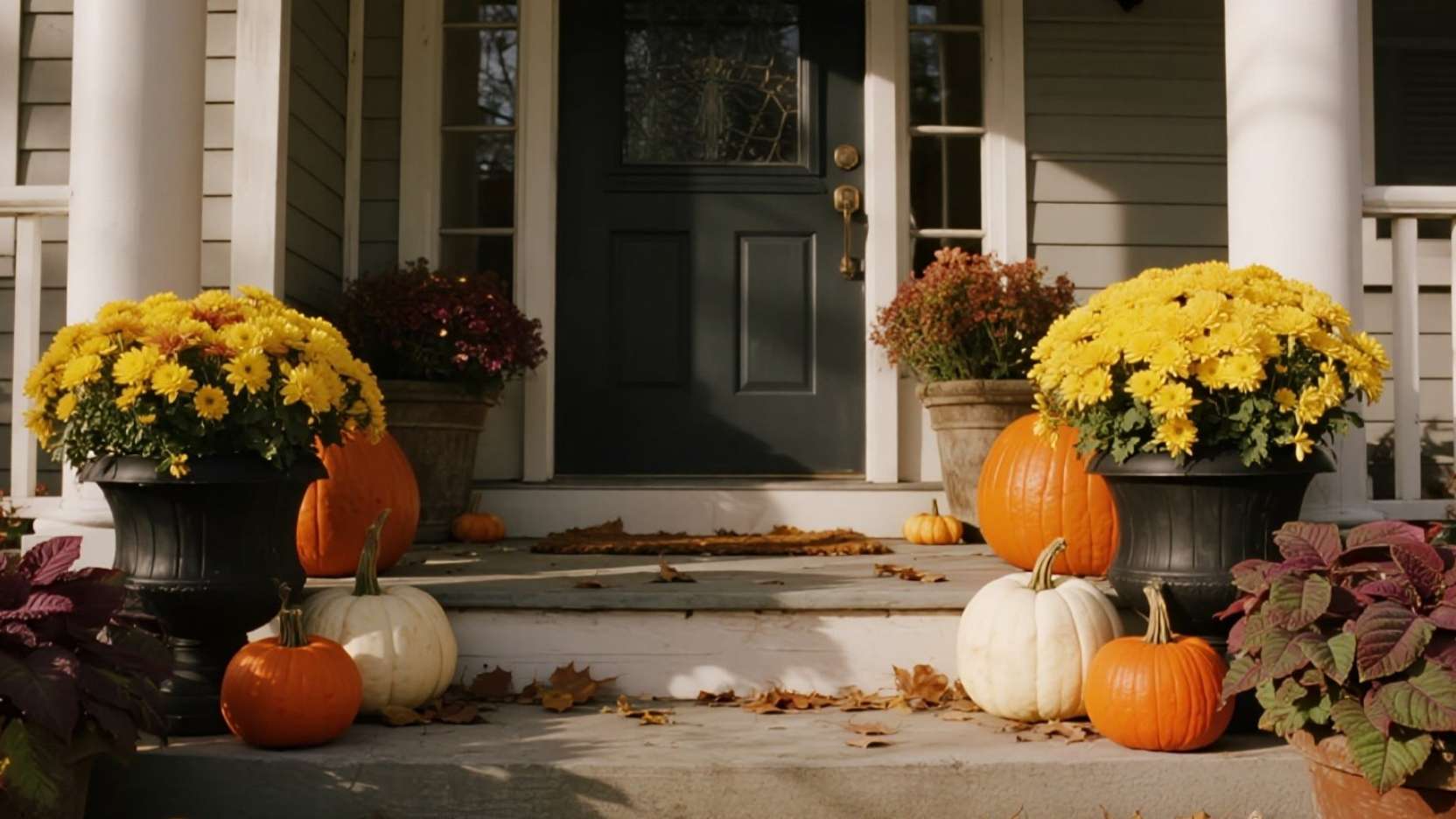
This porch recipe is deliberately simple: chrysanthemums for flower power, pumpkins for sculptural mass, and ornamental kale for texture. You’re balancing height (mums), volume (pumpkins), and leaf interest (kale) so the display reads clearly from the street. Think of it like a three-ingredient weeknight meal—fast to assemble, hard to mess up, and easy to repeat. 🎯🍂
Choose 10–14″ mums as the “anchors,” then nestle pumpkins in odd numbers around the base to create rhythm. Tuck kale at the edges so frilly foliage spills over like lace on a cuff. The trio works because each piece says something different to the eye: color, shape, and texture. 🌼🎃🌀
Color Blocking for the Street
Color-blocked mums show up better than mixed trays because the eye snaps to solid fields of hue. Use one color per pot cluster—e.g., all yellow on the left steps, all burgundy on the right—to create instant contrast with siding and railings. If your house is dark, pick warm mums (yellow, orange); if your house is light, choose saturated tones (burgundy, purple) for punch. 🏡🔶🟣
Pumpkins function like exclamation points: group three to five of a single variety to keep the palette intentional. White pumpkins pop against dark porches; classic orange adds warmth to gray or brick. Let kale bridge the colors—silvery or purple leaves subtly connect mums and pumpkins without visual noise. 🎃🤍🌿

Where to Cluster Pots
Place your biggest clusters at entries, stair turns, and driveway corners to ‘pull’ the eye where you want traffic to flow. Create a primary focal at the door (largest mums + most pumpkins), then echo smaller versions at step landings. Corners and turns amplify visibility because people naturally look where paths change direction. 👀➡️🚪
Use the “3–2–1” layout: three pots at the door, two midway down the steps, one at the sidewalk or corner. Keep at least one pumpkin on the ground plane so the arrangement feels grounded, not floating. Kale is your seamstress—slip it between pots to stitch groupings into one scene. 🧵🪴🧭

Care & Replacement Schedule
Mums like bright light and evenly moist soil; water at the base to avoid wet petals that brown early. Deadhead spent blooms weekly to push new flushes, and rotate pots a quarter turn so growth stays even. Kale thrives in cool temps, sweetening color after the first light frost. 💧🌤️❄️
Plan for staged swaps: early October = set the whole scene; mid-season = replace any tired mum with a fresher tight-bud plant; late season = sub in extra pumpkins, gourds, and more kale as flowers fade. This rolling refresh keeps curb appeal high with minimal effort and budget. Keep a “spare stash” of pumpkins and one backup mum so fixes take minutes, not hours. 🔁🛒⏱️