Introduction: Why Bulbs + Wildflower Lawns Work 🌿
Naturalizing bulbs into clover, daisies, or yarrow creates layered color with very low inputs. The groundcover feeds soil life, cushions summer heat, and lets early bulbs shine before foliage fills in. Think of clover as the “green engine” and bulbs as the “spring fireworks.” 💥
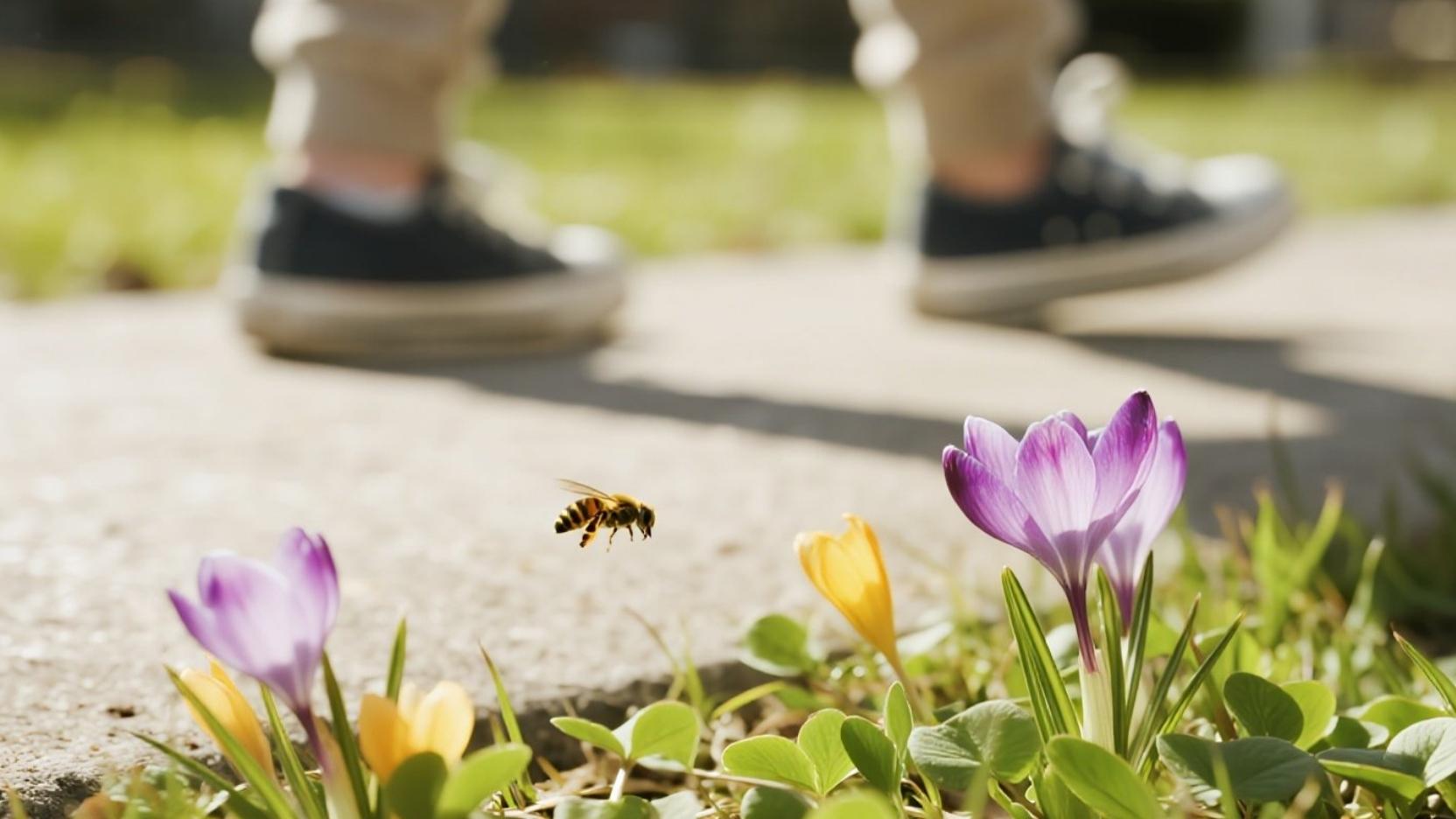
This combo also supports pollinators when food is scarce. Crocus, snowdrops, and early iris open when bees first fly, then daisies and yarrow carry nectar into summer. You get a long season of bloom without constant replanting. 🐝
Proven Pairings: Crocus + Snowdrops + Iris in Clover/Daisy/Yarrow 🌸
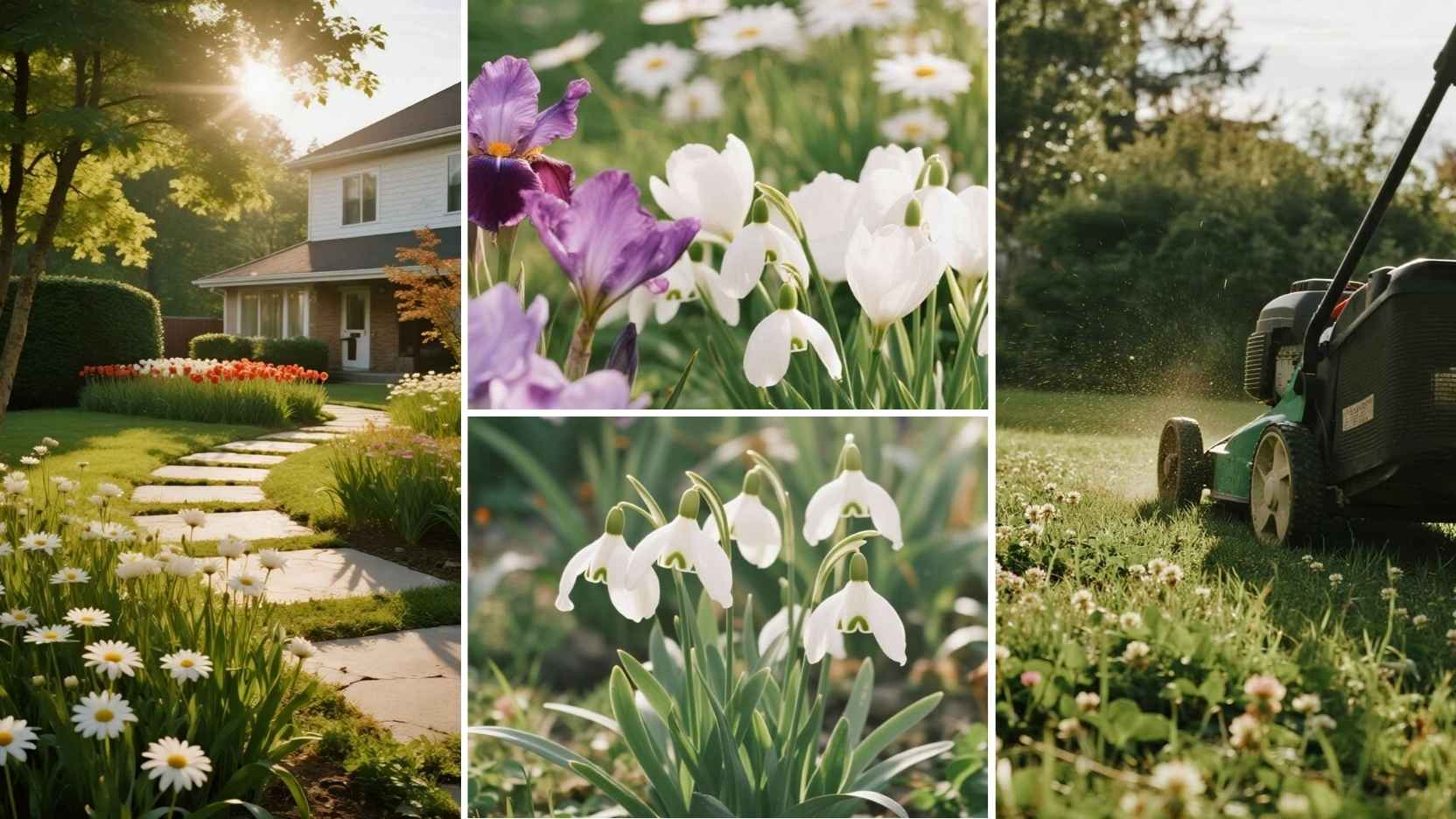
Crocus (Tommasinianus types), snowdrops (Galanthus nivalis), and reticulated iris (Iris reticulata) bloom in waves. Plant them in small 7–15-bulb clusters to read as “drifts,” not polka dots. Clover or yarrow knit between tufts, hiding fading bulb foliage. 🌾
Stagger varieties for succession: very-early snowdrops, early crocus, then early-mid Iris reticulata. In daisy lawns, place bulbs where mowing can pause for six weeks post-bloom. In yarrow patches, bulbs emerge cleanly through soft ferny foliage. 😊

Color Control: Keeping a Cohesive Palette 🎨
Color discipline avoids “visual noise” against a busy meadow lawn. Choose a palette—purple/white/blue is calm; add small accents of sulfur-yellow iris if desired. Avoid mixing bold yellow crocus into a strictly lilac scheme unless it’s intentional. 💜
Pick named selections that match: Crocus tommasinianus ‘Ruby Giant’ (magenta-purple), Iris reticulata ‘Harmony’ (blue), and white snowdrops for contrast. Repeat these three notes across the lawn for rhythm. The groundcover acts like a neutral rug that makes colors pop. ✨

Wildlife Pressure: Deer, Rabbits, & Squirrels 🦌
Snowdrops and Iris reticulata are commonly deer-resistant, while standard crocus can be nibbled by rodents. Where pressure is high, favor Galanthus, Iris reticulata, and daffodils (Narcissus) in deeper drifts. Add sharp gravel in planting holes to deter tunneling. 🪨
Tuck bulbs 3–4 inches deep for crocus/iris and 2–3 times the bulb height for others. Plant inside clumps of yarrow or within dense clover to camouflage. If squirrels are persistent, water in well to settle scent and top with a thin compost veil. 🐿️

Planting Windows, Depths & Spacing ⏱️
Plant in fall when soil is cool but workable; earlier in colder zones, later in mild climates. Use a soil knife to “slit and tuck” clusters into the sward. Aim for 7–15 bulbs per pocket, repeated every 18–24 inches for natural look. 🧤
Depth matters: crocus 3–4 in (7–10 cm), Iris reticulata 4–5 in (10–13 cm), snowdrops 3–4 in (7–10 cm). Mix a pinch of bulb food or compost under bulbs, not in direct contact. Backfill and heel in to press out air pockets. 🌧️

Mowing, Mulching & Aftercare ✂️
Let bulb foliage yellow naturally before your first post-bloom mow. Keeping clover at 3–4 inches shades soil, feeds lawn partners, and hides withering leaves. Resume regular mowing once leaves are fully spent. 🍀
Avoid heavy spring mulches over bulb zones in meadow lawns. Instead, top-dress with a thin compost layer after bloom. Water during unusually dry springs to lock in next year’s displays. 💧

Where to Place Bulb Drifts (& Where Not To) 📐
Pick micro-sites you won’t need to tread daily: under a light-use clothesline edge, along a path shoulder, or between stepping stones. Use curves and “islands” that echo meadow waves. Keep bulbs out of heavy-traffic play zones. 🚶
For daisies, place bulbs in sun pockets that warm early. For yarrow, leverage good drainage on gentle mounds. Repeat groupings in threes to make the design read from the curb. 👀

What to Skip: Common Mismatches & Pitfalls 🚫
Skip random single bulbs sprinkled everywhere; they vanish visually. Avoid mixing clashing crocus colors if your palette is tight. Don’t mow foliage green—next year’s bloom will be weaker. ⚠️
Be cautious with tulips in high deer zones unless using species types or fenced beds. Don’t over-mulch a living clover lawn; it smothers. Avoid soggy spots—bulbs resent standing water. 🧱
A 1-Hour Micro-Plan to Get Started 🗺️
Step 1: Pick a palette (e.g., purple/white/blue).
Step 2: Buy three matching varieties: Crocus tommasinianus, Galanthus nivalis, Iris reticulata.
Step 3: Mark three curved drifts and plant 7–15 bulbs per pocket. 🕒
Step 4: Water in and top-dress lightly with compost. Step 5: In spring, delay mowing until foliage flops and yellows. Step 6: Note gaps and add more bulbs next fall for density. 📓
Conclusion: A Calm Meadow With Spring Fireworks 🌟
When you control color, respect wildlife realities, and plant in repeats, naturalized bulbs read as intentional, not messy. Clover and daisies do the quiet maintenance while bulbs deliver seasonal drama. The result is a long, pollinator-friendly display that’s budget-smart and beautifully simple. 🌼
Start with three proven species, plant in clusters, and protect your timing with patient mowing. Add density each fall and edit only what jars your palette. In two seasons, you’ll have a lawn that greets spring like a well-rehearsed choir. 🎶