Ecology benefits 🌼🧪
Why clover + bulbs work together
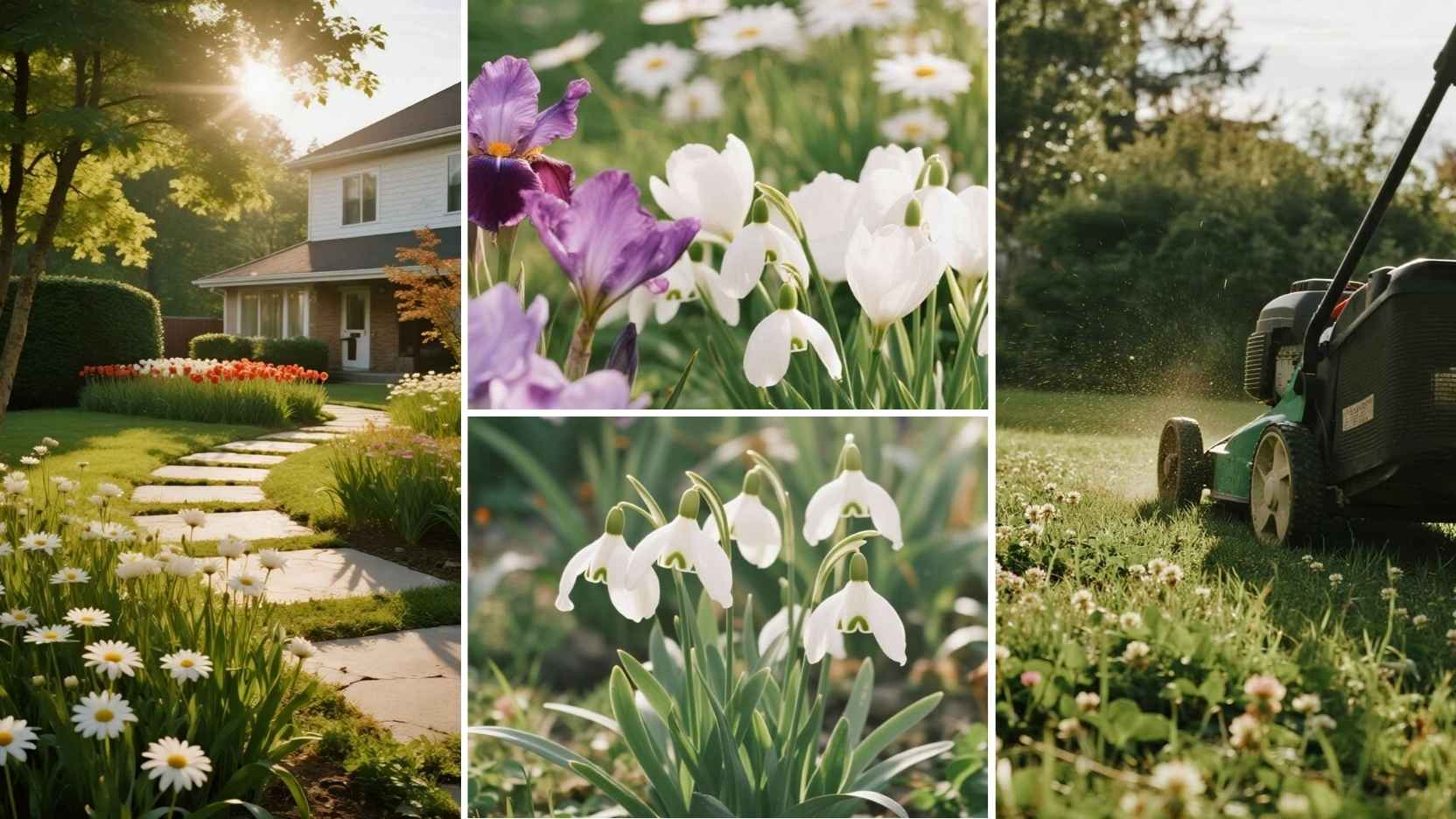
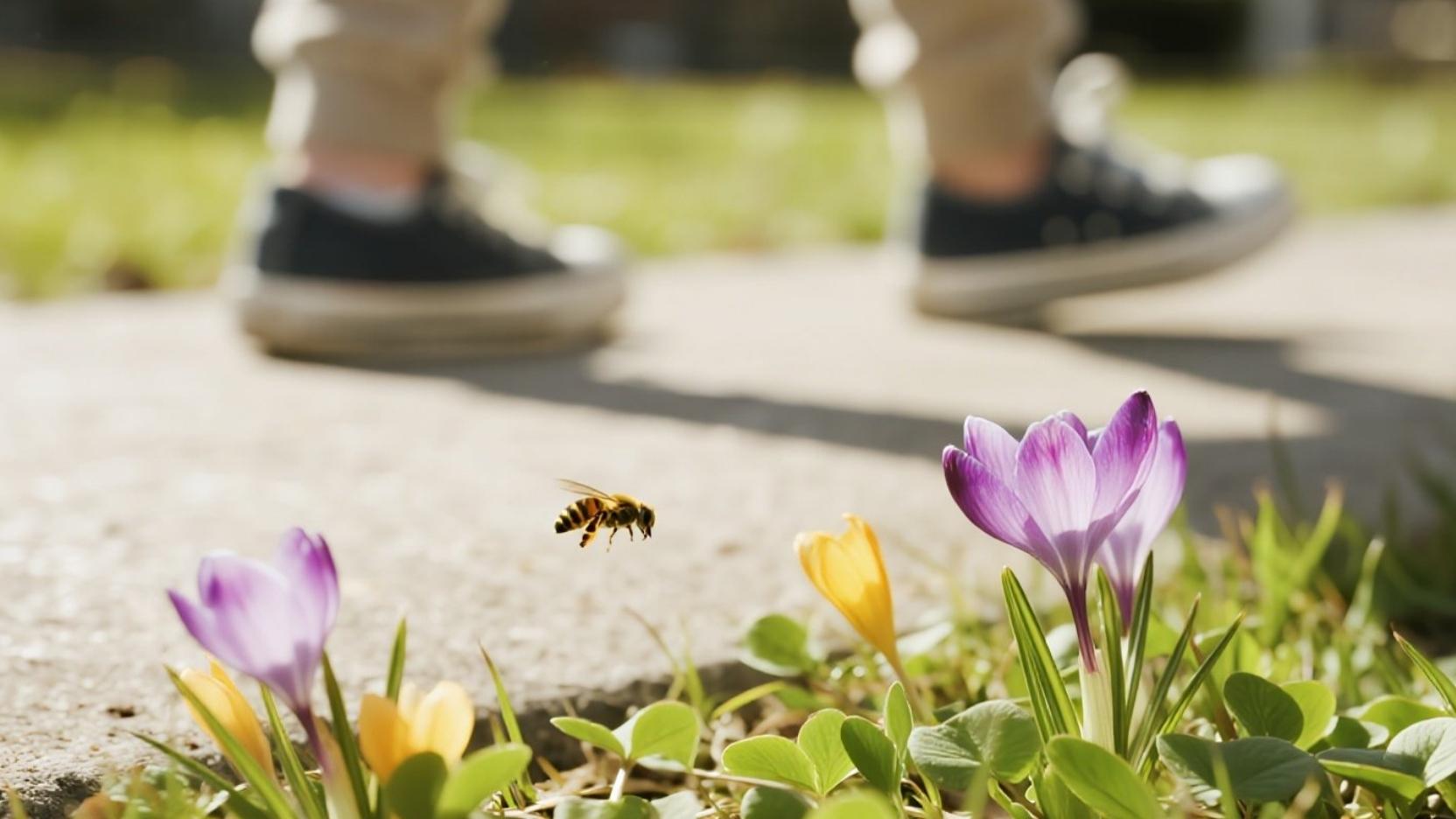
Micro-clover spreads into a soft, living carpet that fixes nitrogen, quietly feeding surrounding grasses and bulbs without synthetic fertilizer. Early spring bulbs—like crocus and snowdrops—pop before the turf really wakes, offering nectar and pollen when bees are hungry. This “green engine + early buffet” pairing keeps inputs low while boosting biodiversity.
Mowing & seasonal care for maximum bloom
Mow high—3–4 inches (7.5–10 cm)—so clover leaflets keep photosynthesizing and bulbs replenish next year’s energy. Let spring bulb foliage fully yellow and flop before your first post-bloom mow; cutting too early weakens bulbs. Through summer, occasional mowing keeps clover tidy, shades soil, and discourages weeds with fewer water needs. ✂️🌿
Staged nectar, continuous color
Choose bulb varieties that bloom in waves—very early, early, and mid-spring—so pollinators always find something. Clover begins flowering later, extending forage into warm months without crowding out the bulbs. The result is a soft succession: bulbs feed the first foragers, clover sustains the rest. 🌈🐛
Kid-/pet-friendly notes 👟🐾

Play and foot-traffic tips
During peak bloom, wear shoes and guide play to open patches—bees tend to linger on flowers, not paths. Keep a small “runway” strip mowed shorter near play equipment to reduce bee traffic where kids sprint. For heavy-use days, set out a picnic blanket over non-flowering turf to create a bee-light zone. 🧺⚽
Pet safety & gentle maintenance
Rinse paws after muddy play and keep pets off freshly planted bulb zones for two weeks. If a bulb pops up in the highest-traffic line, dig and shift it 6–8 inches aside to a calmer nook—bulbs tolerate being moved after foliage dies back. Use a reel or electric mower for quieter cuts that disturb fewer pollinators and neighbors. 🐶🌤️
“Mix & Match” bulb list for naturalizing 🌷🧩
How to select and plant
Think small, early, and self-spreading: species and botanical bulbs naturalize better in low-mow lawns than big hybrids. Tuck bulbs 2–3× their height deep, and cluster in loose drifts so flowers read as “mini-meadows,” not confetti. Pair very-early nectar (snowdrops, tommies) with early and mid-spring color (mini daffodils, species tulips) for a steady food line. 🐝💚
Starter 10 that play nicely with micro-clover
Use this palette to cover very early → mid-spring with low profiles and strong return rates.
- Galanthus nivalis (Snowdrops) — very early; tiny white bells; reliable naturalizer.
- Crocus tommasinianus (“Tommies”) — very early; bee-magnet; slips through turf easily.
- Chionodoxa (Glory-of-the-Snow) — early; starry blues/pinks; multiplies gently.
- Eranthis hyemalis (Winter Aconite) — very early; lacquer-yellow cups; thrives under deciduous trees.
- Puschkinia scilloides (Striped Squill) — early; pale blue stripes; delicate, spreads slowly.
- Muscari armeniacum (Grape Hyacinth) — early-mid; blue clusters; tough and kid-proof.
- Narcissus ‘Tête-à-Tête’ (Mini Daffodil) — early-mid; short stems; pest-resistant.
- Anemone blanda (Grecian Windflower) — early; daisy-like carpets; loves light shade.
- Scilla siberica (Siberian Squill) — early; intense blue; naturalizes well in cool climates.
- Tulipa tarda (Species Tulip) — mid; star-shaped yellow/white; better perennializer than large tulips.
Quick install checklist 🧰
Plant in fall when soil is cool and workable; aim for clusters of 7–15 bulbs for meadow “pops.” Overseed micro-clover at 1–2 lbs per 1,000 sq ft (0.5–1 kg per 100 m²) to thicken gaps after planting. Water in once, then let winter do the rest—low input, high bloom. ✨