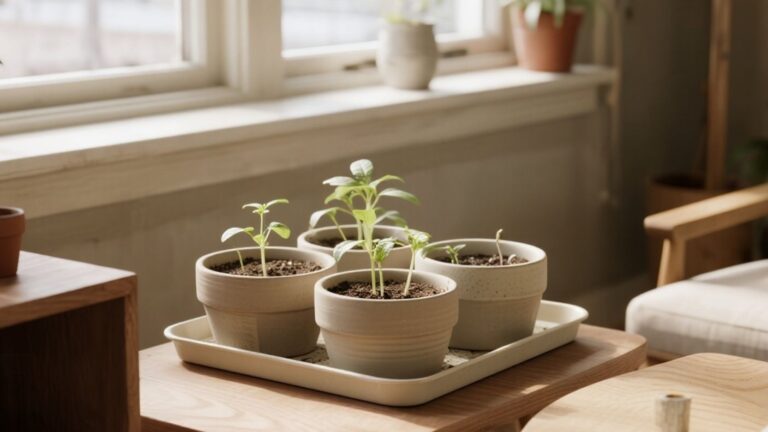
Why Bottom-Watering Works (And Looks Great) 🌱✨
Bottom-watering lets pots drink from below through capillary action, moistening the root zone without soaking the surface. That means fewer splashes, cleaner shelves, and a seed area that belongs in the living room—not the garage. Because the top layer stays drier, you also discourage fungus gnats that prefer damp surfaces.
Aesthetically, a neutral cache tray and ceramic pots create a calm, cohesive look. Functionally, you avoid compacting delicate media with overhead streams. The result is stronger roots, fewer spills, and a routine you can do in under ten minutes. 😌
The Five-Minute Ritual: Wick, Wait, Dump 🕒
Fill your cache tray with about 1–1.5 cm of room-temperature water. Set the pots in, making sure the drainage holes touch the water so the mix can wick. Start a five-minute timer—this brief soak hydrates evenly without waterlogging.
When the timer ends, lift each pot; the surface should feel cool and slightly heavier. Dump the excess water from the tray—standing water invites trouble. Return the tray dry; tidy in, tidy out. ✅
Gear Check: Clean Media, Real Drainage, Calm Palette 🧰

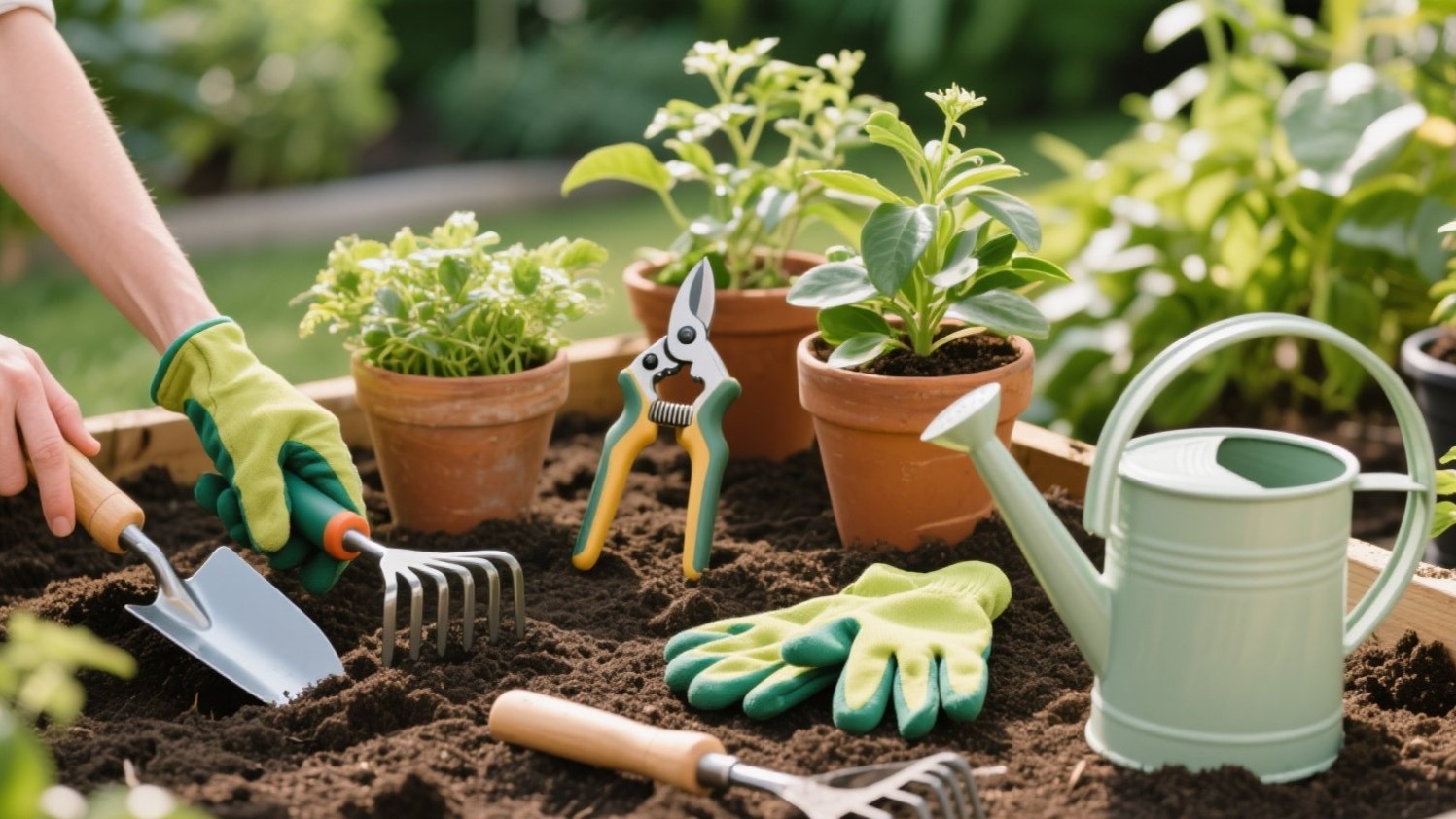
Use fresh, fine seed-starting mix—light, airy, and sterile enough to reduce damping-off risk. Choose pots with real drainage holes and place them inside ceramic cachepots or a neutral fiberglass tray. Keep a microfiber cloth nearby to catch drips as you lift.
A calm color palette—linen, clay, stone—helps the station blend with your living room. Mesh pot liners keep media from sifting out while preserving flow. A small pitcher makes topping up trays precise and splash-free. 🎯
Timing & Frequency: Water the Weight, Not the Clock 📅

Pick up the pot; when it feels light and the top centimeter is dry, it’s time. Early sprouts in warm rooms may need water every 1–3 days; cooler rooms stretch the interval. Light, pot size, and plant density shift the schedule—let weight be your guide.
Skip bottom-watering on the day you up-pot; pre-moisten media from below first, then transplant. After true leaves show, increase airflow and light to balance moisture demand. Consistency beats frequency—steady rhythms build resilient roots. 🌤️
Damping-Off: What It Is, Why It Strikes, How You Block It 🧪
Damping-off is a seedling killer caused by pathogens that love cool, wet, stagnant conditions. You’ll see stems pinch at the soil line, plants flop, and growth halt. Bottom-watering reduces splash and keeps the surface drier—one of your best defenses.
Your first lines of defense: fresh seed-starting mix, clean containers, and airflow. Warmth and gentle circulation make the environment less welcoming to pathogens. Sanitize tools and trays between sowings so yesterday’s microbes don’t meet today’s seeds. 🧼
Fungus Gnats: Stop the Drama Before It Starts 🪰
Gnats breed in persistently damp top layers of soil. Because bottom-watering keeps that surface relatively dry, you interrupt their life cycle. If you still see flyers, reduce watering frequency and remove any standing water in cache trays.
Sticky cards catch adults, but prevention is king. Vacuum or wipe nearby shelves to remove algae and debris. With clean habits and dry surfaces, gnat season never really begins. 🚫
Step-By-Step Setup: Your Living-Room-Friendly Seed Station 🏡

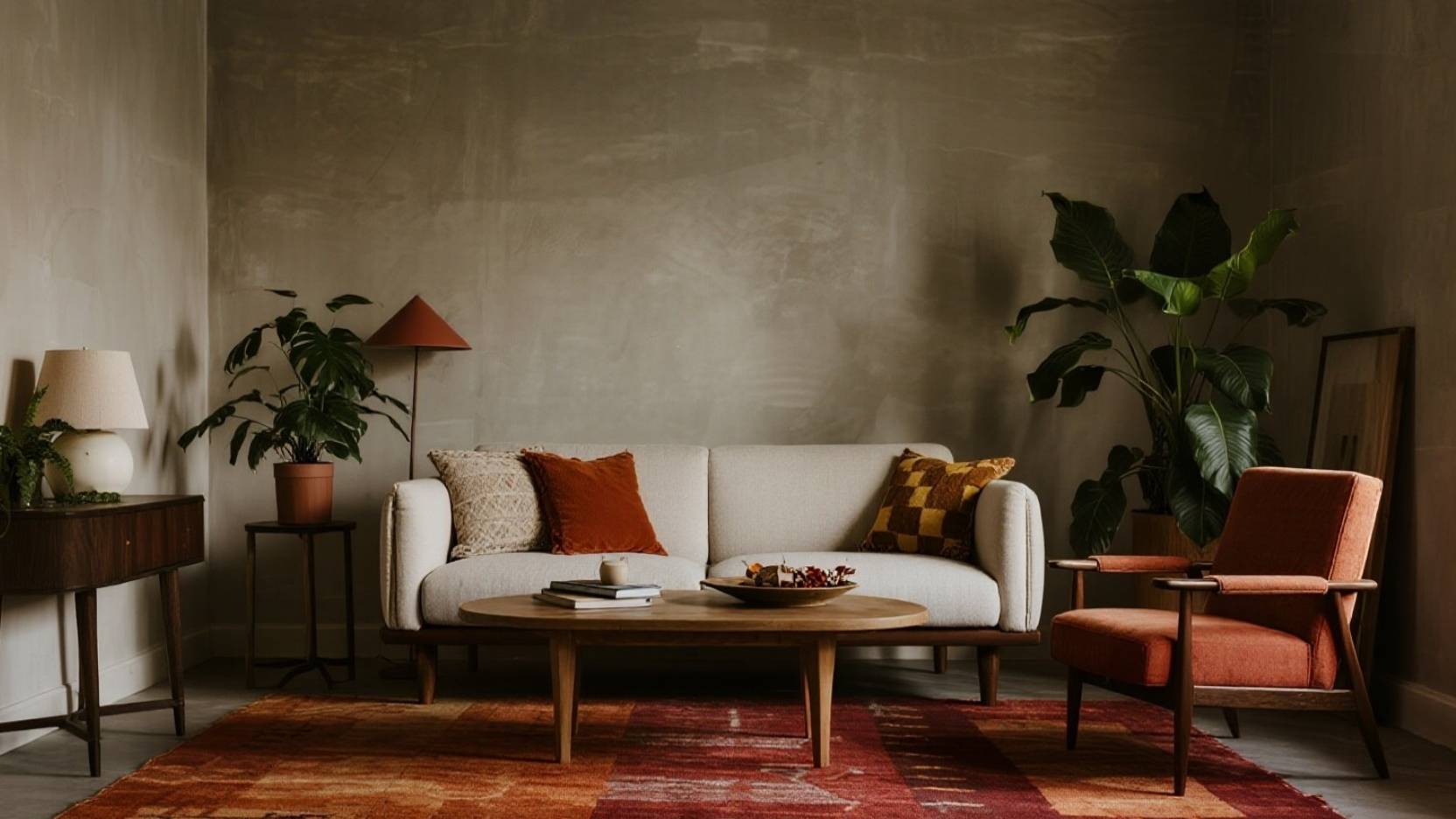
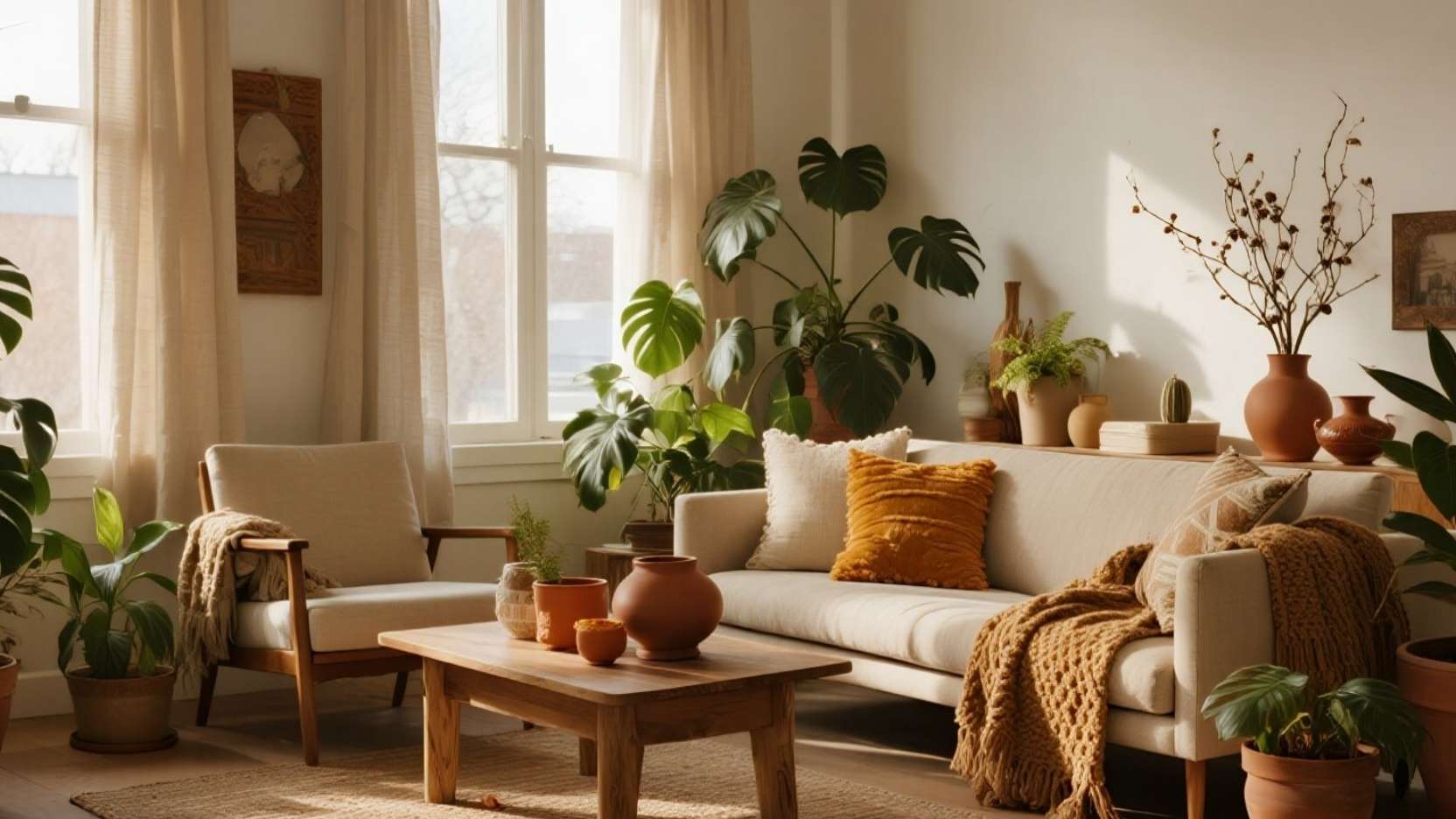
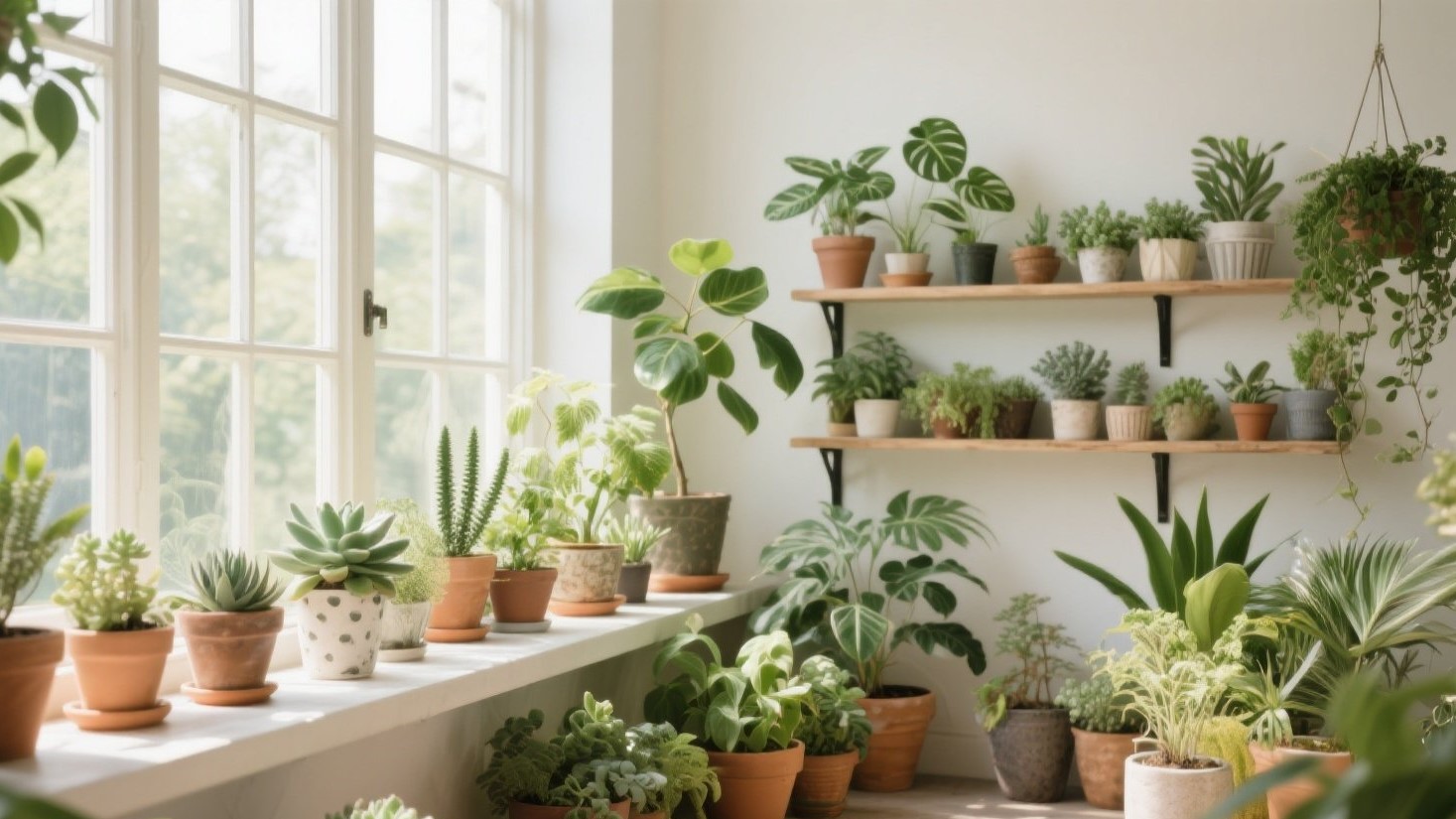
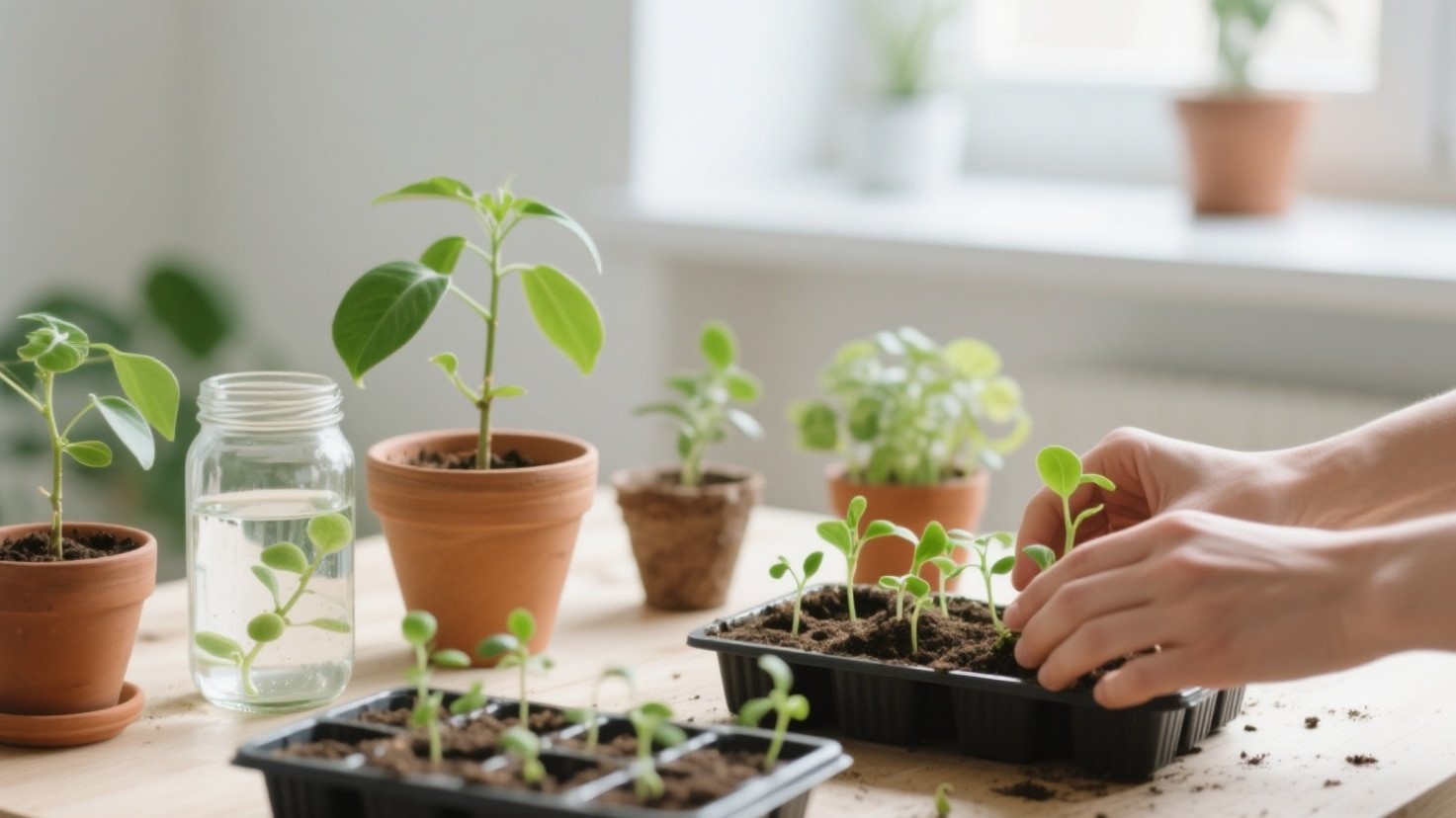
Choose a bright spot with indirect light and stable temperatures. Place a water-safe tray on a console or shelf, then arrange ceramic cachepots in a grid for a designed look. Keep a small bin for fresh mix and a cloth for quick wipe-downs.
Add a clip-on fan or open the window regularly for airflow. Label rows cleanly (painter’s tape or slate markers) to preserve the aesthetic. Build the habit: wick five minutes, dump, and wipe the rim—no evidence left behind. 🧽
Troubleshooting: Soggy Mix, Pale Leaves, Stalled Growth 🧩
If media stays wet for hours, your tray held too much water or your pots sat too long—shorten the soak and confirm drainage holes are clear. For pale leaves, check light first, then nutrition after seedlings have true leaves. Weak stems often trace back to low light and too much moisture; fix those before anything else.
If roots circle at the bottom, shorten soak times and allow more dry-down between sessions. When in doubt, up-pot into fresh mix and resume the minimal-water rhythm. Most seedling issues are environment problems wearing plant costumes. 🎭
Quick Routine (Bookmark This) ✅
- Add 1–1.5 cm water to tray.
- Set pots in contact with water.
- Wait five minutes.
- Lift pots, feel the weight—hydrated, not dripping.
- Dump all leftover water; return tray dry.
Repeat when pots feel light and the top centimeter is dry. Keep the station clean and airy. Enjoy seedling vigor without the mess. 🌿
Final Thoughts: Cleaner Habits, Stronger Starts 💬
Bottom-watering with a strict five-minute wick and dump is a tiny habit with outsized returns. You’ll get even moisture, fewer pathogens, and a seed setup that feels like décor, not clutter. The cleaner the routine, the less you’ll ever need to “rescue” plants.
Pair fresh mix, airflow, and warmth with your minimal-water method. Keep surfaces dry and trays emptied, and fungus gnats become a non-issue. Calm ritual, healthy starts, beautiful space—garden goals met. 🌸