Introduction
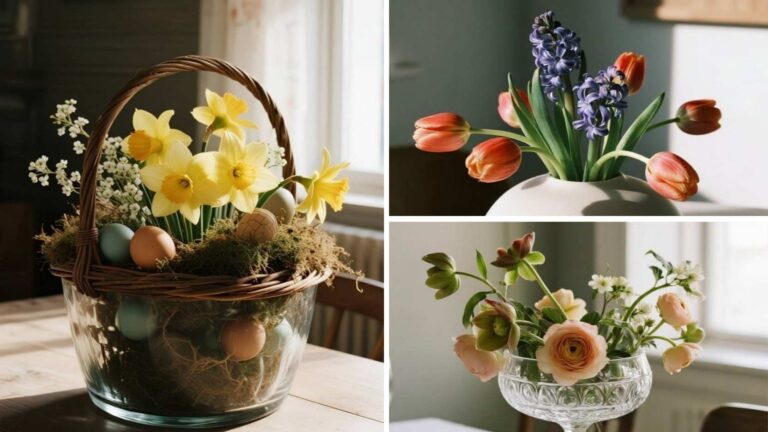
Vessel choice quietly dictates hydration, height, and your whole spring table decor story. Baskets breathe “country charm,” bowls read modern and low-slung, while compotes create airy lift and asymmetry. For Easter, that means your tulips, narcissus, and ranunculus can look cozy, sleek, or ethereal—before guests even sit down. ✨
Think of the vessel as the frame that tells flowers how to behave. Depth sets water capacity and stem support; rim width controls spread and silhouette. Get those right, and your easter flower basket, compote arrangement, or low bowl stays beautiful from Saturday prep through Monday brunch. 🌸🕊️
Quick grid: when to choose which
Use this fast selector when you’re balancing look, longevity, and table sightlines. If you need family-friendly stability and room for eggs or treats, the basket wins. If you want sleek, centerpiece-that-doesn’t-block-faces energy, choose the bowl; for sculptural lift and “floating” blooms, pick the compote. ✅
Keep in mind your weekend schedule. Longer events need deeper water and easy refills; small gatherings can prioritize shape and drama. The grid below helps you match priority to vessel in seconds. 💡
| Priority | Choose | Why | Easter example |
|---|---|---|---|
| All-day hydration | Bowl | Deep basin, easy to refill | Low tulips + hyacinths for buffet |
| Country charm + props | Basket | Hides liner, holds moss/eggs | Daffodils with pastel eggs + ribbon |
| Airy, asymmetric drama | Compote | Stem lift + negative space | Ranunculus + jasmine trailing |
| Kid-safe stability | Bowl/Basket | Lower center of gravity | Coffee-table posy for egg hunt |
| Photo-ready silhouette | Compote | Height without bulk | Dining table hero shot |
Basket pros & cons (plus Easter use cases)

- Pros: Baskets bring instant nostalgia and texture that screams Easter. They hide plastic or glass liners for stealth hydration and offer pockets for moss and treats. Handles and wide rims also make arranging forgiving for beginners. 😊
- Cons: Without a proper liner, water leaks or wicks into wicker. Shallow profiles can under-hydrate thirsty stems unless you top up often. The silhouette trends “wide,” so use restraint to avoid looking bulky. ⚠️
Try this: Line with a snug plastic insert or a cut-to-fit oven liner, then nestle a short glass vase inside. Build a greenery “collar” to lock stems, then add daffodils, tulips, and clusters of waxflower. Finish with tufted sheet moss and two or three dyed eggs tucked low so weight doesn’t tip the mass. 🥚🌿
Bowl advantages for low, modern tables

- Pros: Bowls excel at stable, low mounds that keep sightlines clear. The depth supports generous water and easy refills, extending freshness across the long weekend. A neutral ceramic bowl reads modern and lets color do the talking. ✨
- Cons: Low walls can splay stems unless you add structure. The silhouette is more “polished hotel” than “country Easter,” which may feel formal. If the bowl is very wide, the center can collapse without a grid. 🧩
Pro build: Make a 1–1.5 cm floral tape grid across the rim or use a reusable pin frog. Start with a foliage dome (pittosporum, ruscus), then add tulips, hyacinths, and clusters of ranunculus, keeping the highest point under 20–25 cm. Tuck tiny quail eggs or ribbon snippets on the moss surface without stacking weight on petals. 🎀
Compote magic for airy asymmetry

- Pros: Compotes give stems lift and create that “floating” garden look. A narrower foot with a wide rim invites graceful arcs and negative space. It’s perfect for an editorial compote arrangement centerpiece that photographs like a dream. 📸
- Cons: The higher center of gravity needs counterbalance and smart mechanics. Shallow cups can evaporate faster, so water checks are non-negotiable. Pedestals near high-traffic zones risk bumps, so place thoughtfully. 🚦
Pro build: Set a pin frog or chicken wire dome inside the compote and secure with floral clay. Add a foliage framework, then thread in ranunculus heads and trailing jasmine, letting some lines escape the silhouette. Keep dyed eggs and ribbon on the table around the foot so the design stays visually light. 🌿
Liner tricks & water-level checks for long-weekend display

Use double containment for baskets: a fitted plastic liner plus a short vase for extra depth. For bowls and compotes, anchor mechanics first, then line with a thin sheet of floral wrap to slow evaporation. Mark a discreet “fill to” point on the inner glass so anyone can top up. ✅
Check water morning and evening from Saturday to Monday. Tulips and hyacinths drink fast and keep growing, so re-snip stems if the dome loosens. If blooms flag, swap in pre-conditioned stems from a spare jar kept cool. 🌬️💧
Styling with dyed eggs, moss, and ribbon—without tipping the mass

Treat eggs and ribbon as grounding accents, not payload. Keep them low on the moss surface, never perched on petals or balancing on the rim. Aim for a 70/20/10 ratio of flowers/foliage/props so the design reads floral first. 🌷📏
Use narrow silk or grosgrain tails that tuck under stems rather than knotting weight at the rim. In baskets, coil ribbon inside the foliage collar so it peeks without dragging. In compotes, style eggs on the table runner near the foot to stabilize the pedestal visually. 🪢
Conclusion
Choose the vessel that fits your priorities—hydration, height, or mood—and your flowers will behave beautifully. Baskets bring nostalgia and hide mechanics, bowls deliver sleek weekend stamina, and compotes add sculptural lift. With liners, smart grids, and light-handed props, your Easter centerpieces will look fresh through Monday. 🌟
When in doubt, run the quick grid: event length, guest flow, and sightlines. Then match stem choice and mechanics to that container’s strengths. That’s a floral vessel guide you can reuse all spring. 🌼🗂️