Introduction: Why an “Allium Bridge” Works 🌷🧅🌻
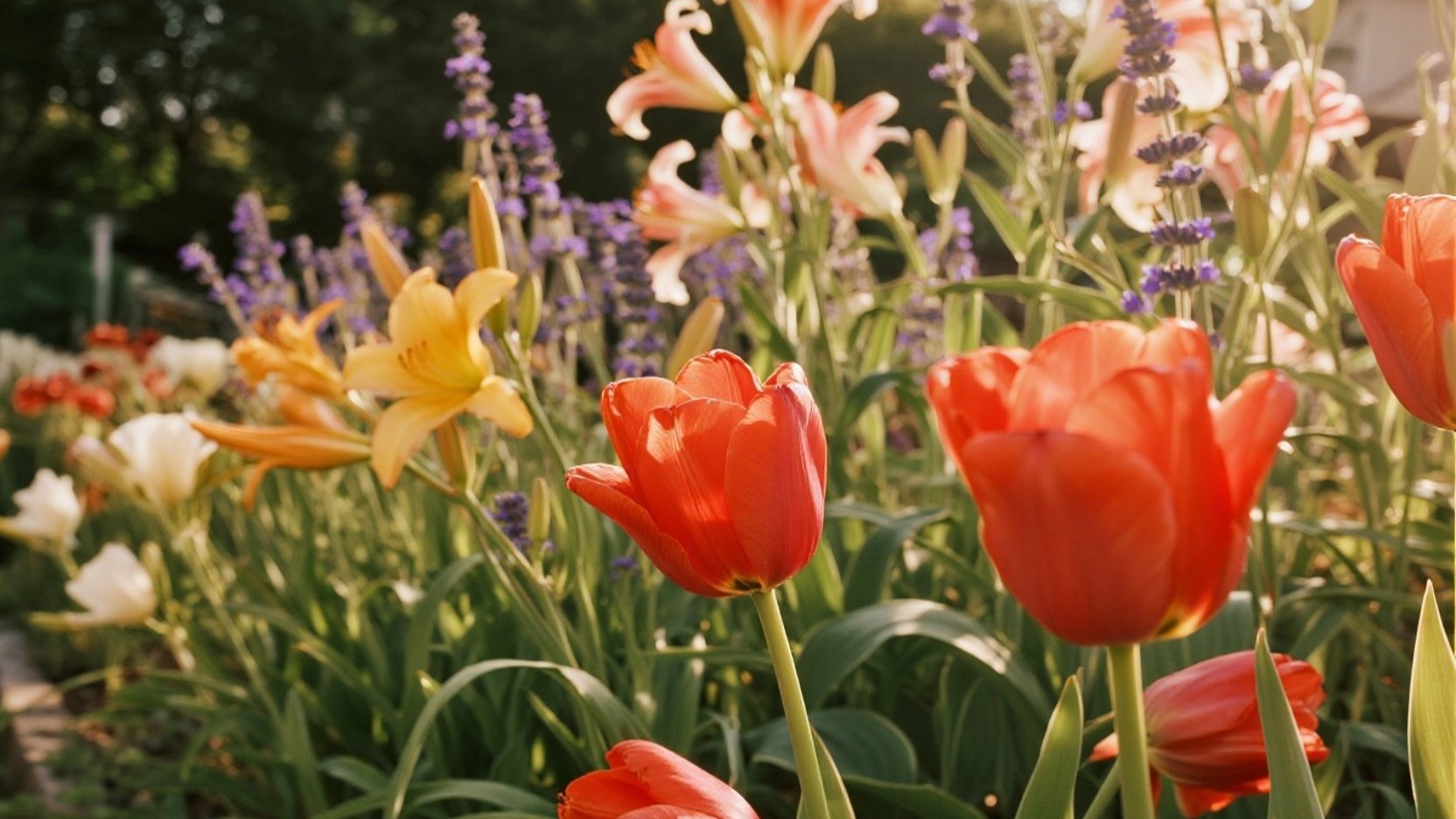
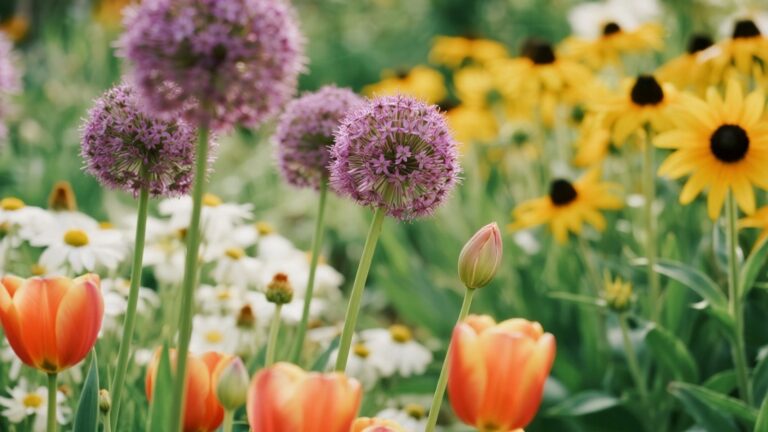
Alliums are nature’s baton pass—blooming just after tulips so your border never looks “between seasons.” They share similar cultural needs with tulips, which means your fall planting session sets both up for success. As tulip petals drop, the rising spheres of alliums take over and keep color humming.
Those architectural orbs also cue the next act by pairing beautifully with early summer perennials. Think of them as visual punctuation that organizes the show. Instead of a lull, you get a clean hand-off to summer stars with zero dead air. ✨
Bloom Timing & Sequence ⏱️
Most garden tulips peak from April to early May in cool climates, fading as days warm. Many ornamental alliums—like Allium ‘Purple Sensation’ (May) and A. ‘Globemaster’ (late May–June)—slot in right after. This extends visible bloom without changing your care routine.
Early summer perennials such as echinacea and rudbeckia hit stride from June into August. With alliums as the pivot, your border goes spring color → sculptural bridge → summer fireworks. The sequence makes your bed feel intentional, not accidental. 🎯
Site & Cultural Needs (Soil, Light, Water) 🌞🌱

Alliums and tulips both prefer full sun and well-drained, moderately fertile soil. Aim for a sandy-loam with added grit to prevent soggy bulbs, and keep irrigation light to moderate once established. In heavy soils, elevate beds or amend with coarse mineral material.
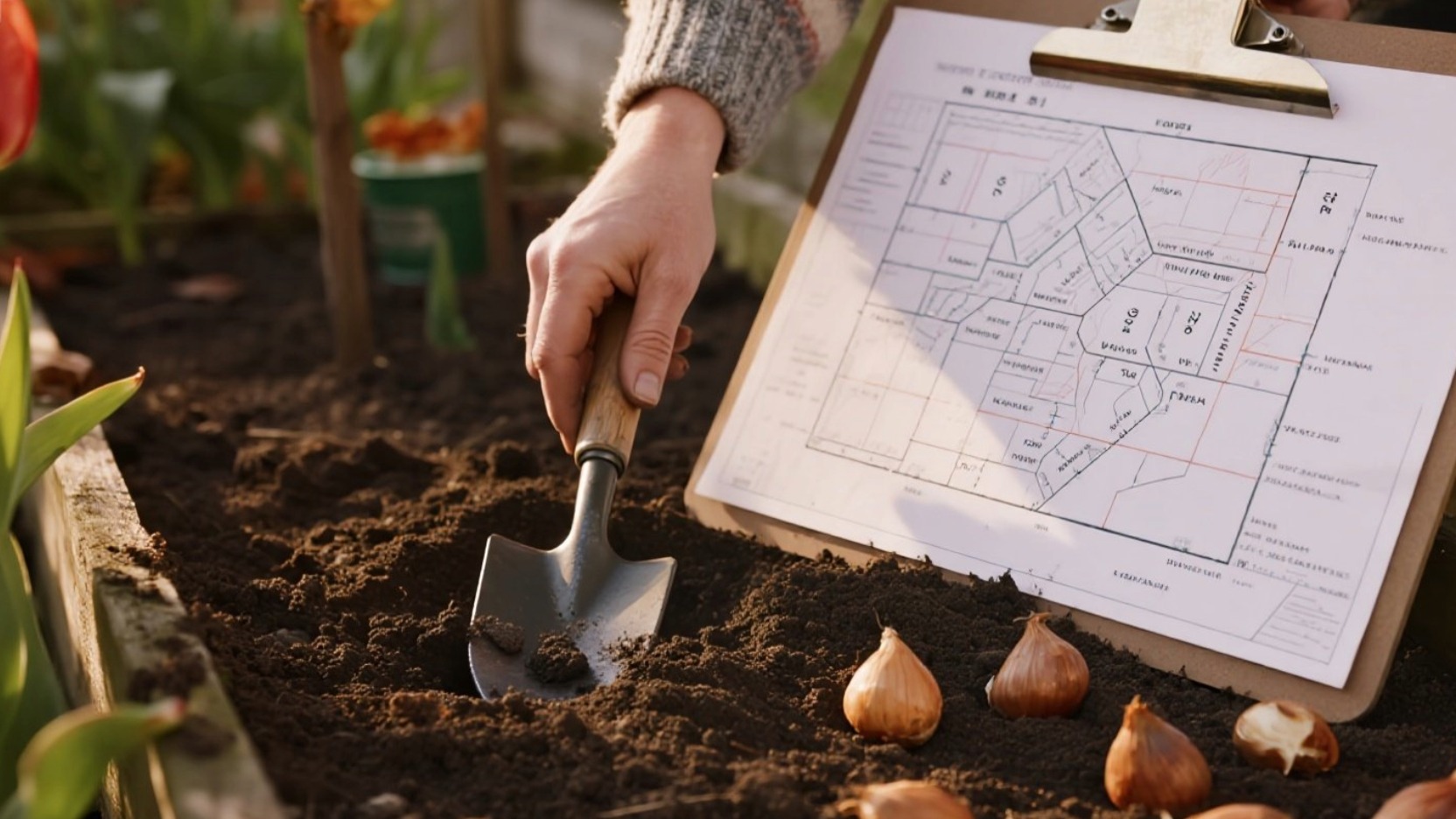
Plant bulbs in fall, setting depth at roughly 2–3× bulb height. Water in once, then let winter moisture do the rest. Avoid high-nitrogen feeding, which pushes foliage over flowers. 🌿
Design: The Combo Map (Front / Mid / Back) 🗺️
A simple placement map keeps the bridge readable from the path. Put low spring color up front, your spherical bridge in the midline, and the tall summer chorus in back. This layering creates depth without clutter.
Use the table below as a plug-and-play starting point. Swap cultivars by color while keeping heights consistent. The structure does most of the design heavy lifting. 🧩
| Zone | Spring (now) | Bridge (late spring) | Summer (handoff) | Notes |
|---|---|---|---|---|
| Front | Botanical/greigii tulips | Short alliums (A. azureum, A. cowanii) | Low catmint, dianthus | Edge color + pollinators |
| Mid | Triumph/Darwin tulips | Allium ‘Purple Sensation’ | Echinacea mix | Strong silhouette |
| Back | Bearded iris, peonies | Allium ‘Globemaster’ / ‘His Excellency’ | Rudbeckia, ornamental grasses | Height + late season movement |
Pairing with Late-Spring Stalwarts (Bearded Iris & Peonies) 🌸

Bearded iris bring vertical flags just as alliums round the composition. Their swordlike leaves contrast beautifully with allium globes, balancing sharp and soft. Choose iris tones that echo your allium hue for cohesion.
Peonies bridge fragrance and mass with their generous buds. As tulips dwindle, peony foliage fills gaps while alliums star. The trio reads luxe without being high-maintenance. 💎
Handing Off to Summer Stars (Echinacea & Rudbeckia) 🌻

Once alliums peak, their seed heads still look sculptural above emerging echinacea. By the time echinacea and rudbeckia open, the border feels freshly composed, not torn down and rebuilt. You’ll notice fewer awkward bare patches and more continuous rhythm.
Choose warm summer tones—gold, mango, raspberry—to play off purple allium remnants. Add a few ornamental grasses to carry motion and light. Your late season suddenly feels curated. 🌅
Cut Flowers & Arrangements: High-Impact Stems 💐

Alliums are long-lasting in the vase and provide instant architecture. Harvest when the globes are nearly open for best life, and flame the stem ends briefly to reduce sap seepage. Pair with late tulips and peonies for high/low texture.
Seed heads dry beautifully for sculptural arrangements. Keep a few standing in the garden as living “sculptures.” Your border becomes a cutting garden without losing design integrity. ✂️
Deer, Rodents, and Pest Resistance 🦌🚫

Ornamental onions contain sulfurous compounds that most deer and rodents dislike, making them reliable where tulips alone get grazed. While tulips are often a snack, surrounding clumps with alliums can reduce browsing pressure. Think of alliums as a friendly bodyguard.
Voles dislike the scent barrier, and squirrels are less curious around onion relatives. In pressure zones, add sharp gravel in planting holes and top-dress with crushed shells. You’ll still get the spring show—with added insurance. 🛡️
Planting Plan & Spacing Cheat Sheet 📏
For large alliums like ‘Globemaster’, space 12–18 in (30–45 cm) apart; for ‘Purple Sensation’, 8–12 in (20–30 cm) works well. Tulips in the same zone can be tucked between at 4–6 in (10–15 cm) spacing. Stagger in triangles for natural density.
Set both bulbs 2–3× bulb height deep—often 6–8 in (15–20 cm) for these sizes. Mix a handful of grit beneath each bulb to shed water. Label clumps so you don’t disturb them during summer edits. 🏷️
Maintenance Through the Seasons 🧰
After bloom, let foliage yellow naturally to recharge bulbs. Deadhead allium globes only if you don’t want seed heads; otherwise, enjoy the structure. Add a light mulch to moderate soil temps and suppress weeds.
In summer, water deeply but infrequently—bulbs resent constant wet. Divide congested clumps every few years in late summer or early fall. Avoid high-nitrogen fertilizer to keep stems sturdy. ✅
Conclusion: A Seamless Ribbon of Color 🎀
The “allium bridge” turns an awkward gap into your border’s signature move. By matching cultural needs and sequencing blooms, you get continuity without extra work. Iris, peonies, echinacea, and rudbeckia slot in like dancers hitting their marks.
You’ll enjoy spring sparkle, late-spring architecture, and a confident summer chorus. Deer resistance is the behind-the-scenes bonus that keeps the show intact. Plant once in fall, then let the seasons carry the melody. 🎶