
Introduction: The “sun-then-shade” puzzle, solved 🌞➡️🌤️
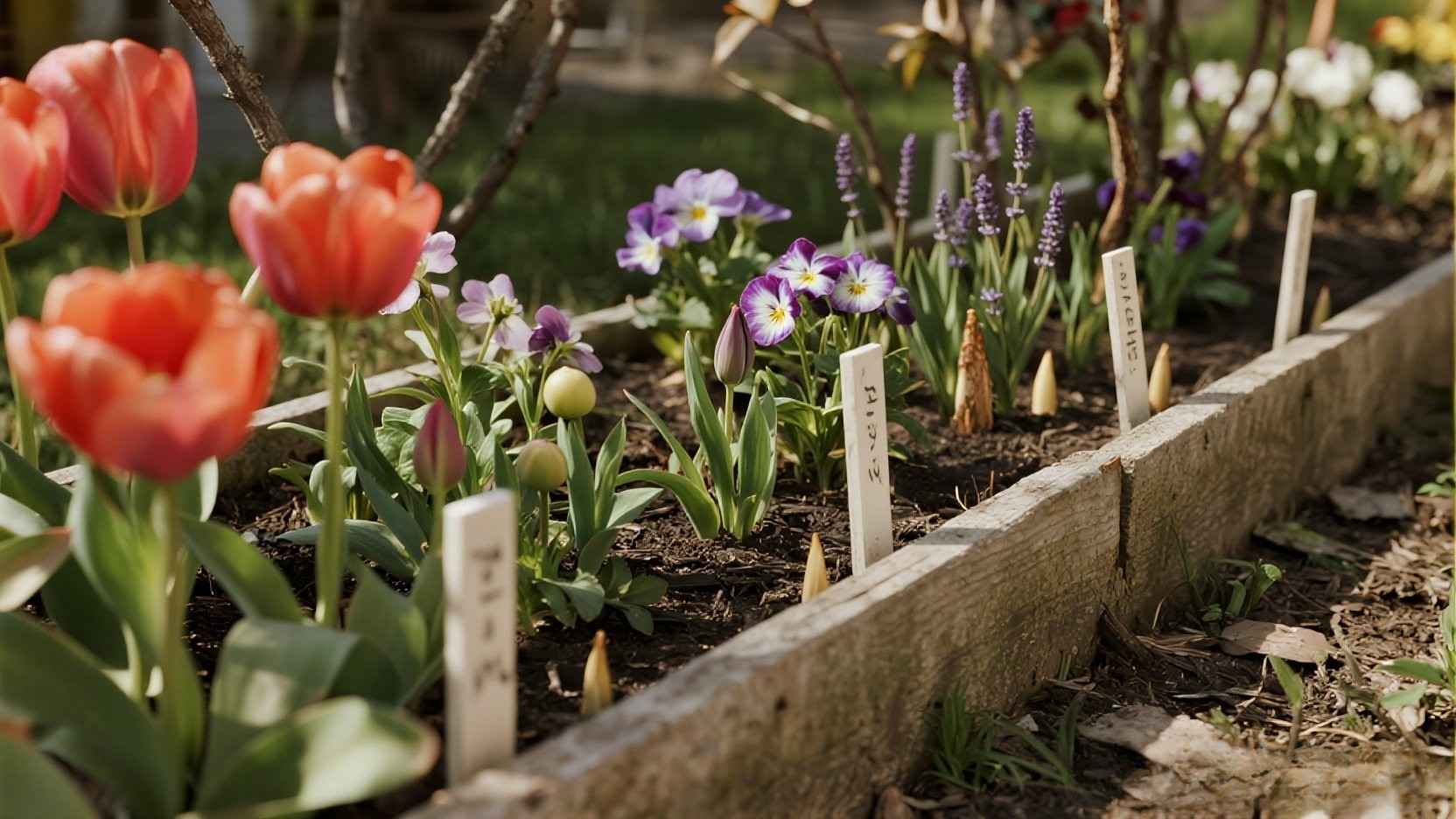
Tulips love the bright spring window before deciduous trees leaf out, but many companions stall once the canopy closes. The trick is pairing bulbs with perennials that tolerate low summer light yet don’t crowd spring growth. Think of your bed as a relay team: tulips run first; shade-savvy foliage anchors the long summer season. 🌈
This approach also fixes the “ugly duckling” phase, when tulip foliage flops but must recharge the bulb. Broad, overlapping leaves from companions hide yellowing tulip leaves without stealing spring sun. You get crisp April color, seamless June texture, and a bed that feels intentional, not patchy. ✅
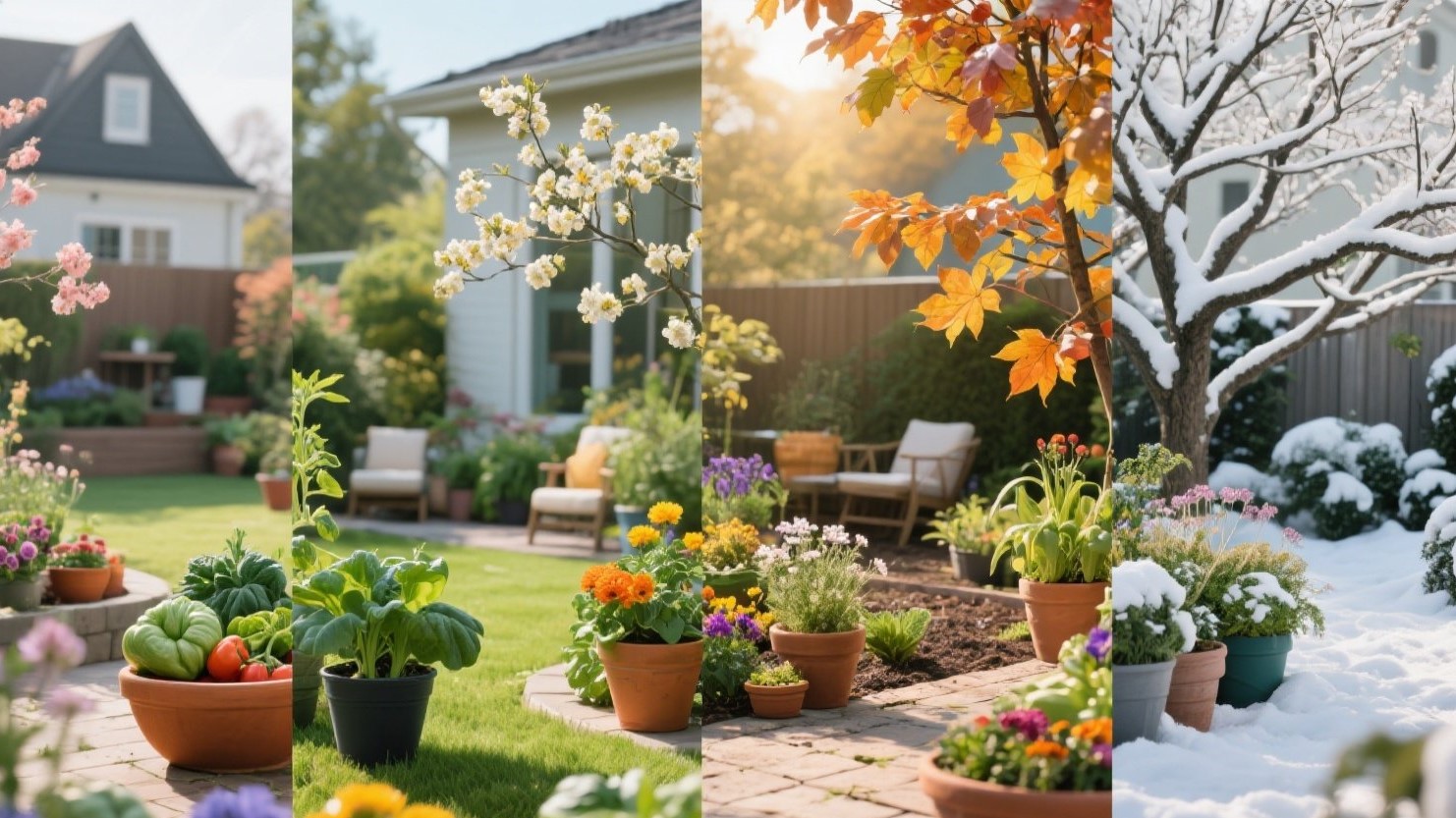
Understand the microclimate: spring sun, summer shade 🧭
Under deciduous trees, expect 4–6 hours of direct light in early spring, then high, dappled shade after leaf-out. Plan drainage carefully: tree roots want evenly moist, not soggy, soil with 5–7 cm organic mulch. Avoid heavy digging that severs feeder roots; tuck bulbs and perennials into pockets between roots. 🌱
Choose companions rated for part shade to shade by June, with good dry-shade tolerance as roots thicken. Favor perennials with large, laminate leaves that can shingle over fading bulb foliage. Keep spacing generous so tulips still receive unshaded spring light while perennials bulk up later. 📏
Core combo that works: Brunnera ‘Jack of Diamonds’, hosta, hardy geranium 💎

Brunnera ‘Jack of Diamonds’ offers huge, heart-shaped, silver-veined leaves that expand right as tulips finish. The scale and overlapping habit cloak senescing foliage without smothering bulbs. Spring sky-blue brunnera flowers also echo late tulip tones for a graceful handoff. 💙
Hosta brings bold texture and dependable shade performance; choose slug-resistant, thicker leaves for longevity. Varieties from blue to chartreuse let you tune light levels and contrast with tulip colors. Hardy geranium (e.g., Geranium x cantabrigiense types) weaves a breathable, flowering ground layer that stays tidy. 🌿
Layout blueprint: bulbs mid-bed, leaf-heavy perennials around/above 🗺️

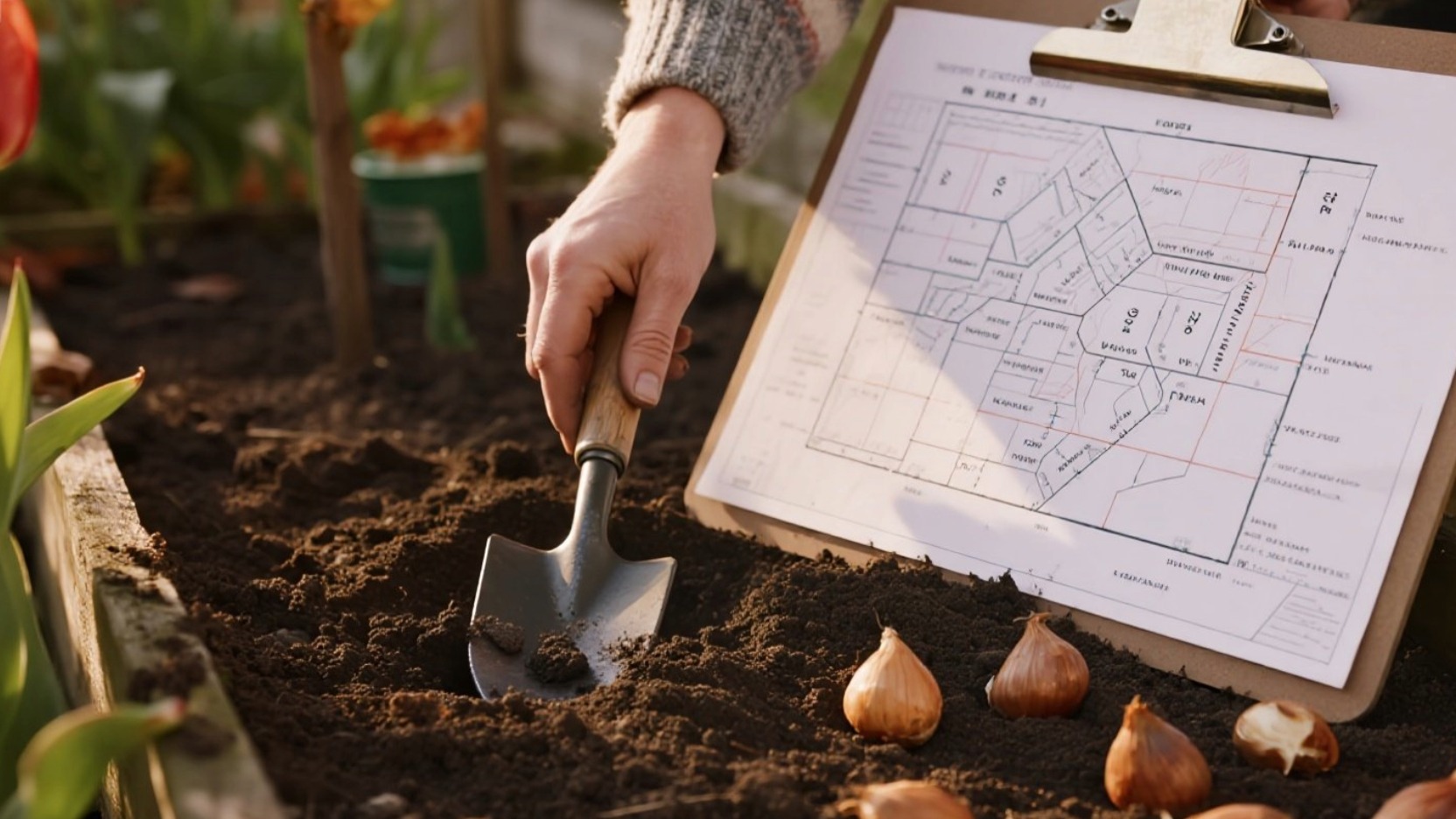
Set tulips in mid-bed drifts where early sun penetrates, aiming for 10–12 cm deep and 10–12 cm apart. Encircle those pockets with brunnera and hosta so their expanding leaves can “shingle” over spent foliage. Thread hardy geranium through gaps to knit the surface and reduce weeding. 🧶
Layer heights thoughtfully: tulip blooms at 30–50 cm, brunnera/hosta at 35–60 cm, geranium at 15–25 cm. This creates a soft dome that hides tulip die-back yet preserves air flow. Use curved drifts rather than tight rings to avoid a “bullseye” look and to mimic natural spread. 🎯
Walkway-side edging: low spring bloomers (phlox, iberis) 🚶♀️

Along paths, creeping phlox (Phlox subulata) makes a spring color carpet that enjoys the same early light. Iberis sempervirens (candytuft) provides evergreen mounds that anchor structure when tulips fade. Keep this edging 20–30 cm tall so it never shades mid-bed bulbs in April. 🌸
Stagger phlox and iberis in 30–40 cm repeats for a continuous ribbon. In summer shade, flowering slows but the foliage still frames the bed crisply. Clip lightly after bloom to encourage dense mats and stop encroachment onto the walkway. ✂️
Planting & care calendar: simple steps for reliable returns 📅

Fall (prime time): plant tulips when soil cools (roughly 7–10 °C), adding bulb-friendly grit for drainage. Install brunnera, hosta, and geranium as potted perennials, watering to settle roots. Top with a thin compost layer and 5 cm mulch, keeping crowns and bulb tips clear. 🍂
Spring: let tulip foliage yellow naturally for 4–6 weeks after bloom to recharge bulbs. Begin light feeding of perennials with balanced, slow-release nutrients; avoid high nitrogen that flops leaves. Spot-water during dry spells—tree roots compete hard even in shade. 💧
Why big leaves matter: concealment, cooling, continuity 🛡️
Large leaves act like shingles, visually tucking away the tulip “messy middle.” They also shade soil, reducing evaporation and keeping roots cooler under competition. Consistent leaf mass carries the bed’s presence when flowers pause, so the space never looks empty. 🌬️
Brunnera’s oversized hearts, hosta’s bold ovals, and geranium’s lacy fans create a readable texture contrast. This mix avoids a monotone blob while staying cohesive in shade. The result is a garden that photographs beautifully from April to August without constant edits. 📸
Troubleshooting & pro tips: longevity, critters, and color harmony 🧰
If tulips weaken after a few years, refresh with new bulbs or shift to botanical tulips (often better at perennializing). Use bulb baskets or sharp-grit pockets to deter squirrels and improve drainage. Where deer pressure is high, interplant inconspicuous rings of alliums to discourage browsing. 🐿️🦌
Color-tune the combo: silver-leaf brunnera cools hot tulip tones; chartreuse hosta brightens deep reds and purples. Keep bloom sequencing: early-mid tulips up front, mid-late types slightly behind, so the show advances backward. Edge lightly twice a year to maintain the clean walkway line and sightlines. 🎨
Quick Specs & Spacing (cheat sheet) 🧪
Tulips: 10–12 cm deep, 10–12 cm apart; best in Zones roughly 3–8 with winter chill. Brunnera ‘Jack of Diamonds’: 45–60 cm spread; part shade; even moisture. Hosta (thicker-leaf types): width 45–75 cm; part to full shade; mulch for root comfort. 🌡️
Hardy geranium (ground layer): 30–45 cm spread; part shade; shear lightly after first flush. Creeping phlox (edge): full sun in spring, tolerates summer dapple; quick clip post-bloom. Iberis (edge): evergreen mounds; free-draining soil; light shearing for shape. ✨
Summary: a reliable relay from April sparks to August calm 🌟
Design for the calendar you actually have: bright spring, then benevolent shade. Center tulips where spring sun lands, surround with broad-leaf shade anchors, and finish with a neat, low edge. Your bed flows—from tulip theater to leaf couture—without a gap in beauty. 💚
With this shade-smart formula, maintenance becomes light edits, not monthly overhauls. Plants grow into their roles, concealing what needs hiding and highlighting what deserves attention. That’s the quiet luxury of a bed that solves sun-then-shade by design, not by chance. 🌿