
Introduction: Why ‘Late to Emerge’ Keeps Tulips in the Spotlight 🌟
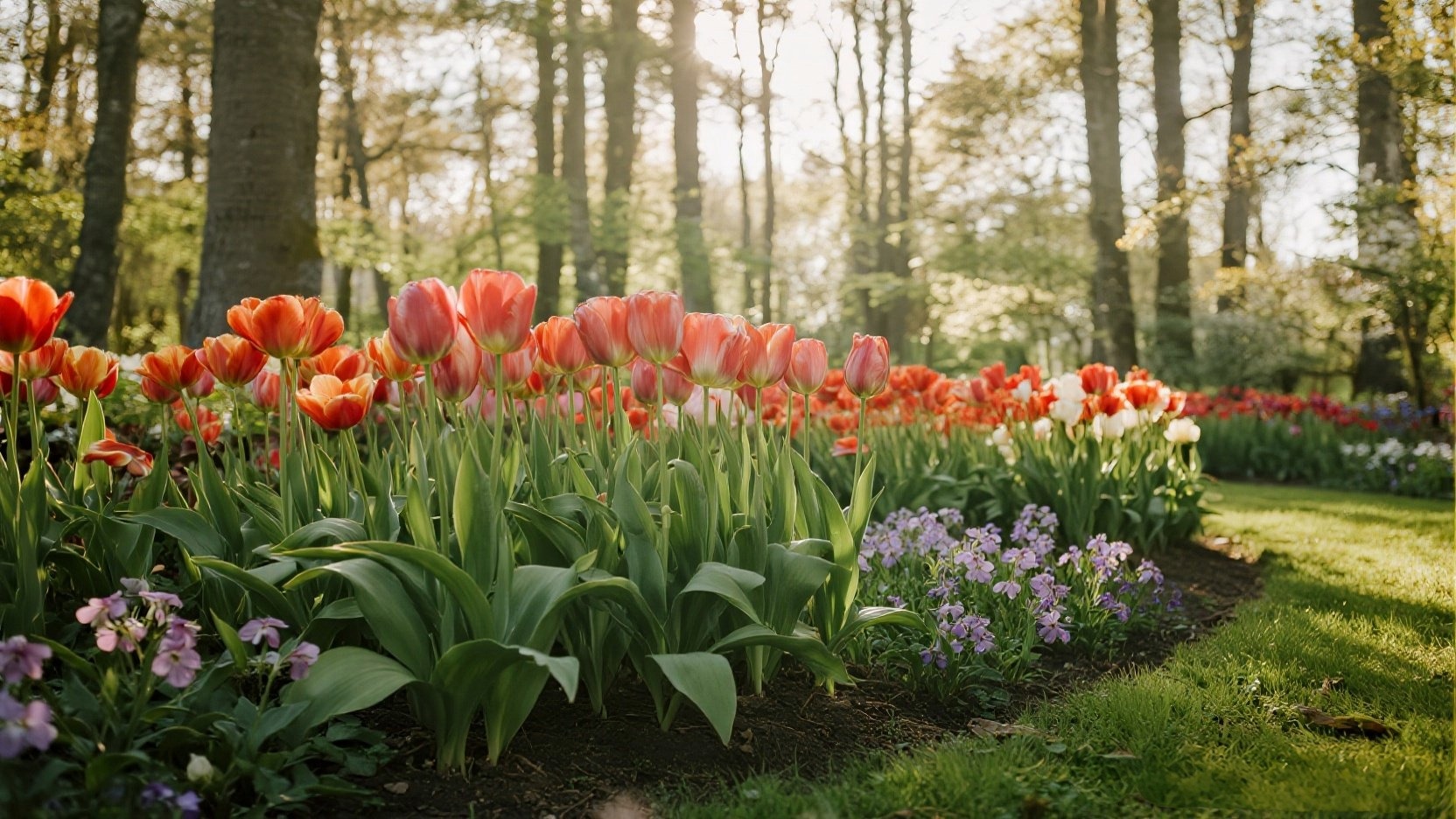
Tulips want an uncluttered stage in April, and late-emerging perennials don’t elbow in until the bulb show is over. By choosing plants that wake up slowly, you prevent spring foliage from smothering tulip leaves as they recharge. Think of it like a relay: tulips sprint first, then summer perennials carry color into July and beyond. 🌈
This sequencing also solves the “ugly phase” when tulip foliage flops but must photosynthesize. Late risers spread fresh growth to mask decline without stealing light during peak bloom. You get continuity of interest, better bulb performance, and a bed that looks intentional instead of patchy. ✅
The Strategy: Pick Later Risers and Plant the Gaps 🧩
Late-emerging choices include balloon flower, summer phlox, Russian sage, and daylily, all of which push serious growth after tulips fade. Place them in the “in-between” spaces where tulip clumps don’t need air or light in spring. Aim for contrasting shapes—spikes, domes, and wands—so the bed has rhythm. 🎼
Layer heights like shelves: daylily and balloon flower mid-border, Russian sage to the back, and phlox where you want a dome of color. Keep 12–18 inches around each tulip clump for airflow during die-back. When foliage yellows, discreetly tuck it under neighboring leaves and let the late crew hide the rest. 🙌
Plant Profile: Balloon Flower (Platycodon grandiflorus) 🎈

Balloon flower is a true late-starter, often sleeping through early spring and rising as bulbs wrap up. Its inflated buds and clean vertical stems pop above receding tulip leaves. Choose compact cultivars if wind is an issue, and allow a sunny, well-drained spot. 💙
Cut back spent stems once in summer to encourage a tidier mound and a modest reflush. Avoid heavy spring mulch directly on crowns, as this species prefers warmth to wake. Pair with daylily to contrast starry blooms against strap-like foliage for easy texture wins. ✨
Plant Profile: Summer Phlox (Phlox paniculata) 🌸

Summer phlox brings mid-to-late summer domes of color and rises slowly enough to dodge tulip shade conflicts. Modern mildew-tolerant varieties hold foliage better into late season. In richer soil, it fills the space left by tulips and anchors the center of the border. 🌿
Give it full sun in cooler zones or afternoon shade in hot summers to reduce stress. Water deeply but infrequently to train roots and cut down disease. Pinch once in late spring for stockier plants and an even bloom canopy. ✂️
Plant Profile: Russian Sage (Salvia yangii, formerly Perovskia) 🪄

Russian sage wakes late on woody crowns, then erupts into silver stems and lavender haze. Its see-through texture screens the last tulip leaves without forming a smothering mat. Drought-tolerant and sun-loving, it thrives in lean, well-drained soil. ☀️
Cut the woody framework down to a low stool in early spring, but not to ground level. Avoid high-nitrogen feeding to keep stems upright and aromatic. Pair behind phlox to create a gauzy backdrop that glows at golden hour. 🌅
Plant Profile: Daylily (Hemerocallis) 🌼

Daylilies send up tidy fans just as tulips decline, offering a green screen that hides messy bulb die-back. With staggering bloom windows across cultivars, you can extend color through much of summer. Their clumps also mark where not to dig as you expand the bed. ✅
Choose early-to-midseason bloomers to bridge June into July. Divide every 3–5 years to maintain vigor and keep the foliage dense enough to cover gaps. Deadhead spent scapes to focus energy on roots and next year’s performance. 🔁
Zone Notes & Sun Requirements 🗺️
-
Balloon flower: Zones ~3–8; full sun to part sun; prefers warmth to break dormancy.
-
Summer phlox: Zones ~4–8; full sun in cooler regions, light afternoon shade where summers scorch.
-
Russian sage: Zones ~4–9; full sun; best in dry, well-drained soils.
-
Daylily: Zones ~3–9; full sun for bloom, part sun acceptable in hot zones with adequate moisture. 🌤️
Match sun to your hottest month, not just spring conditions. What seems “sunny” in April may be partial by July when trees leaf out. Re-assess after one full season and slide plants forward or back to keep them in their preferred light band. 🔎
Marking Bulb Positions for Future Dividing & Interplanting 📍
Mark tulip clumps right after bloom using golf tees, short bamboo, or discreet stones. Log a quick sketch with spacing notes so you don’t slice bulbs when adding perennials later. These cues help you lift, divide, or shift bulbs without guesswork. 📝
As tulip foliage fades, top-dress with compost and keep markers in place until fully dormant. When interplanting, position late perennials 6–10 inches off the bulb’s densest core. This preserves bulb vigor while letting perennials own the space by midsummer. 🧭
Maintenance Rhythm: Divide, Shear, Stake—Simple and On Time ⏱️
Divide daylilies in late summer or very early spring when clumps thin at the center. Shear balloon flower lightly after first flush to neaten and encourage sporadic blooms. For phlox, pinch once in late spring, then deadhead to reduce mildew pressure. ✂️
Use slim, unobtrusive stakes or a single hoop early for taller phlox—support set before storms keeps stems straight. Cut Russian sage back in early spring to a low framework and skip heavy feeding. Finish with a quick monthly check: weeds out, mulch fluffed, markers verified. 🧰
Quick Layout Recipe (Example Bed, 6×10 ft) 📐
Plant three tulip clumps front-middle-back with 16–18 bulbs per clump for a strong spring moment. Tuck two daylily clumps in front of the back tulips, one balloon flower near center, and a drift of Russian sage along the rear edge. Slot two phlox domes midline to bridge color from early summer into late. 🎯
Maintain 12–18 inches of clear “breathing room” around each tulip clump through spring. After foliage yellows, disguise with expanding perennial leaves, not extra mulch. Review sunlight in midsummer and adjust positions after first season if blooms lag. 🔄
Mini Buying & Spacing Notes 🛒
Choose compact balloon flower cultivars (12–18 in) where wind exposure is high. Select disease-tolerant phlox lines and space 18–24 in for airflow. For Russian sage, plan 24–36 in width; for daylily, 18–24 in per clump to keep the green screen dense but not congested. 📏
Summary: A Clean Handoff from Spring to Summer 🏁
Late-emerging perennials let tulips finish their job while setting up your summer show. With smart markers, right-sized spacing, and a light maintenance rhythm, gaps vanish without sacrificing bulb health. Your bed reads as one continuous story—from April crescendo to August encore. 🎶🌺