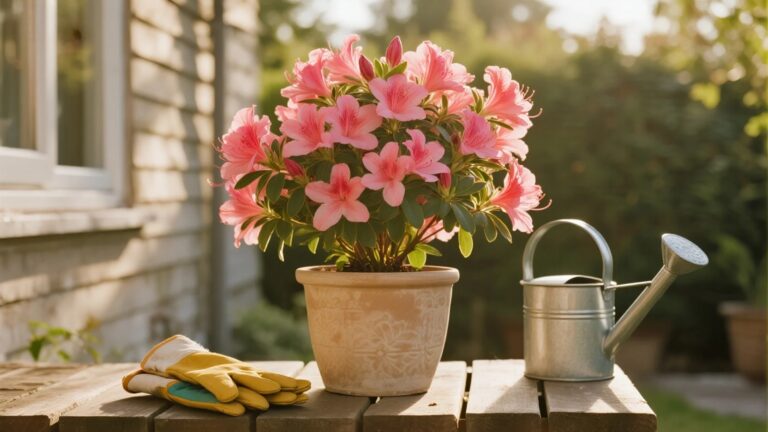
Azaleas are beloved flowering shrubs that bring spectacular color to gardens and homes. While they can be a bit particular about their care, understanding a few key principles will help you keep your azalea thriving and blooming year after year. Here’s your complete guide to azalea care in simple terms.
1. Light: Sun Worshippers With Some Limits
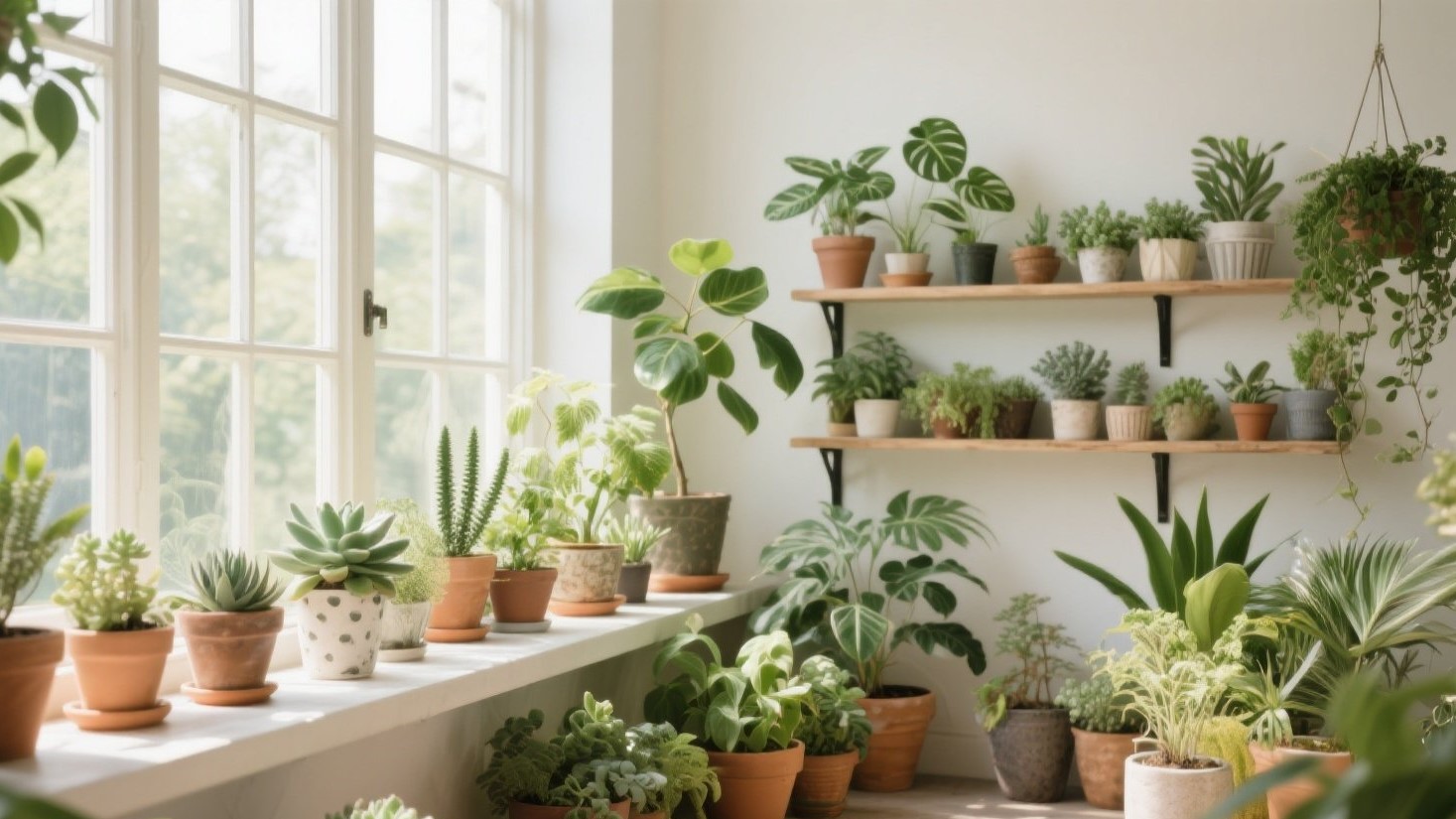
Azaleas need plenty of bright light to produce their famous blooms. Place your potted azalea on a south or east-facing patio or windowsill where it will receive at least 4-6 hours of sunlight daily. While they love light, in very hot climates, they appreciate some protection from intense afternoon sun. Without enough light, your azalea won’t form flower buds and may drop leaves.
2. Watering: Consistent Moisture is Key
Keep the soil evenly moist but not soggy. Check the soil daily by touching the surface – if it feels slightly dry to the touch, it’s time to water. Azaleas have fine roots that can quickly suffer if the soil dries out completely. With experience, you’ll learn your plant’s watering rhythm, which changes with the seasons.
3. Soil: The Foundation for Success
- Well-Draining Mix: Use a quality potting mix labeled for acid-loving plants or a blend containing peat moss
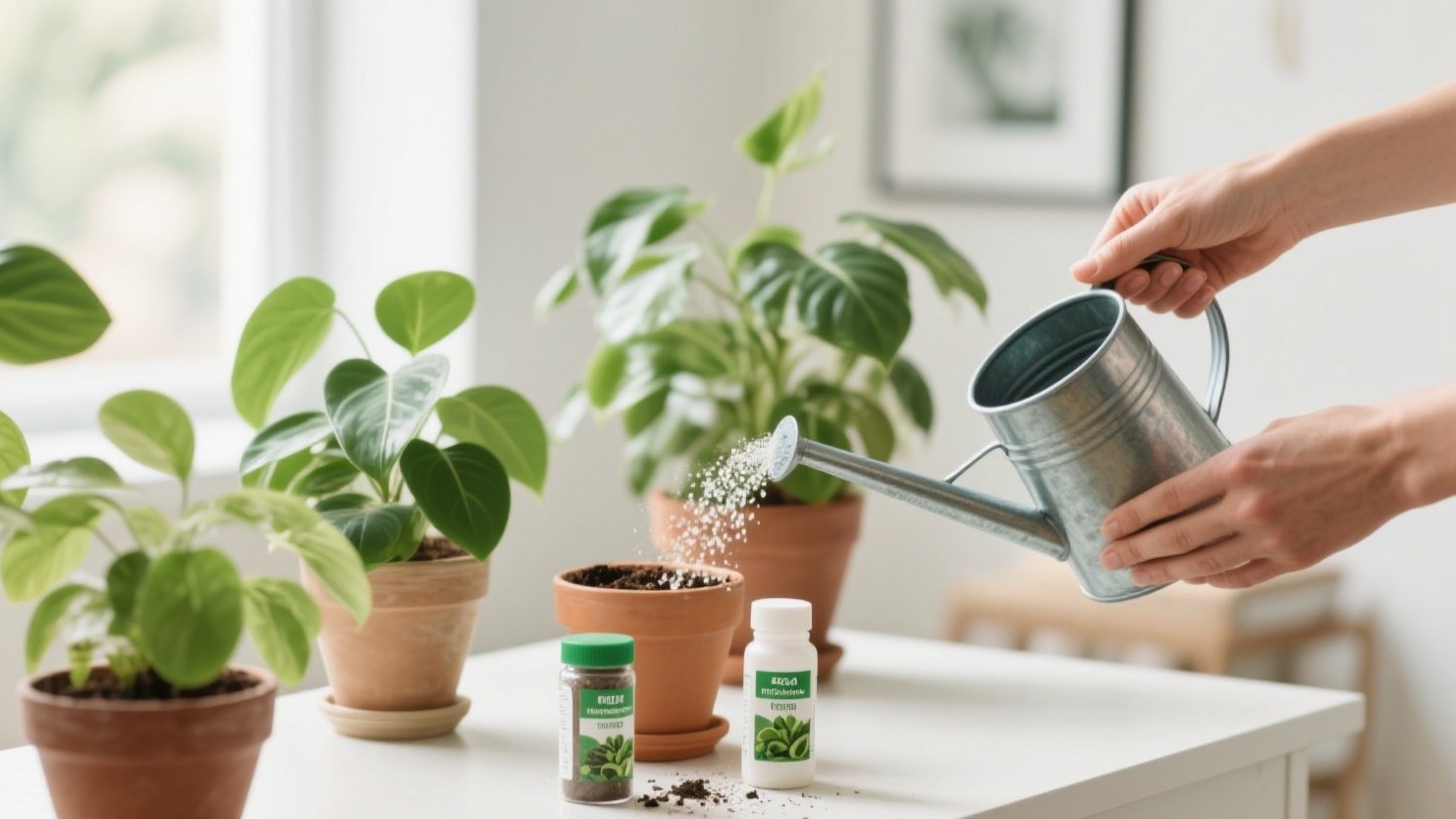
- Acidity Matters: Azaleas need acidic soil to thrive. Tap water can make soil more alkaline over time. Monthly, use a soil acidifier (available at garden centers) or mix a solution of 1 teaspoon vinegar per gallon of water to maintain proper pH.
4. Repotting: When and How
Repot in spring after flowering, but only when roots have filled the current container. When repotting:
- Choose a new container only 1-2 inches wider than the current one
- Use a similar soil type to what the plant is accustomed to
- Ensure the new pot has good drainage holes
5. Air Circulation: Give Them Space
Good air flow helps prevent disease. If growing indoors, place your azalea where there’s some air movement, but avoid direct blasts from heating or cooling vents. Outdoors, space plants so leaves don’t touch, allowing air to circulate freely.
6. Feeding Your Azalea
- Growing Season: Use a fertilizer for acid-loving plants according to package directions
- Bloom Time: When buds appear, switch to a bloom booster fertilizer higher in phosphorus (the middle number on fertilizer packages)
- Off-Season: In winter, you can top-dress with compost or well-rotted manure to enrich the soil
7. Winter Care
- In cooler regions (below USDA zone 7), bring potted azaleas indoors before temperatures drop below 40°F
- Place in a cool, bright location and reduce watering
- Increase humidity by misting leaves regularly or using a humidifier
8. Pruning for Health and Shape
- Remove any dead or yellowing leaves as you notice them
- After flowering, you can shape the plant by trimming leggy branches
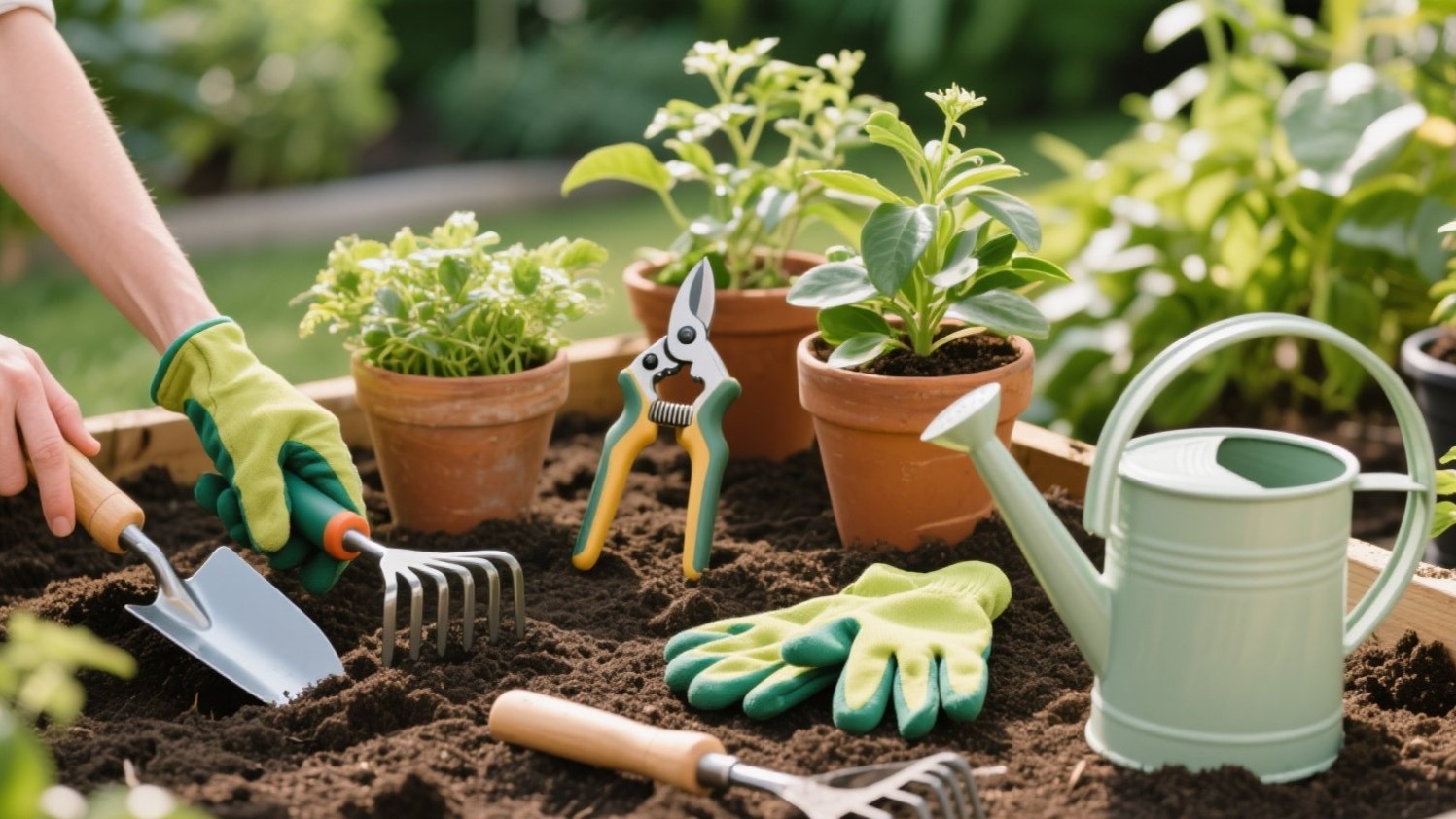
- Always use clean, sharp pruners to make clean cuts
9. Making New Plants
Azaleas are easy to propagate from cuttings:
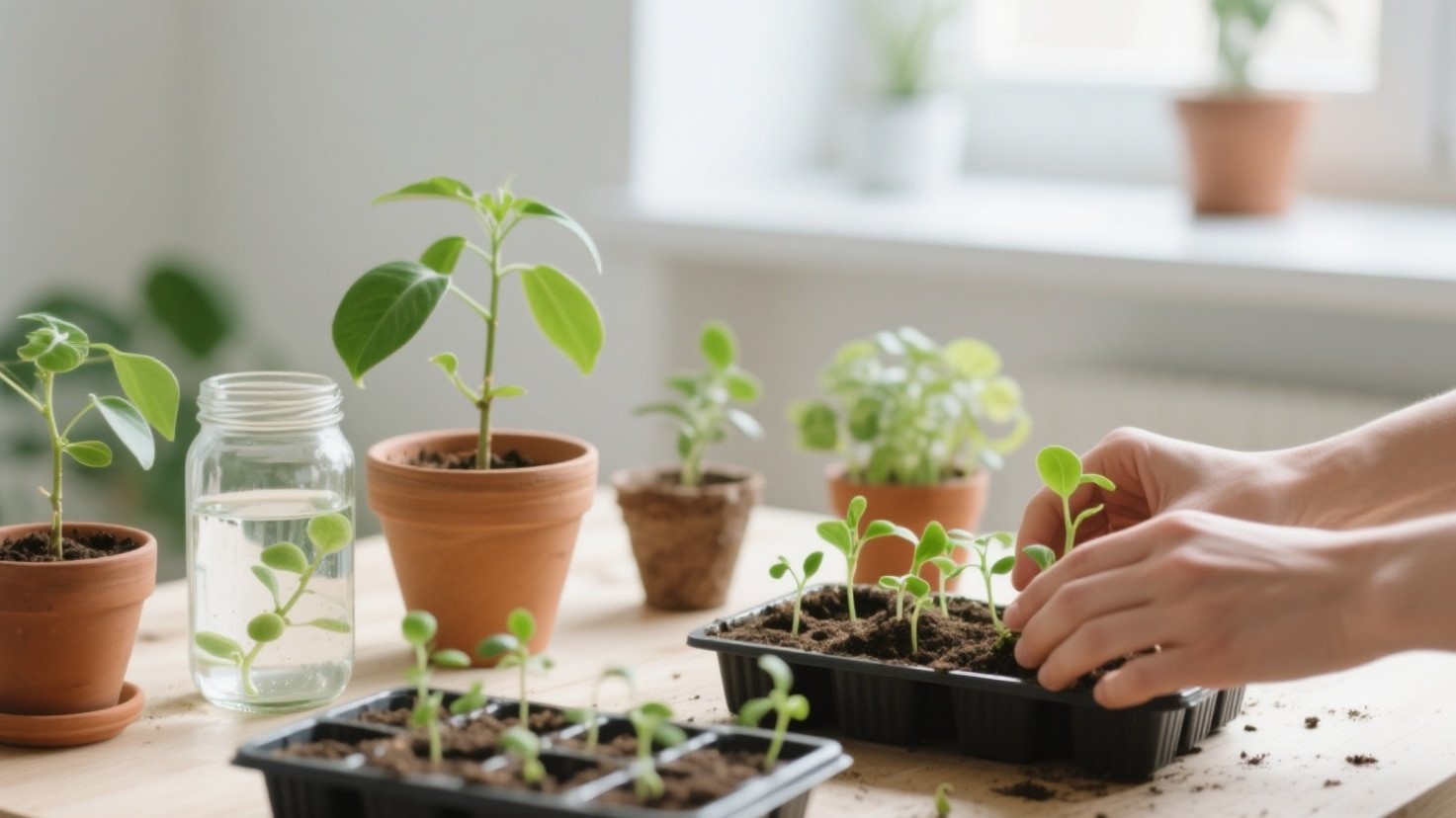
- Take 4-6 inch cuttings from new growth
- Remove flowers and soft tip growth
- Dip the cut end in rooting hormone (available at garden centers)
- Plant in moist potting mix and keep consistently moist until roots develop
Troubleshooting Tips:
- Yellow leaves: Often indicates soil is not acidic enough
- Dropping buds: Usually caused by uneven watering or sudden temperature changes
- No flowers: Typically due to insufficient light or improper pruning timing
Remember that azaleas are resilient – even if yours loses its blooms or drops some leaves, with proper care it will likely bounce back. The key is providing consistent moisture, adequate light, and acidic soil conditions. Your reward will be spectacular seasonal flowers that make the extra care worthwhile.