Introduction: A Walk Becomes a Work of Art 🍂
A simple stroll through your yard or a nearby field can supply everything you need for soul-warming autumn décor. When you learn to pick, press, and layer wildflowers, seed heads, and berries, you turn fleeting color into lasting keepsakes. The secret is balancing shapes and tones to capture that “forest-edge” glow that feels both wild and refined. 🌾
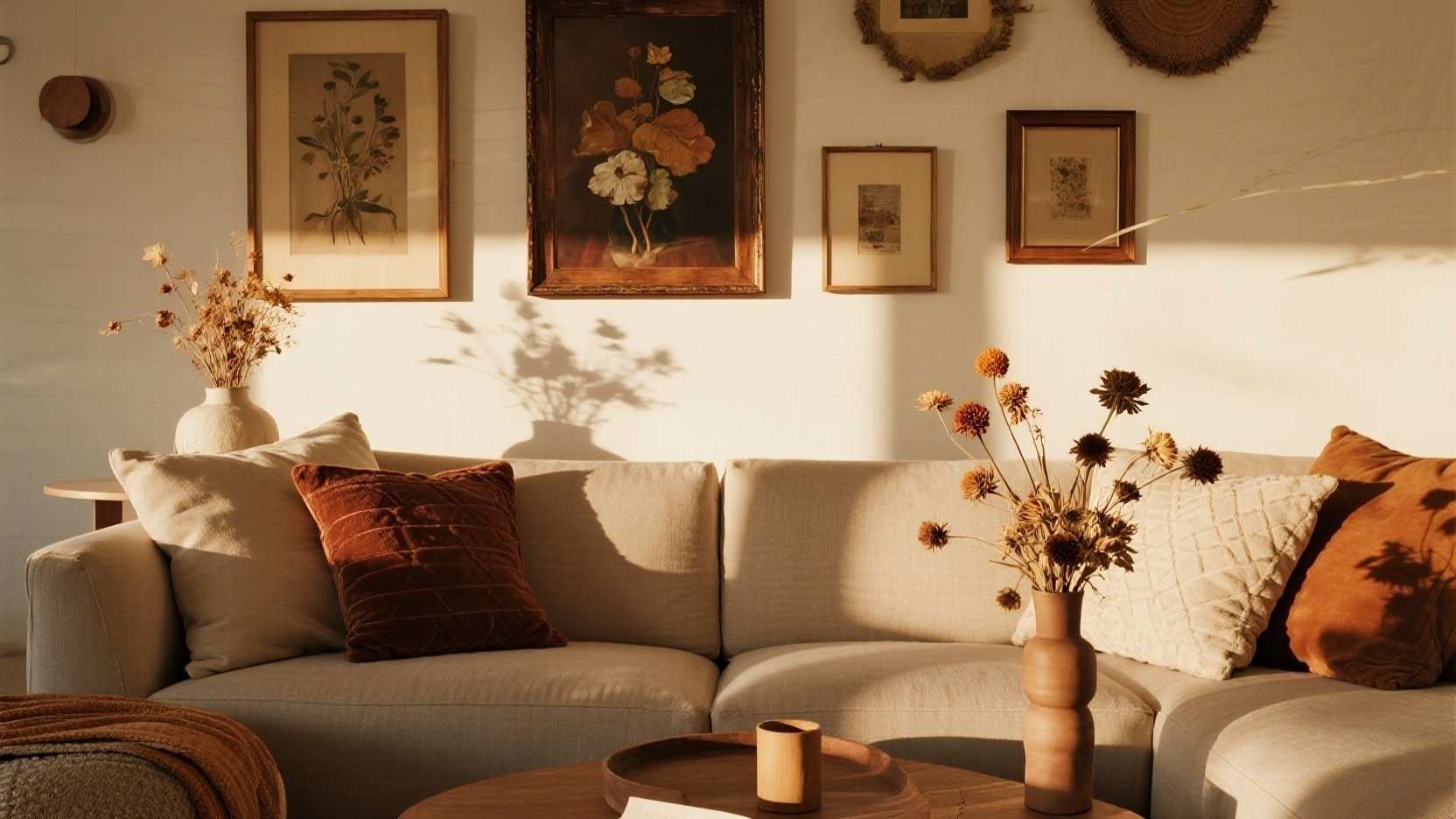
Think of your finished piece as a low, horizontal collage made for mantels and shelves. This format lets the eye travel like a woodland path, with quiet pauses and bright accents. It’s also a perfect gift—personal, seasonal, and easy to customize for someone’s home palette. 🎁
Gather & Select: Field-to-Home Foraging 🌿
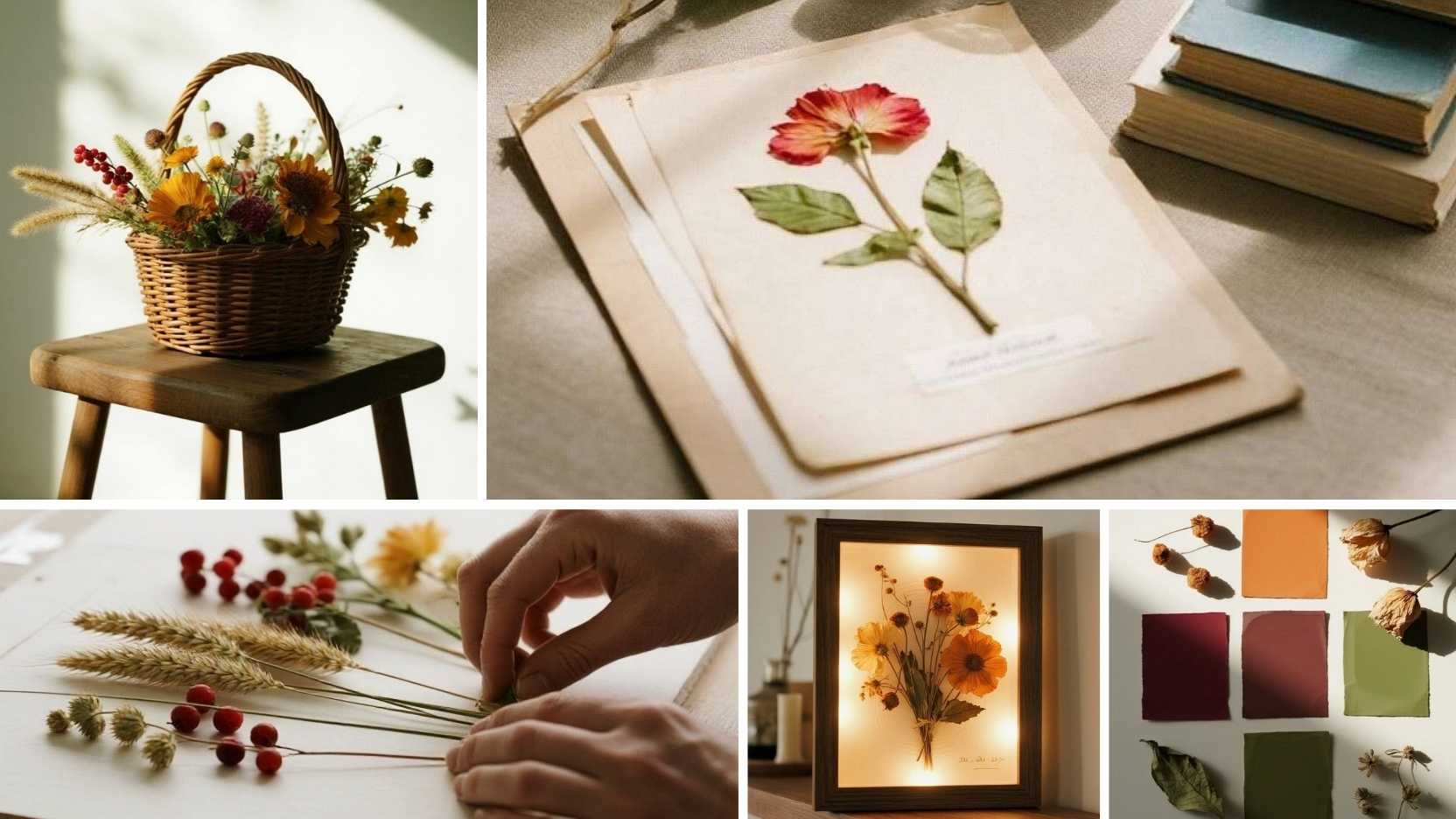
Forage on a dry morning after dew has lifted to reduce browning and mold. Choose a mix of forms: airy (grasses), spikes (lavender or salvia), disks (daisies), bells (campanula), and berries for dots of color. Avoid roadside sprays and unknown species; if in doubt, leave it out and focus on familiar garden or meadow plants. ✅
Snip stems longer than you think you’ll need so you can trim during design. Carry a paper bag or breathable basket, not plastic, to prevent sweating. Group finds by color families—ochres, russets, plums—and you’ll save time later at the table. 🎨

Preserve & Prepare: Pressing, Drying, Conditioning 🧪
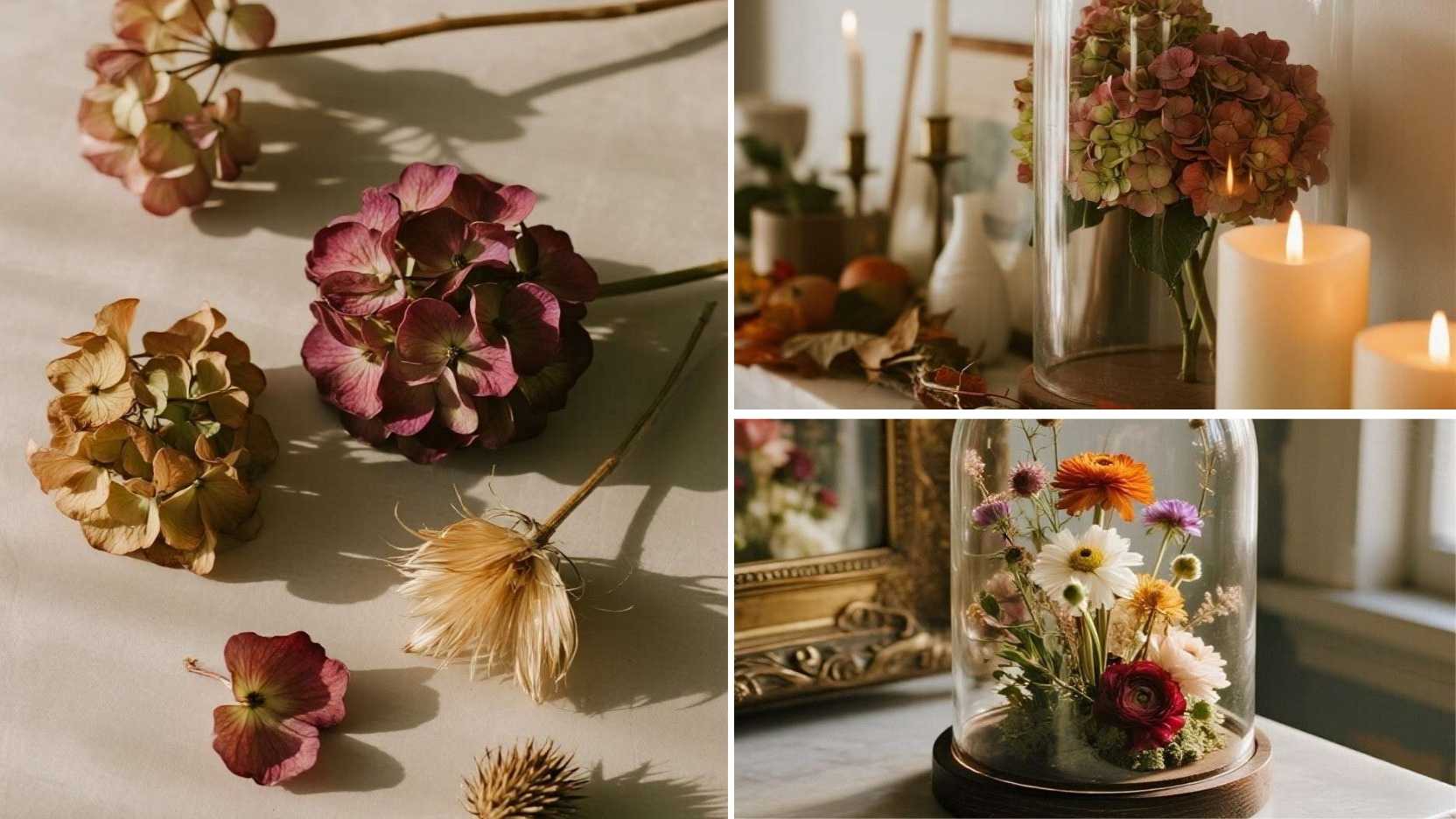
Press flat blooms between parchment in heavy books for 5–10 days, changing papers every 48 hours. For fuller petals, use silica crystals in an airtight container for 2–7 days to retain shape and richer tones. Strip lower foliage and let stems air-dry upside-down for a week to strengthen color and reduce droop. 📚
Condition fragile bits by misting lightly with 70% isopropyl alcohol, which evaporates quickly and discourages moisture spots. Test a petal first to ensure it doesn’t stain or curl. Store your prepared pieces in labeled envelopes by color and shape for easy composing. 🗂️

Design Basics: Shapes, Color, and “Forest-Edge” Warmth 🎨
Begin with a shape plan: ground (grasses), structure (spikes), focal disks, and punctuation (berries). Arrange from largest shapes to smallest, just like setting a table before the cutlery. Repeat colors in threes to guide the eye—amber, burgundy, and moss create a classic woodland palette. 🍁
Balance light and shadow to mimic how the forest edge actually looks. Place paler items where you want a gentle glow and tuck deeper hues at the “roots” for weight. Keep one quiet negative-space strip for breathability; it’s the visual equivalent of a walking path. 🌙

Build the Mantel Collage: Low, Horizontal Composition 🧱
Work on a long base—mat board, reclaimed wood with a thin lip, or a shallow tray—cut to about two-thirds the length of your mantel. Lay a soft ‘grass line’ first, running left to right, then add mid-height spikes slightly staggered to create movement. Float disks and bells above that line, leaving airy gaps to keep it light. 🌬️
Use archival glue or narrow floral tape under overlaps to keep the look seamless. Add berry clusters last as tiny lanterns of color, concentrating near the visual center. Step back after every three placements; distance reveals crowding faster than close work. 👀

Finishing & Framing: Turn It Into an Heirloom 🖼️
Seal pressed blooms with a light archival spray or frame under UV-protective acrylic to reduce fading. Shadow-box depths of 3–5 cm keep textured pieces safe while showcasing dimension. Add a discreet label on the back with date, location foraged, and notable species—provenance elevates sentiment to heirloom. ✍️
For open displays, anchor the base with removable museum putty on the mantel to prevent slips. Keep pieces away from direct sun and humidity spikes; think living room, not bathroom. Refresh with seasonal swaps rather than constant handling to extend the life of delicate elements. 🧴

Gifting & Care: Keepsake Longevity 🎁
Wrap your collage in acid-free tissue and place it in a snug box with corner supports. Tuck a small care card: display out of direct sun, dust with a bulb blower, and avoid high humidity. Add a short note about where the botanicals were found—the story is the sparkle that turns décor into memory. 💌
For annual refreshes, photograph the piece, then replace only one small element per season to keep continuity. If berries fade, swap for preserved seed pods in similar scale and value. The goal is gentle evolution, not a full redesign, preserving both look and sentiment. 🌟
Quick Safety & Sourcing Notes 🧤
Wear gloves if you’re sensitive to sap and avoid plants you can’t identify. Harvest lightly—never take rare species and leave enough for wildlife and reseeding. When in doubt, cultivate your favorites at home so your heirloom art stays ethical and abundant. 🌱✨