Why silica-set blooms keep their autumn magic 🍁✨
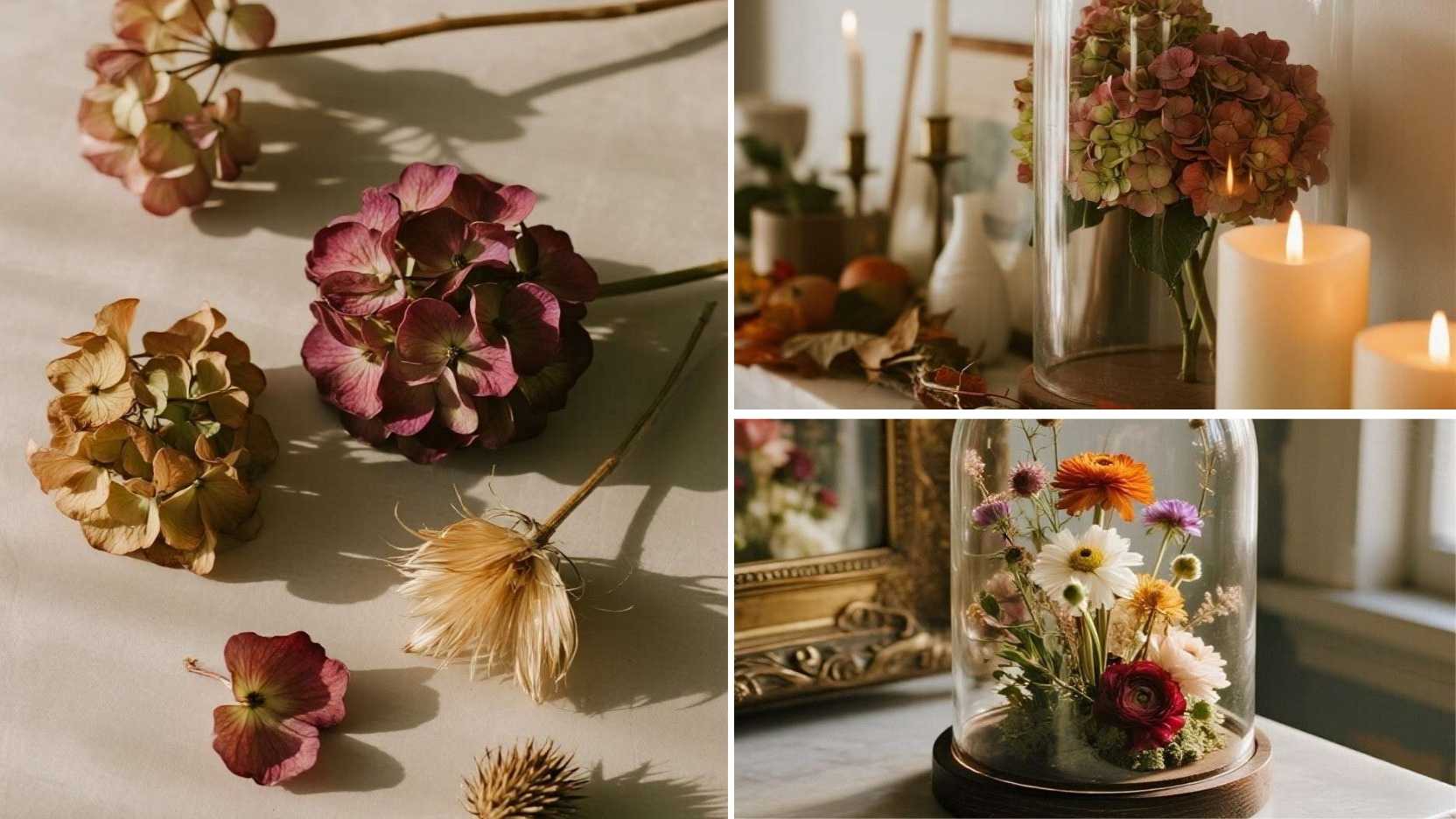
Dried with silica crystals, petals keep their original shape, and pigments like anthocyanins (burgundy) and carotenoids (gold/ochre) retain richer tones. The crystals pull moisture evenly, preventing the crumpling that air-drying can cause in dense heads. That means your mantel keeps its “fresh-from-forest” warmth for months instead of days.
Silica also preserves subtle textures—hydrangea veining, thistle bracts, and grass plumes—so the vignette reads dimensional even in low light. Because the structure remains, stems are easier to style upright under a cloche. You’ll spend less time fixing slumps and more time enjoying the glow. 🌙
Silica-Drying 101: From harvest to storage 🧪🌿
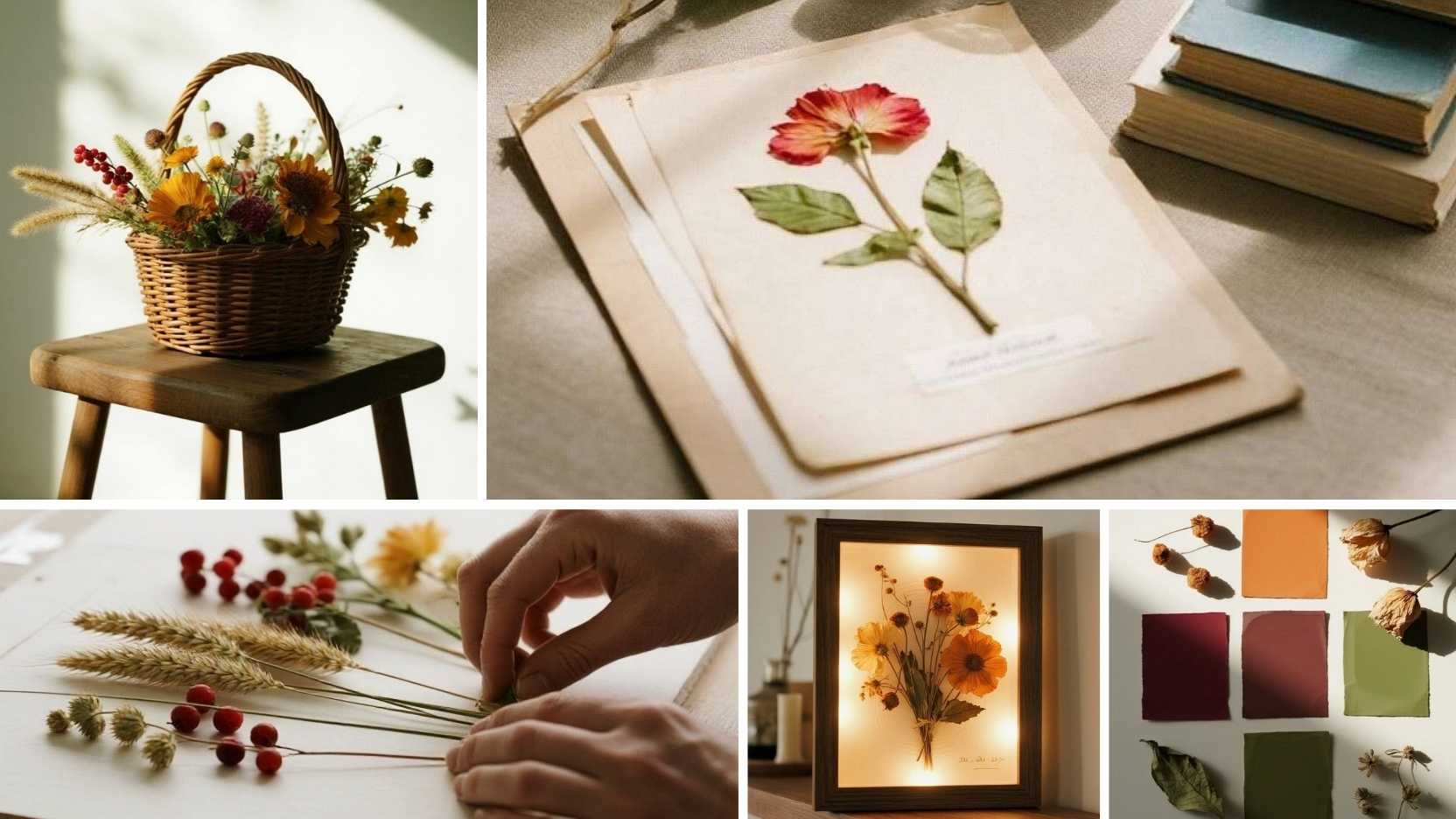
Pick blooms at peak color on a dry day; moisture on petals causes blotches and mold. Trim stems short, place blooms face-up in an airtight container, and pour silica to nestle between petals. Most petals cure in 2–7 days depending on thickness.
To finish, lift flowers gently and brush off grains with a soft paintbrush. Mist with a light acrylic fixative if you want extra color hold, then store in a lidded box with a small desiccant pouch. Label by date so you know which colors to rotate into the season’s vignette. 😊

Shapes & Textures: Round vs. spiky for contrast 🔵🟣
Round heads like hydrangea or peonies create a calm base and read as “solid color blocks.” Spiky or structured stems—thistle, eryngium, seedheads—add energy and micro-shadows that pop under side lighting. Mixing both lets the eye travel without clutter.
Think of “one hero, two supports”: pick a single focal bloom, then flank with contrasting shapes and a fine filler like baby’s breath or dried grasses. Keep a 60/30/10 ratio: 60% round, 30% spiky, 10% airy. This balance photographs well and resists visual fatigue over weeks. 📸

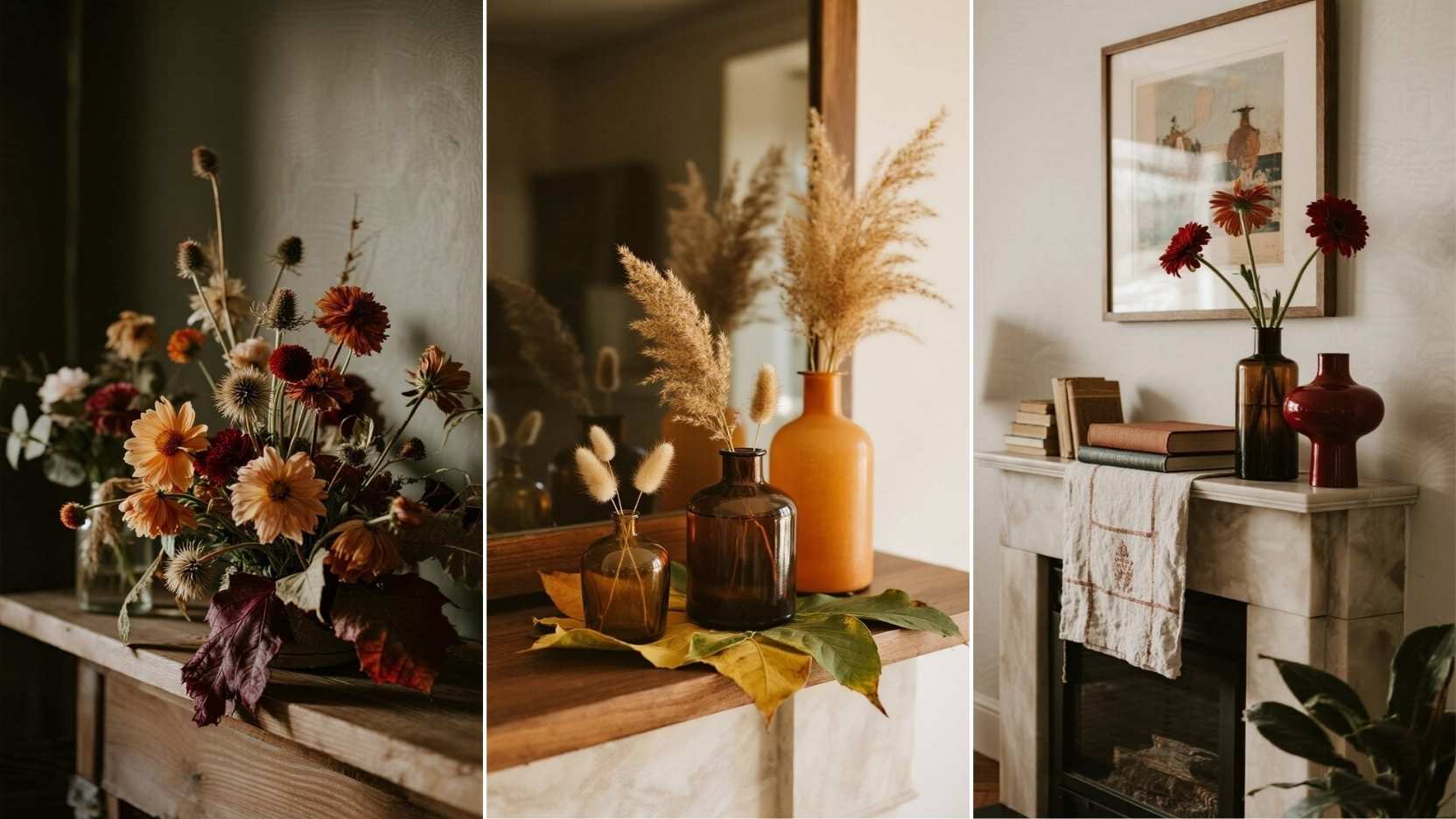
Build the Layered Mantel: Print → Cloche → Leaf runner 🖼️🔔🍂
Start with a framed print or art panel that echoes your palette—sepia landscapes or charcoal botanicals are timeless. Center a cloche over your silica-set hero bloom to create height and a clean focal dome. Then scatter loose dried leaves as a slim ‘runner’ that visually connects left and right.
Stagger heights with stacked books or low boxes hidden beneath a scarf or runner. Tuck seedheads at the print’s base so they overlap its frame line, unifying back-to-front depth. Finish with two small bud vases off-center to keep the composition from feeling mirror-perfect. 🕯️
Color & Glow: Ochres, burgundies, and light placement 🎨💡
Ochre reads warm even in cool rooms, while burgundy anchors the scene and adds sophistication. Use one small warm-white light (2700–3000K) from the side to carve shadows in petals and seedheads. Candles add romance, but keep flames away from dried materials—use LED tapers for safety.
Bounce light off the frame’s glass or a pale wall to avoid hotspots. If your room is very bright, add a matte print to cut glare and keep the vignette legible by day. At night, dim the background so the cloche bloom becomes the star. ⭐

Dust Control & Longevity: Cloches and shadow boxes 🧼🫧
A cloche limits dust and slows color fade by reducing UV exposure and airflow. Shadow boxes work for flatter materials—pressed leaves, seedpods, and grasses—adding museum-like calm. Rotate pieces monthly and rest sensitive burgundies away from direct sun.
Keep silica packets nearby (hidden behind books) if your home is humid. Handle stems by the base, not petals, to avoid micro-cracking that looks like frost. If colors dull, refresh the scene by swapping in a brighter accent rather than overhandling existing pieces. 🧤

Troubleshooting: Common issues and quick fixes 🧰⚠️
Brittle petals mean overdrying; add a tiny humidity bump by displaying near (not above) a diffuser for an hour, then return under the cloche. Color shift toward brown often comes from high heat or UV—move the vignette and prioritize ochres over delicate pinks. Flattened blooms happen when crystals weren’t between petals; next time, sift silica gently to nestle into gaps.
If leaves curl, press them briefly under a cool, heavy book with parchment before styling. Dust on petals should be blown away, not wiped—use a camera rocket blower. For long seasons, keep a “reserve” box of extras so swaps feel intentional, not like repairs. 🔄
Closing Notes: A mantel that warms the room all season 🌾🏡
When your colors are locked with silica and your layers flow front to back, the vignette feels like a small hearth even without a fire. The framed print grounds the story, the cloche bloom sings, and the leaf runner links every note. Rotate pieces slowly and the composition will carry you from early ochres to deep winter burgundies with grace.