Introduction: Color, Cover, and Quiet Soil Work 🍂🌱
Fall cover crops can be both soil medicine and a good-looking winter “carpet.” Crimson clover brings burgundy tints, winter rye lays down the mossy green, and hairy vetch adds soft texture. Beneath the color, living roots keep nutrients in place, feed microbes, and set you up for a faster spring turn-over.
Bare soil is like an uncovered fridge—moisture and goodness escape quickly. A living mulch reduces erosion from wind and rain while adding biomass you can return to the bed. Think of it as a winter service plan that beautifies now and pays dividends later.
How the Palette Works: Beauty + Biology 🎨🧪
The amber-moss-burgundy trio is not just pretty; it deliberately mixes species with complementary root habits. Rye’s fibrous roots knit the surface, clover nodules fix nitrogen, and vetch trails to shade soil. Together they slow runoff, trap nutrients, and keep microbial life fed all winter.
Visually, rye makes the green canvas, clover drops burgundy accents, and vetch adds the soft “blur.” That combination keeps beds from looking bare and muddy in the off-season. The result reads intentional landscape, not “forgotten vegetable patch.”
Plant Profiles & Roles 🌾❤️🧵
Crimson Clover (Burgundy Tints + Nitrogen)
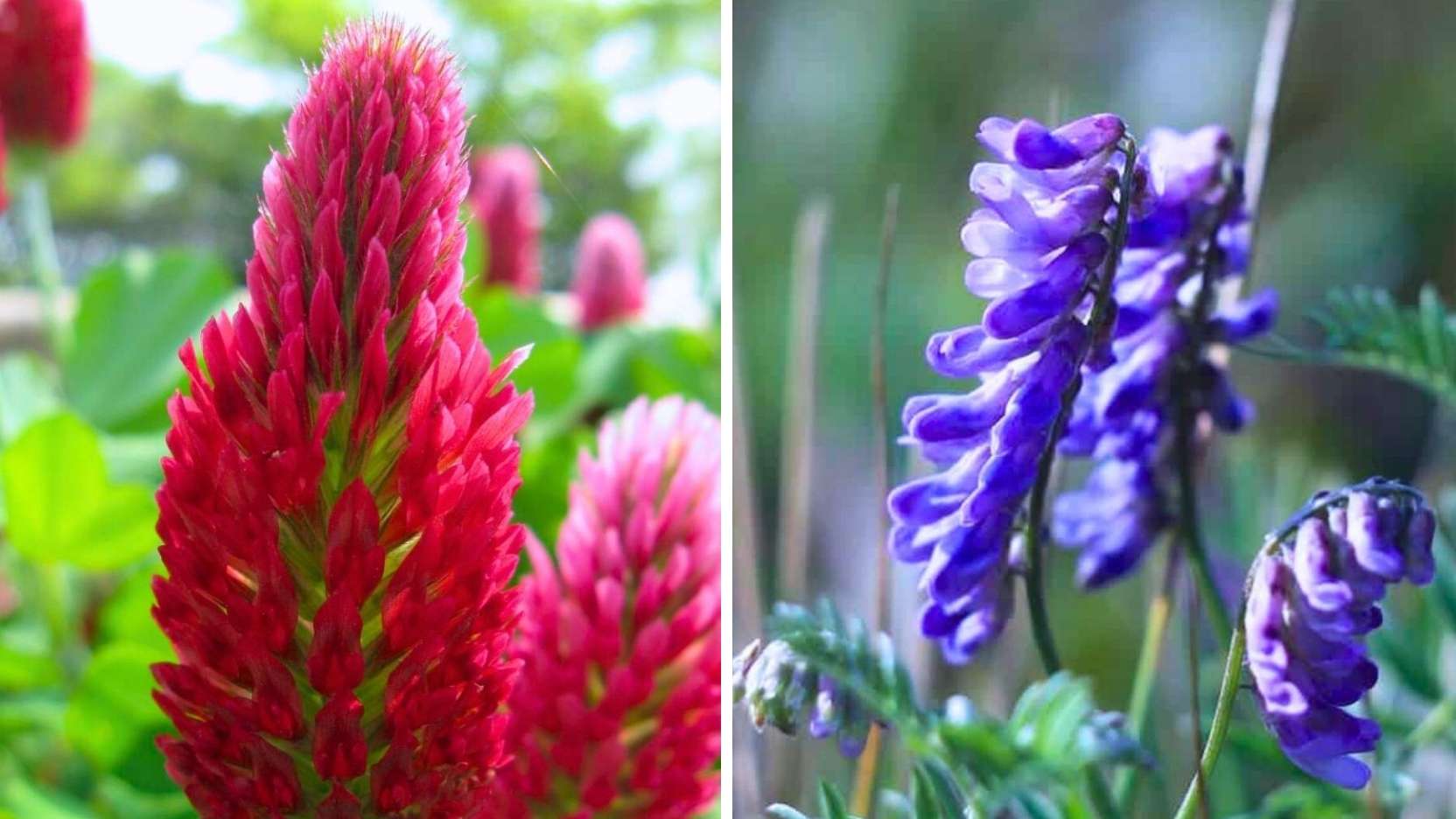
Crimson clover supplies a red-burgundy top note that pops against green rye. It fixes nitrogen in root nodules, which becomes available after you terminate and incorporate or mulch-crimp the stand. Bees love the spring bloom, so terminate before mature seed if you want to prevent reseeding.
In compacted beds, clover’s taproot opens micro-channels for air and water. It’s quick to establish and tidy in winter, so it maintains a neat look. Pair lightly with rye to avoid shading out the clover starter leaves.

Winter Rye (Mossy Green + Erosion Control)
Winter rye is the winter workhorse with dense, fibrous roots. It locks soil in place, mops up leftover nutrients, and creates a uniform moss-green carpet. The tall spring growth is easy to crimp or mow before seed set.
Rye also exudes compounds that can temporarily suppress weeds. That means fewer spring volunteers and a cleaner bed to flip. Give it headroom in mixes so it anchors the look without smothering partners.

Hairy Vetch (Soft Texture + Spring Nitrogen)
Hairy vetch drapes between rye blades, knitting a soft, plush layer. It’s another nitrogen fixer, complementing clover while spreading growth horizontally. The viney habit fills gaps and shades soil to stabilize moisture.
Terminate vetch in early bloom for easier management and best nitrogen capture. If allowed to seed, it can linger—great for living pathways but messy if unmanaged. In cold snaps, its fuzzy foliage still reads cozy and intentional.

Zone-Agnostic Mixes & Sowing Windows 🗺️⏳
You can deploy the trio broadly because they tolerate a wide range of climates. In colder areas, sow earlier in fall to allow root establishment before hard freezes. In milder climates, you can sow later into early winter as long as soil is workable.
Simple recipes: (1) Rye-Forward Screen: 60% rye, 20% clover, 20% vetch for maximum erosion control. (2) Nitrogen-Rich Velvet: 40% rye, 30% clover, 30% vetch for lush spring N. (3) Low-Rise Aesthetic: 40% rye (shorter variety), 40% clover, 20% vetch for a compact, neat look.
Spacing, Seeding Rates & Layout 📏🌾
Broadcasting is most common: aim for even coverage rather than perfect rows. As a guide per 1,000 sq ft, use rye: 1–2 lb, crimson clover: 0.5–1 lb, hairy vetch: 1–2 lb. For rows, drill shallowly (¼–½ in) with 6–8 in row spacing to keep a tidy “stitched” look.
For mixed beds, scatter the clover and vetch first, lightly rake, then overlay rye for the canvas. Water to settle seed into contact with soil, and mulch edges only if erosion is severe. In raised beds, think of “patchwork blocks” that repeat across the layout to read as design.
Management: From Sowing to Termination 🔧🗓️
Keep the stand moist until germination; then water as needed to avoid drought stress during establishment. Avoid heavy foot traffic on wet soils to protect the living mat. Top-dress with a light compost dusting if germination is spotty.
Terminate 2–4 weeks before spring planting by mowing, crimping, or cutting at soil level. For no-till, leave residues as a mulch and plant transplants into slits. For till-in, wait a few days after termination so residues start to soften before shallow incorporation.
Sanitation: Keep Diseased Material Out 🧼🚫
Never use diseased or pest-infested crop residues in your cover-crop layer. Compost or dispose of those separately to avoid carrying pathogens through winter. Clean tools between beds to reduce spread.
If you had late blight, wilt, or heavy pest pressure, reset with clean cover seed and fresh compost. Rotate families when you return to cash crops to break cycles. Healthy inputs plus diverse covers deliver stronger spring starts.
Spring Prep: Faster Bed Turnover 🚀🌷
This palette pays off when you need to flip beds quickly. Residues from rye/vetch/clover act like a pre-laid mulch, reducing weeding and soil splashing. Nitrogen from legumes gives early growth a gentle kick.
For direct-seeded crops, shred residues finely and rake a thin surface layer to create a seedable tilth. For transplants, open slots through the mulch and plant right in. Either way, you start cleaner, cooler, and more resilient.
Conclusion: A Winter Carpet That Works All Year ✅✨
Amber (clover), moss (rye), and soft threads (vetch) give you color now and fertility later. Living roots hold soil, trap nutrients, and feed biology through the quiet months. Come spring, you’re working with a primed canvas—not rebuilding from scratch.
Choose a mix recipe, broadcast evenly, and keep diseased material out of the system. Terminate on time and use residues to your advantage. Your winter beds will look curated—and your spring prep will feel like cheating. 💪🌿