A healthy garden starts below the surface. While we often focus on sunlight, fertilizers, and watering routines, one crucial factor quietly determines whether plants thrive or wither: drainage.
Poor drainage is one of the most common — and most overlooked — causes of plant failure. It slowly suffocates roots, encourages rot, and invites disease. Many gardeners don’t even realize their soil has drainage issues until their plants begin yellowing or dying for no clear reason.
But the good news? It’s entirely preventable once you understand what’s happening underground.
🌧️ Why Drainage Matters More Than You Think
Plant roots need both water and air to function. When soil holds too much water, oxygen gets pushed out — creating a suffocating, anaerobic environment. Roots literally drown, leading to root rot, fungal infections, and stunted growth.
Well-drained soil, on the other hand, acts like a sponge: it absorbs moisture when needed and releases the excess naturally. This balance keeps your plants hydrated without waterlogging them.
Here’s what poor drainage does to your plants:
- Leaves start yellowing from the bottom up
- Growth slows, even when you’re watering correctly
- Foul smell from the soil (a sign of rot)
- Mold or algae growth on soil surface
- Roots appear brown or mushy instead of firm and white
If any of these symptoms sound familiar, drainage is likely the silent culprit.
🌿 How to Test Your Soil’s Drainage (The Simple Way)
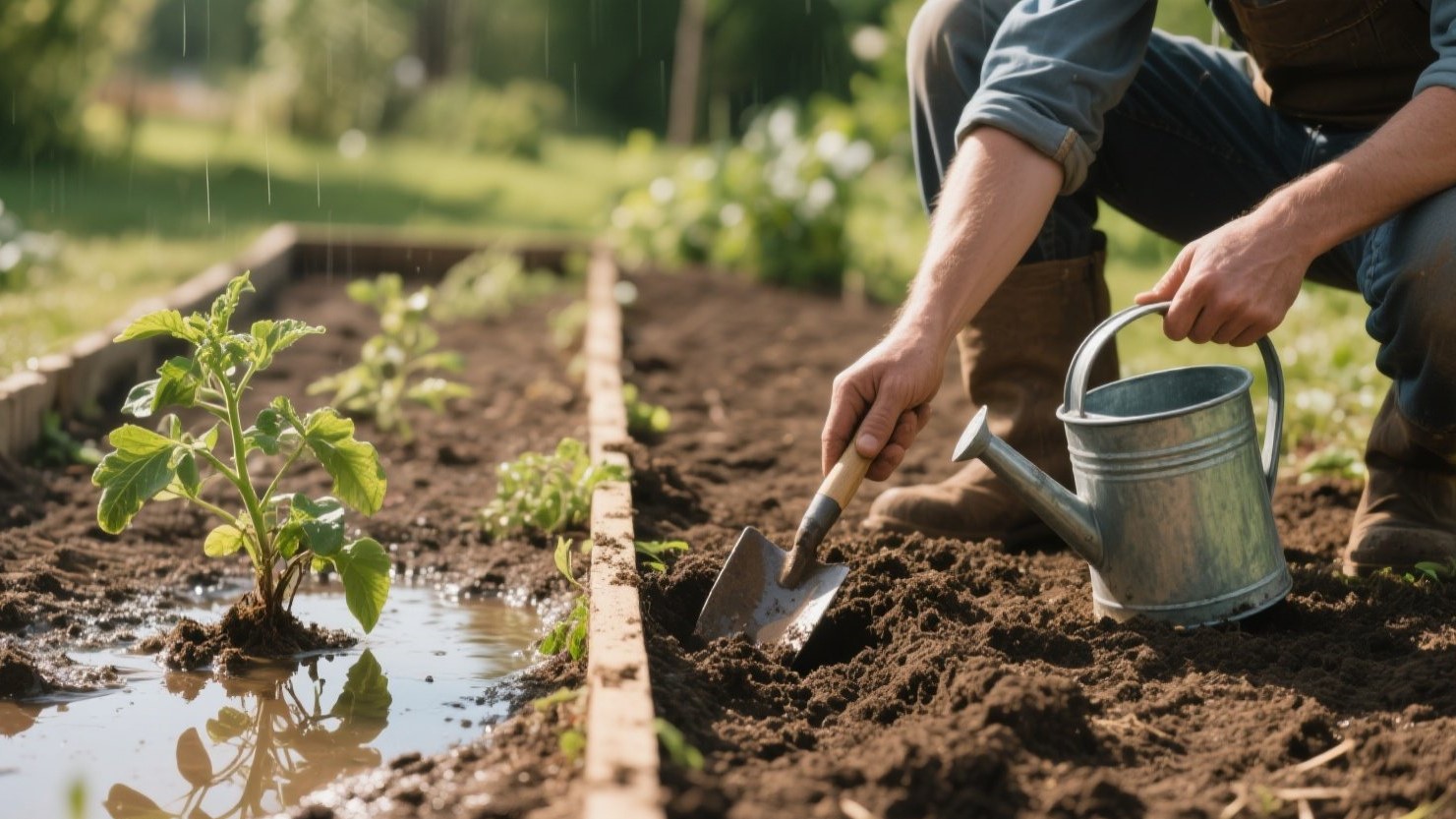
Before you fix the problem, you need to know how serious it is. Here’s an easy DIY drainage test you can do with just a shovel and a timer:
Step 1: Dig a small hole about 12 inches deep and 12 inches wide.
Step 2: Fill the hole completely with water. Let it drain completely.
Step 3: Once it’s empty, fill it again and time how long it takes to drain.
📏 The results:
- Drains in under 30 minutes: Excellent drainage.
- Drains within 1–2 hours: Good for most plants.
- Takes over 4 hours: Poor drainage — the soil holds too much water.
If your hole still has standing water after a few hours, your garden likely has a compacted or clay-heavy soil structure that needs improvement.
🪴 Common Causes of Poor Drainage
- Heavy clay soil — Tiny, tightly packed particles that trap water.
- Compacted soil — From foot traffic or machinery compressing the top layer.
- Low-lying areas — Natural dips in your yard collect rainwater.
- Organic matter imbalance — Too much fine compost or silt can prevent flow.
- Improper grading — The garden surface doesn’t slope slightly away from foundations.
Understanding which of these applies to your space helps you choose the best solution.
🌾 Easy Fixes for Better Drainage
Drainage problems are common, but thankfully, the fixes are simple and long-lasting. Here are effective, low-cost ways to transform your soil:
1. Build Raised Beds
The fastest, most reliable solution for persistently soggy soil.
Why it works:
Raised beds lift the root zone above the problem area, letting excess water drain freely.
How to do it:
- Build beds 6–12 inches high with untreated wood or stone.
- Fill them with a 50/50 mix of garden soil and compost.
- Make sure the bottom isn’t sealed — roots should still connect with the ground below.
Raised beds are especially helpful in rainy climates or clay-heavy regions.
2. Amend Soil with Organic Matter
If you prefer to plant directly in the ground, improving soil structure is key.
Add:
- Compost (improves texture and microbial activity)
- Coarse sand or fine gravel (enhances water flow)
- Coconut coir or leaf mold (boosts aeration and water retention balance)
Mix these materials into the top 8–12 inches of soil. Over time, earthworms and microbes will naturally integrate them deeper, creating a looser, more breathable soil profile.
3. Avoid Overwatering
Even well-drained soil can become soggy if overwatered.
Tips:
- Water deeply but less often (once or twice a week).
- Always check the top 2 inches of soil — if it’s still damp, wait before watering again.
- Use mulch to reduce evaporation and stabilize moisture levels.
4. Improve Landscape Grading
For yards that naturally collect water, consider gently reshaping the terrain.
The goal:
Create a subtle 1–2% slope (about 1 inch per 4 feet) leading away from the house or low points.
Water should move downhill naturally, not toward plant beds or structures.
If you’re unsure, observe where water pools after heavy rain — it reveals exactly where intervention is needed.
💧 Bonus Tip: Grow Plants That Love Moist Soil
If fixing drainage isn’t practical everywhere, you can still work with nature.
Designate wetter zones for water-tolerant plants like:
- Japanese iris
- Swamp milkweed
- Daylilies
- Ferns
- Hostas
These species thrive where others struggle, creating a balanced ecosystem without constant maintenance.
🌻 The Long-Term Benefits of Good Drainage
Improving drainage is more than a one-time fix — it transforms your entire garden’s health.
Good drainage means:
- Stronger root systems
- Fewer fungal diseases
- Easier nutrient uptake
- Better resilience to both drought and heavy rain
- Healthier soil structure for years to come
In other words, investing time in drainage pays off in every growing season that follows.
🌱 Final Thoughts: Healthy Roots, Healthy Garden
You can’t always see what’s happening beneath your plants, but that’s where most garden success truly begins.
Ignoring drainage is like ignoring oxygen — everything above ground depends on it.
By understanding how water moves through your soil and making small adjustments with compost, sand, or raised beds, you set the foundation for a thriving, resilient garden.
Because when your soil breathes, your plants live fully. 🌿💧