Quick reality check: Why late-planted bulbs are still a good bet (risk vs. reward) 🌱⏳
Planting late beats not planting at all—if you leave bulbs in the bag, they’ll definitely die, but in the ground they at least have a chance. Many spring bulbs are tough and will root whenever soil is workable, even if blooms lag a season. Think of it as “salvage mode”: you’re protecting the bulb’s energy so next year can still be great. 💪🌤️
Set expectations: late planting can delay or reduce flowers because bulbs like 12–16 weeks of cold (about 0–7 °C / 32–45 °F). If they miss part of that chill, you may see mostly leaves or short stems this spring. That’s normal—let the foliage feed the bulb after bloom-time and you’re investing in better results next year. 🍃➡️🌸
How to triage fast: Test, sort, and plant today (pots or ground) 🧪🪴🧱
Firmness test first 🧤
- Squeeze each bulb gently: firm = plant, mushy, moldy, or hollow = compost. A papery tunic and mild earthy smell are good; wet, sour, or collapsed bulbs won’t recover. This 60-second sort saves space and time.
If you forgot to plant bulbs and they’re sprouting in the box 🌱📦
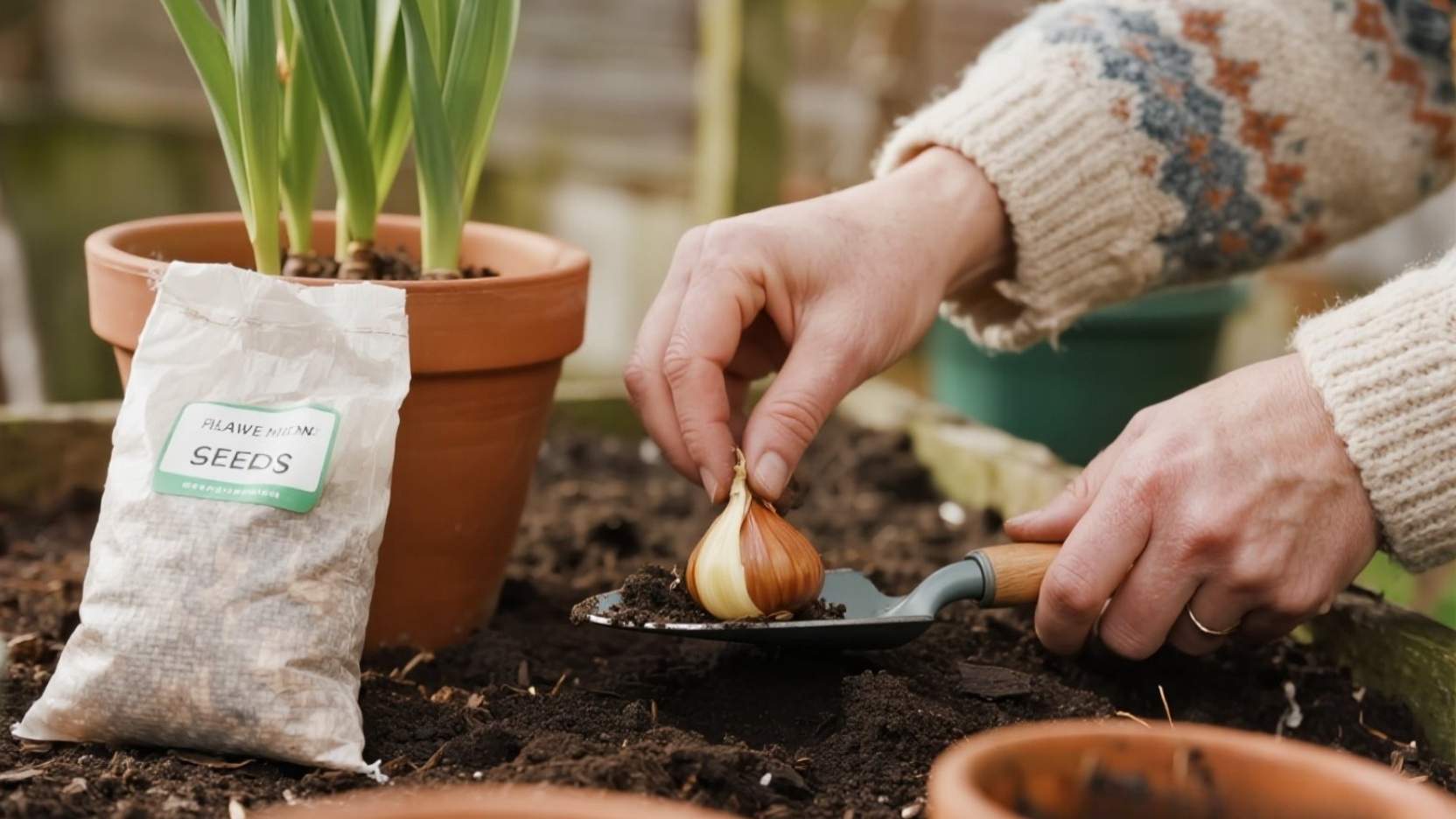
- Handle shoots carefully; they’re fragile but still viable. Plant with shoots just at or slightly below soil level, then backfill so tips barely peek out—light will guide them upright. Don’t snap bends straight; they’ll self-correct.
Pot option: quick wins and control 🪴
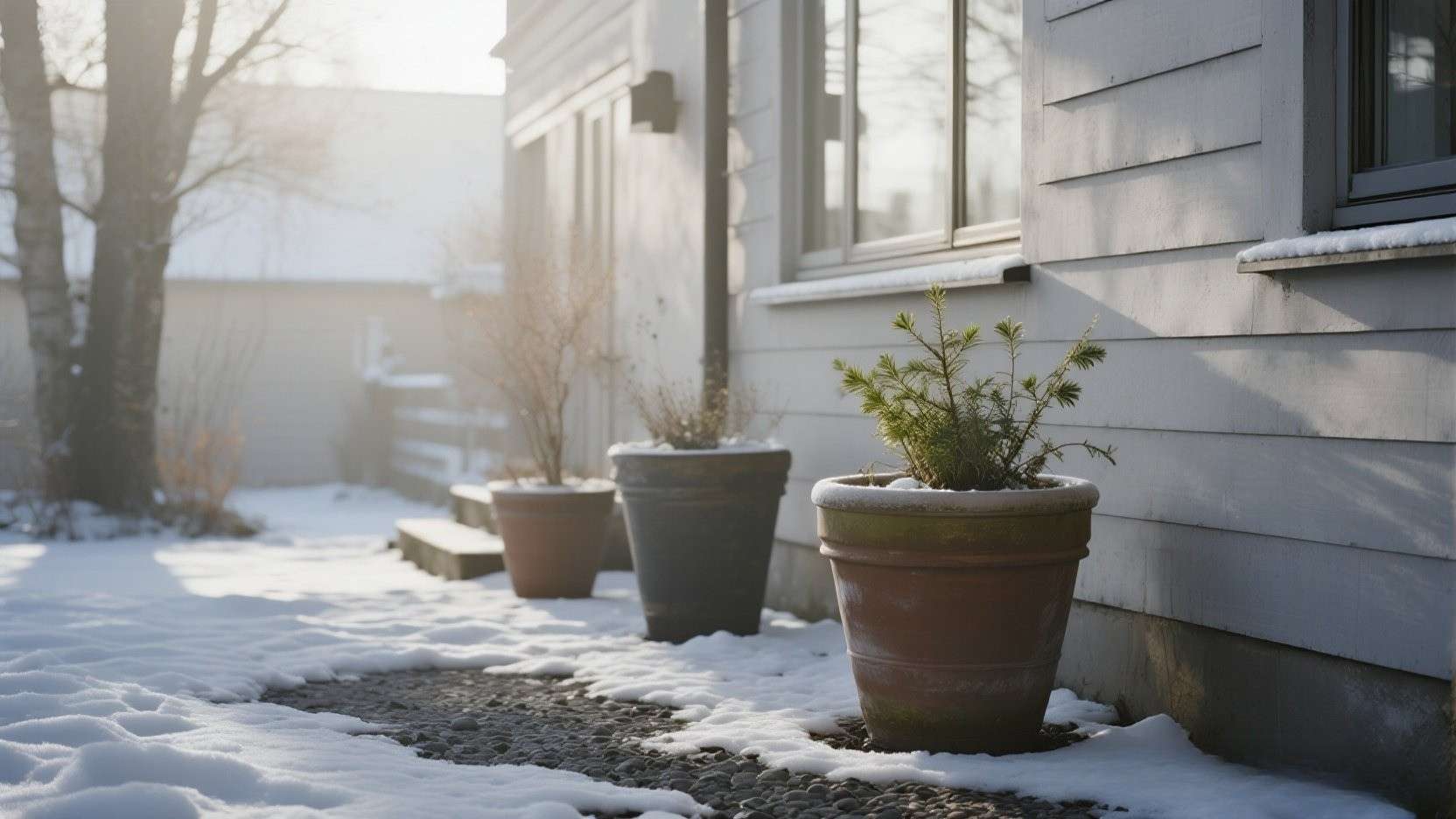
- Use a frost-resistant pot with drainage and a gritty mix (potting soil + perlite). Plant most bulbs about 3× bulb height deep; crowd pots a bit for a fuller look. Keep evenly moist (not soggy) and shelter near a wall to limit freeze–thaw swings.
Ground option: plant bulbs late wherever soil is workable 🌏
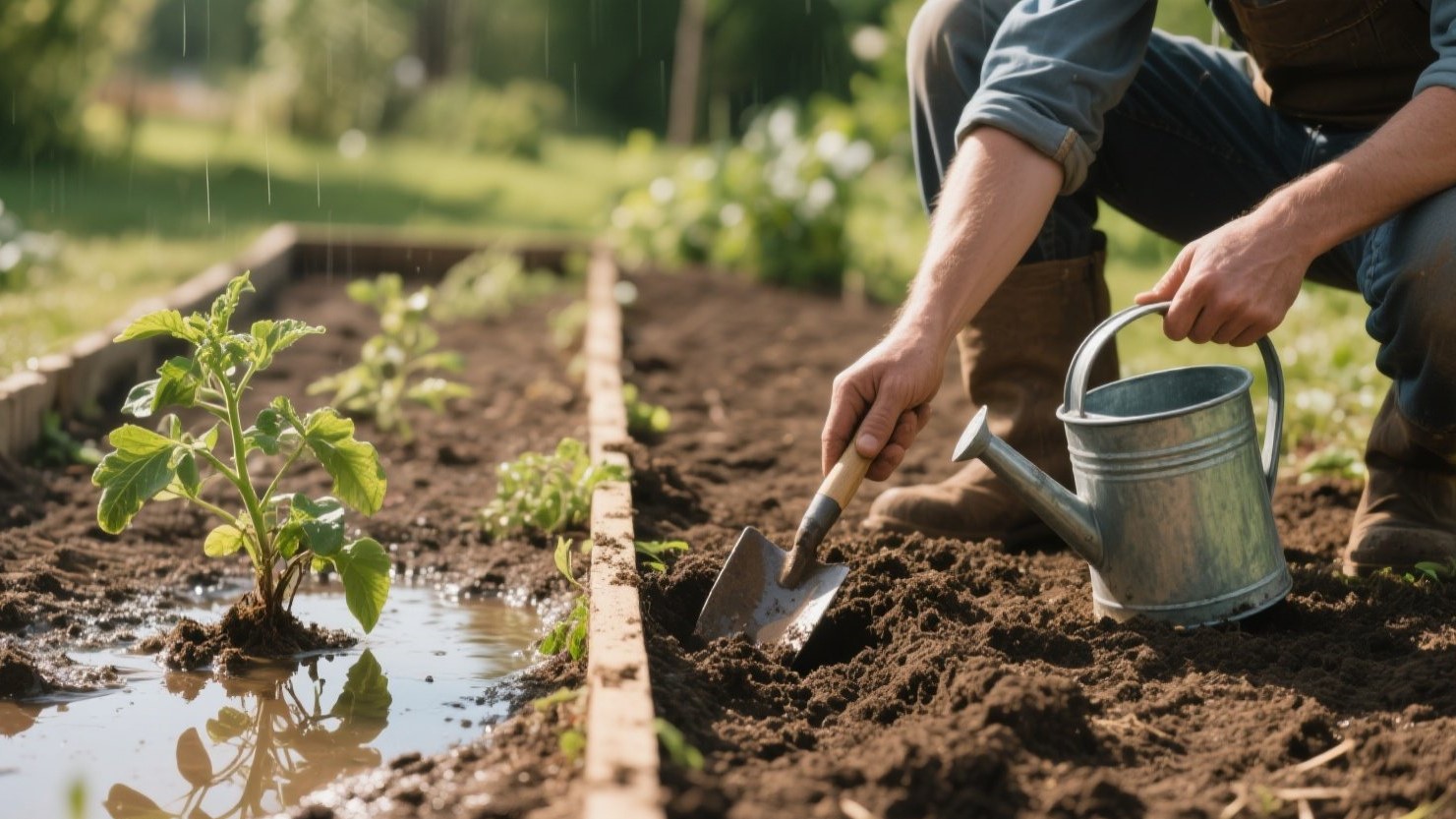
- Aim for the same 3× height depth in well-drained soil; water in to settle pockets. Add a thin mulch (2–3 cm) to buffer temperature and conserve moisture. Label the spot so you don’t disturb forming roots later. 🏷️
Water, feeding, and aftercare 🚿🍽️
- Water lightly after planting and then as needed—bulbs dislike waterlogging. Skip high-nitrogen feed now; if anything, use a light, balanced bulb fertilizer once shoots emerge. Allow foliage to yellow naturally; that’s how bulbs recharge.

Expectation setting: This year might be shy—next year often shines ✨📅
With plant-bulbs-late timing, first-year blooms may be sparse or short, and some bulbs could give foliage only. That’s not failure—it’s a reset while the bulb rebuilds roots and stores energy. Treat this season as a rehabilitation phase. 🛠️🌿
Next spring often improves dramatically if you let leaves fully photosynthesize after flowering. Deadhead spent blooms but keep foliage until it yellows, then tidy and re-mulch. You’ll go from “rescue mission” to reliable color with far less stress next year. 🌈👍
Key takeaways (for quick skimmers) ✅
- Plant them anyway: in soil > in storage—otherwise they’ll definitely die.
- Sort fast: firm = plant; mushy/desiccated = compost.
- Be patient: expect weaker first-year performance; recovery next year is common for most hardy spring bulbs. 🌷💚