Introduction 🌾

Your plants are trying to tell you something — you just have to know how to read the signs. 🌿
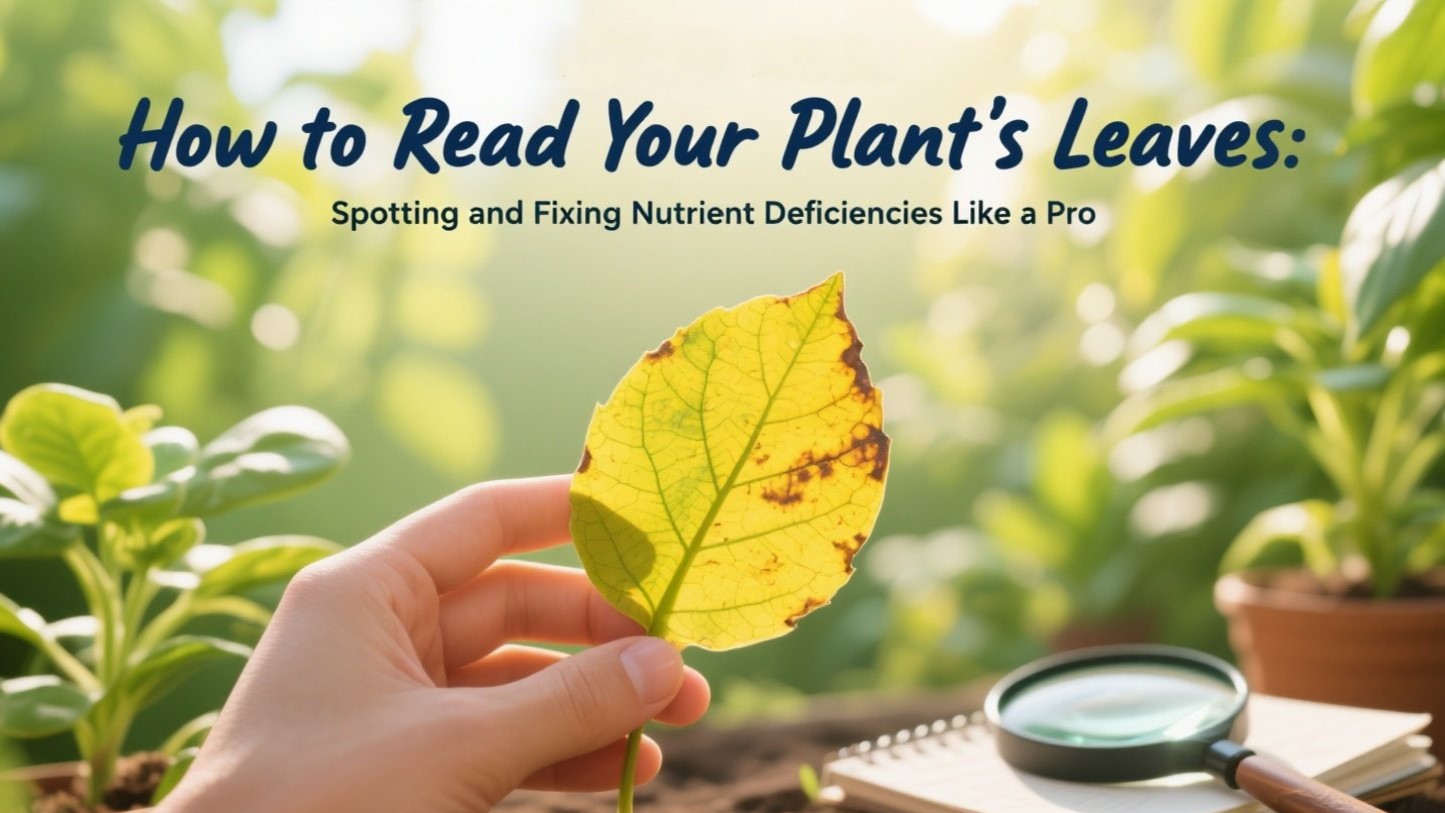
From pale yellow leaves to crispy brown edges, nutrient deficiencies show up clearly on your plants’ foliage long before the problem becomes severe. Every spot, curl, or discoloration is your plant’s language for “I’m missing something.”
Learning to interpret these clues is one of the most valuable skills a gardener can develop. It saves time, reduces unnecessary treatments, and helps prevent irreversible damage. Whether you grow houseplants, herbs, or vegetables, this guide will help you confidently diagnose and correct nutrient deficiencies — without guesswork or gimmicks.
Understanding Nutrient Deficiencies 🧠🌱
Just like humans need vitamins and minerals, plants need a balanced diet of essential nutrients to thrive. When one or more of these nutrients are lacking, plants show visible symptoms — often starting with changes in leaf color or texture.
There are two main types of nutrients:
- Macronutrients — needed in large amounts (Nitrogen, Phosphorus, Potassium, Magnesium, Calcium, Sulfur).
- Micronutrients — needed in trace amounts (Iron, Zinc, Manganese, Boron, Copper, Molybdenum).
A deficiency doesn’t necessarily mean your soil lacks nutrients; it might also mean:
✅ The pH is off (locking nutrients away).
✅ The roots are damaged or waterlogged.
✅ The fertilizer balance is incorrect or inconsistent.
That’s why visual diagnosis — reading leaf symptoms — is an essential first step before applying any fix.
Common Nutrient Deficiencies (and How to Identify Them) 🍂
Below are the most frequent nutrient deficiencies you’ll encounter — plus how to correct them safely and effectively.
🟩 1. Nitrogen Deficiency (N) – The Pale Leaf Problem
Symptoms:
- Older (bottom) leaves turn pale green or yellow.
- New growth appears stunted or smaller than usual.
- Plant overall looks “tired” or dull in color.
Why It Happens:
Nitrogen is a key component of chlorophyll — the pigment that makes leaves green. Without enough nitrogen, the plant can’t photosynthesize effectively.
How to Fix It:
- Apply a balanced or nitrogen-rich fertilizer (10-5-5 or 20-10-10).
- For organic gardeners: use composted manure, blood meal, or fish emulsion.
- Check drainage — nitrogen leaches out quickly in overwatered soil.
✅ Tip: Always feed in moderation. Too much nitrogen causes rapid, weak growth and fewer flowers.
🟧 2. Potassium Deficiency (K) – The Burnt Edge Effect
Symptoms:
- Leaf tips and edges turn brown or scorched, especially on older leaves.
- Yellow halos may appear between veins.
- Flowering and fruiting plants produce smaller or misshapen blooms/fruits.
Why It Happens:
Potassium regulates water movement and strengthens cell walls — it’s the “resilience nutrient.” Without it, plants become vulnerable to stress, drought, and disease.
How to Fix It:
- Use a bloom booster fertilizer (5-10-10 or 0-10-10).
- Add wood ash or kelp meal for organic potassium sources.
- Maintain proper soil moisture — potassium moves through water, so consistent watering helps.
✅ Tip: For potted plants, flush the soil monthly to prevent salt buildup that blocks potassium absorption.
🟨 3. Magnesium Deficiency (Mg) – The Yellow Veins Mystery
Symptoms:
- Leaves show yellowing between green veins (interveinal chlorosis).
- Common in older leaves first, then spreads upward.
- In severe cases, leaves curl or develop rusty brown spots.
Why It Happens:
Magnesium is a central part of chlorophyll. Low magnesium means your plant can’t create enough green pigment, leading to fading and discoloration.
How to Fix It:
- Mix Epsom salt (magnesium sulfate) — 1 tablespoon per gallon of water — and use it to water or mist affected plants once every two weeks.
- Check soil pH: if it’s too acidic (<6.0), magnesium becomes unavailable. Add garden lime to correct it.
✅ Tip: Avoid using Epsom salt excessively. It’s a supplement, not a cure-all.
🟫 4. Iron Deficiency (Fe) – The Yellow-Top Look
Symptoms:
- New (top) leaves turn pale yellow or white, but veins stay green.
- Older leaves remain normal.
- Growth slows, and leaves feel thin or papery.
Why It Happens:
Iron deficiency usually isn’t about lack of iron in the soil — it’s about pH imbalance. Alkaline soils (pH >7) lock iron away from roots.
How to Fix It:
- Lower pH slightly using sulfur, peat moss, or acidic fertilizers.
- Apply chelated iron supplements to quickly correct yellowing.
- Avoid overwatering — soggy soil reduces oxygen and limits iron absorption.
✅ Tip: Acid-loving plants like gardenias, blueberries, and azaleas are especially prone to iron issues.
⚪ 5. Calcium Deficiency (Ca) – The Crumbly Leaf or Tip Rot
Symptoms:
- New leaves are distorted, curled, or develop soft, translucent tips.
- In fruits like tomatoes or peppers: blossom end rot (black, sunken spots).
- Roots appear weak or stunted.
Why It Happens:
Calcium strengthens cell walls and root development. Deficiency often appears in container plants or sandy soils where calcium leaches easily.
How to Fix It:
- Add crushed eggshells, dolomitic lime, or gypsum.
- Maintain even soil moisture — calcium moves via water flow in plants.
- Avoid using too much ammonium-based fertilizer (it competes with calcium uptake).
✅ Tip: In tomatoes, consistent watering and mulching are just as vital as calcium supply.
How to Prevent Future Deficiencies 🌍
Prevention is better (and cheaper) than cure. Here’s how to maintain nutrient balance year-round:
- Test your soil annually. Home kits or lab tests reveal pH and nutrient levels.
- Rotate fertilizers. Alternate between balanced, organic, and slow-release types.
- Use compost regularly. It replenishes micronutrients naturally.
- Avoid overwatering. Excess water leaches nutrients away from roots.
- Watch for seasonal changes. Plants may need extra feeding during peak growth.
Final Thoughts 🌸
Your plants’ leaves are their voice — and once you learn to “listen,” you’ll rarely lose a plant to nutrient problems again. 🍃✨
By observing patterns, adjusting soil conditions, and feeding mindfully, you’re not just fixing problems — you’re building a long-term understanding of how your plants live and thrive. Healthy leaves, strong roots, and vibrant colors are simply the result of a gardener who pays attention.
So next time you spot a yellow leaf or a crispy edge, grab your notebook instead of your panic — your plant just sent you a message, and now you know how to reply. 🌿💚