🌱 Introduction: Gardening with a Green Conscience
In a world where sustainability is becoming more than just a buzzword, the way we garden can also reflect our values. Instead of buying new pots or expensive decor, why not transform what you already have into something beautiful and functional?
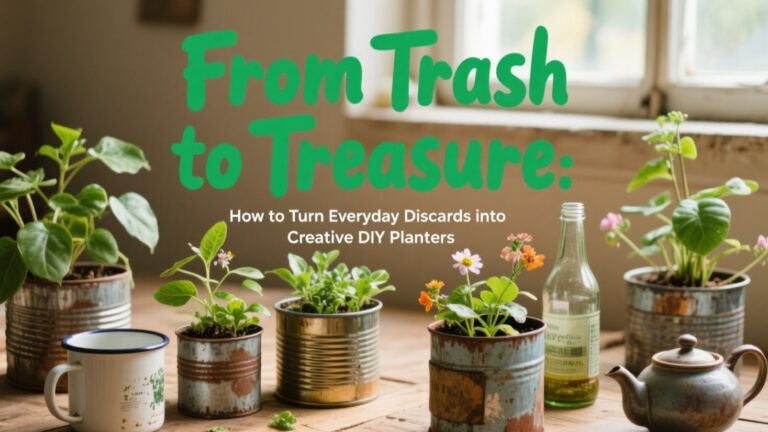
DIY planters made from discarded materials—old mugs, tin cans, glass bottles, even broken ceramics—are more than just a craft project. They’re a small yet meaningful step toward reducing waste, saving money, and expressing your creativity. This isn’t just recycling—it’s upcycling, where something ordinary becomes extraordinary.
Let’s explore how you can turn your household “trash” into living art that breathes life into your home or garden. 🌿✨
🪴 Why Upcycling Matters in Gardening
Every year, millions of plastic pots end up in landfills. Most are not recyclable because of the soil residue and mixed materials. By repurposing containers you already have, you not only minimize waste but also give new life to everyday items that might otherwise be thrown away.
Beyond environmental benefits, upcycled planters also:
- Encourage creativity and personalization.
- Make gardening accessible for beginners or budget-conscious plant lovers.
- Add a touch of charm and storytelling to your green space.
As many gardeners on Reddit’s r/houseplants and r/ZeroWaste communities put it, “Every unique container holds a story.”
☕ 1. Old Mugs: Tiny Havens for Succulents

That chipped coffee mug you can’t part with? It’s perfect for a small succulent or cactus!
How to do it:
- Add a layer of small stones or pebbles at the bottom for drainage.
- Fill with cactus or succulent soil mix.
- Plant your mini green friend and water sparingly.
Tip: If your mug doesn’t have a drainage hole, water less frequently or use a spray bottle to avoid root rot.
Best for: Echeveria, jade plant, or haworthia.
A mismatched set of mug planters looks especially charming on windowsills or office desks!
🥫 2. Tin Cans: Rustic Charm with a Vintage Twist

Tin cans—from coffee, beans, or soup—are among the easiest and most versatile upcycling materials.
How to prepare:
- Wash and dry thoroughly.
- Use a hammer and nail to punch a few holes in the bottom for drainage.
- Paint or wrap with twine, burlap, or patterned paper for aesthetic appeal.
Best for: Herbs like basil, mint, or thyme.
Tin can planters are lightweight, durable, and perfect for balcony gardens or kitchen windows. Pair different sizes for a rustic, farmhouse look.
🍾 3. Glass Bottles: Sleek Containers for Propagation

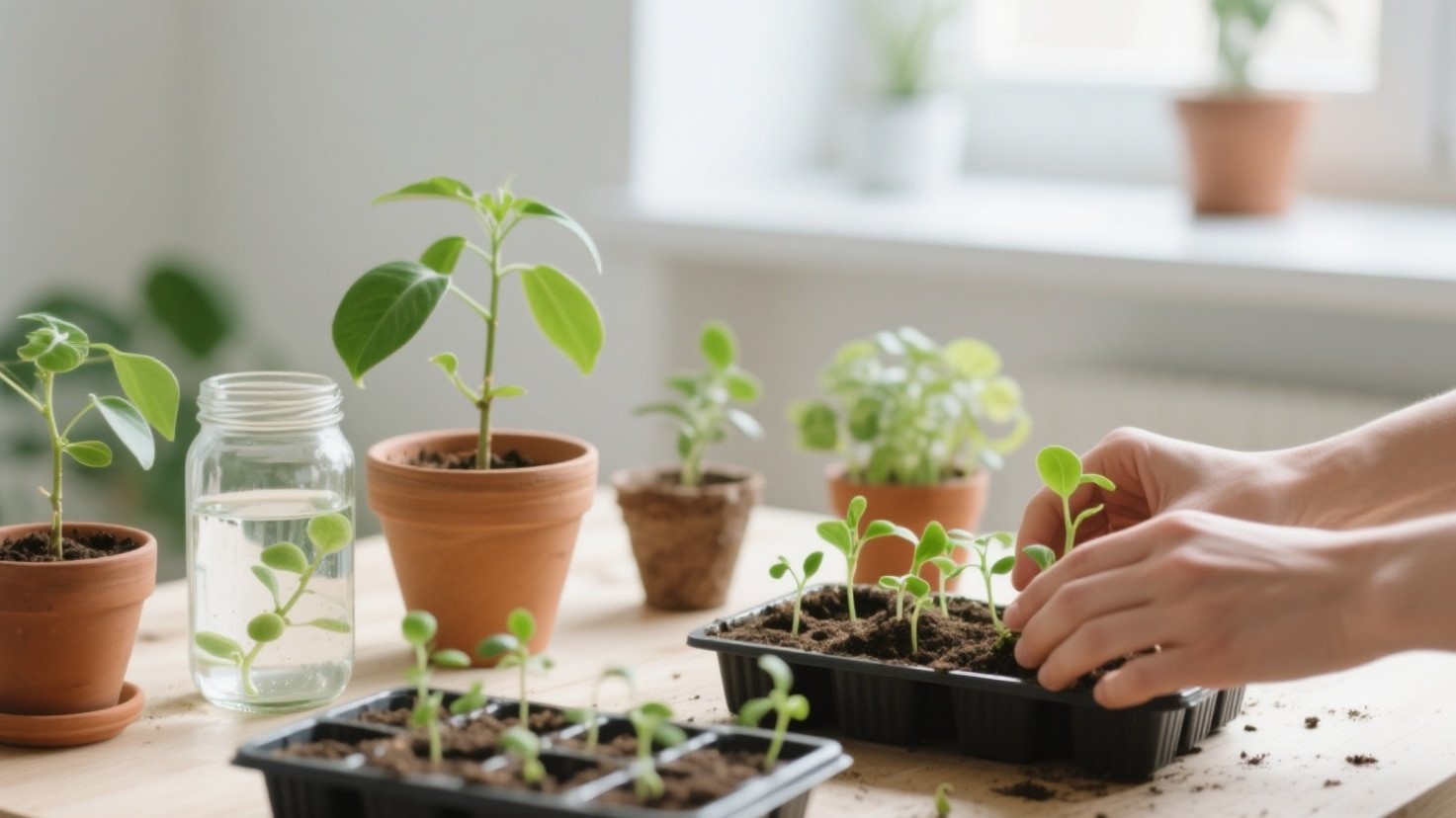
Glass bottles and jars are ideal for hydropropagation—growing plants in water.
How to do it:
- Clean bottles thoroughly and remove labels using warm soapy water.
- Fill with filtered water and place cuttings inside.
- Change the water every 5–7 days to prevent algae growth.
Best for: Pothos, philodendron, monstera, or tradescantia.
The transparency lets you admire the growing roots—making it both educational and visually stunning. 🌿💧
Pro Tip: Amber or dark glass bottles help protect roots from light exposure and algae buildup.
🍶 4. Broken Ceramics: Mosaic Magic

Don’t toss those broken ceramic bowls or plates! Use the pieces to create mosaic-style planters or decorate old containers.
How to do it:
- Use strong waterproof glue to attach broken shards onto an old plastic or terracotta pot.
- Seal with a clear varnish for durability.
This gives new life to what would otherwise be landfill waste—and the result is a one-of-a-kind piece of art.
Best for: Medium-sized plants like ferns or begonias.
👟 5. Shoes, Tea Pots, and Other Odd Finds
If you want a true conversation starter, experiment with quirky containers:
- An old boot or sneaker can house hardy plants like succulents or ivies.
- A teapot makes a whimsical centerpiece for a coffee table garden.
- Even colanders work as hanging planters—perfect for trailing plants!
The key is ensuring adequate drainage. Drill or punch holes, or line with gravel before adding soil.
Each piece becomes an expression of your personality—a small eco-art installation that adds character to your space. 🌻
🧰 Practical Tips for DIY Planters
- Add Drainage: Always ensure proper water flow to prevent root rot.
- Seal Porous Containers: Coat the inside of cardboard or wooden planters with waterproof sealant to extend lifespan.
- Use the Right Soil: Match soil type to plant species (succulent mix for cacti, rich potting soil for herbs).
- Be Mindful of Size: Smaller containers dry out faster; monitor watering frequency.
- Label and Rotate: Mark what you’ve planted and rotate containers occasionally for even light exposure.
🌿 Final Thoughts: Creativity Meets Sustainability
Creating DIY planters from everyday trash is more than just a fun craft—it’s a reflection of sustainable living. Each container you rescue from the waste stream tells a story of care, imagination, and respect for the planet.
So before you toss that old mug or tin can, pause for a moment. Could it cradle a new plant instead? 🌱
As many eco-gardeners say, “Every plant deserves a second chance—and so does every container.”