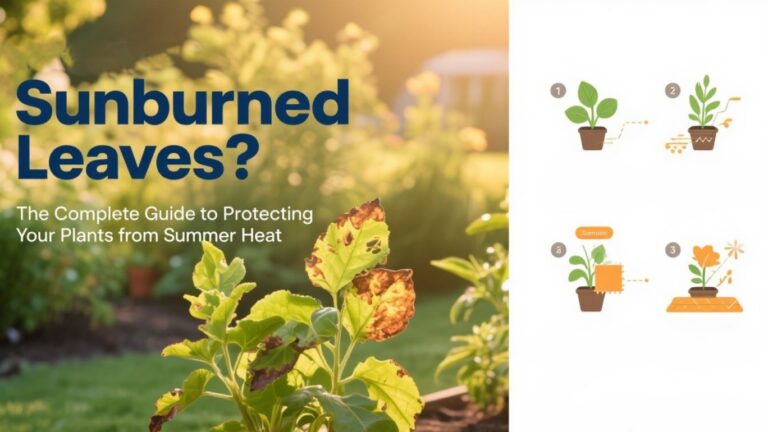
🌞 Introduction: When Sunshine Turns Too Strong
Sunlight gives life to plants — but too much of a good thing can quickly turn harmful.
During the peak of summer, when temperatures soar and UV rays intensify, many gardeners begin to notice a troubling sight: yellowing, browning, or crispy patches on leaves. These aren’t random blemishes — they’re signs of leaf scorch or sunburn, and they can weaken a plant’s ability to photosynthesize and thrive.
Whether you’re nurturing a lush garden or a few houseplants near a sunny window, understanding how to protect them from excessive heat is vital for long-term growth.
Let’s explore how and why leaf scorch happens — and most importantly, how to prevent and heal it effectively. 🌿
☀️ What Is Leaf Sunburn (and Why It Happens)
Leaf sunburn occurs when intense sunlight and heat damage the plant’s surface tissues faster than it can cool itself through transpiration (the natural process of water evaporation from leaves).
When the balance between light, heat, and hydration is disrupted, plants can’t regulate temperature properly. The result? Dehydrated, damaged leaf cells.
Common causes of sunburned leaves include:
🌡️ Sudden exposure to full sun after being in shade
🌤️ Heatwaves or extended hot afternoons
🚿 Water droplets on leaves acting like magnifying lenses
🌱 Dark-colored containers that absorb too much heat
🌴 Poor soil moisture or drought stress
🔎 How to Identify Sunburn Damage

Sunburned leaves have a distinct appearance. Here’s what to look for:
- White, pale, or yellow patches on leaves (bleached appearance)
- Brown or crispy edges — often starting at the tips
- Scorched sections between leaf veins
- Leaf curling or wilting despite regular watering
Once a leaf is scorched, those damaged spots will not recover. However, the plant can still survive and regrow healthy foliage if you take quick, corrective measures.
🌤️ Step-by-Step Guide to Prevent Leaf Scorch
1. 🌿 Acclimate Plants Gradually
If you’re moving plants outdoors for the season, don’t place them directly under full sunlight.
Start with 2–3 hours of morning sun for a few days, then increase exposure slowly. This helps plants adjust their chlorophyll production and build stronger leaf tissues.
📅 Tip: Sudden relocation from shade to sunlight is one of the top causes of burn in potted plants.
2. 🕶️ Use Shade Cloths or Natural Barriers
Installing a shade cloth (30–50% shade rate) can dramatically reduce heat stress during peak summer.
You can also use:
🌾 Trellises with climbing vines
🌳 Overhead trees or pergolas
🪴 Patio umbrellas for movable protection
This reduces direct exposure without depriving plants of essential light.
3. 💧 Water Deeply, Not Frequently
The most common mistake? Frequent shallow watering. It encourages surface roots that dry quickly.
Instead, water deeply every few days to help roots grow downward, where soil stays cooler and retains moisture longer.
🌱 Early morning watering is ideal — it hydrates plants before the heat of the day, reducing stress and evaporation.
🚫 Avoid watering during midday heat: droplets can intensify light and scorch leaves.
4. 🌾 Mulch Generously
A 2–3 inch layer of organic mulch (like wood chips, straw, or compost) helps regulate soil temperature and lock in moisture.
Mulching also protects roots from overheating and reduces water loss — crucial during dry spells or heatwaves.
5. 🌬️ Improve Air Circulation
Plants in stagnant air heat up faster. Space them properly and avoid crowding pots.
Good airflow allows for better transpiration and helps prevent fungal problems that thrive in hot, humid conditions.
If growing indoors, use a small oscillating fan to maintain gentle movement.
6. 🪴 Choose Heat-Resilient Varieties
Some plants are naturally more tolerant of sun and drought.
✅ Heat-tolerant favorites:
- Succulents (aloe vera, echeveria)
- Rosemary, thyme, and lavender
- Zinnias, marigolds, and lantanas
🌿 More sensitive species:
- Ferns, calatheas, peace lilies, and begonias — best kept in partial shade.
Matching the right plant to the right light condition prevents future stress and damage.
7. 🌼 Prune Judiciously After Damage
Once the heatwave passes, trim away scorched or brittle leaves. This helps the plant redirect nutrients to healthy areas and stimulates new growth.
However, avoid heavy pruning during high heat periods — it can expose inner leaves to direct sunlight, worsening the problem.
💚 Bonus Tip: Indoor Plant Sunburn Is Real Too!
Even houseplants can get burned if placed too close to south-facing windows where sunlight concentrates through glass.
👉 Move them a few inches back or use sheer curtains to diffuse light.
👉 Rotate pots weekly to avoid uneven exposure.
You’ll notice new leaves forming greener, thicker, and more vibrant once the lighting balance improves.
🌻 Healing and Recovery: What to Expect
After treating sunburn, your plant won’t bounce back overnight — but with consistent care, new healthy leaves will begin to replace damaged ones within 2–4 weeks.
During recovery:
🌿 Keep soil consistently moist but not waterlogged
🌤️ Avoid fertilizer until the plant stabilizes
🍃 Continue gradual light exposure
Patience is key — think of recovery as retraining your plant’s “skin” to handle light again.
🌱 Final Thoughts: Sunlight Is a Friend, Not a Foe
Plants need sunlight to live — but like humans, they need balance. The same sun that nurtures growth can also scorch it if exposure becomes too intense.
By mastering seasonal care — providing shade, deep hydration, and gentle light adjustments — you’re not just keeping plants alive, you’re helping them thrive through even the harshest heat.
Remember: every leaf tells a story of resilience. 🌞💧🌿