🌱 Introduction: When Your Plants Start Reaching for the Sun
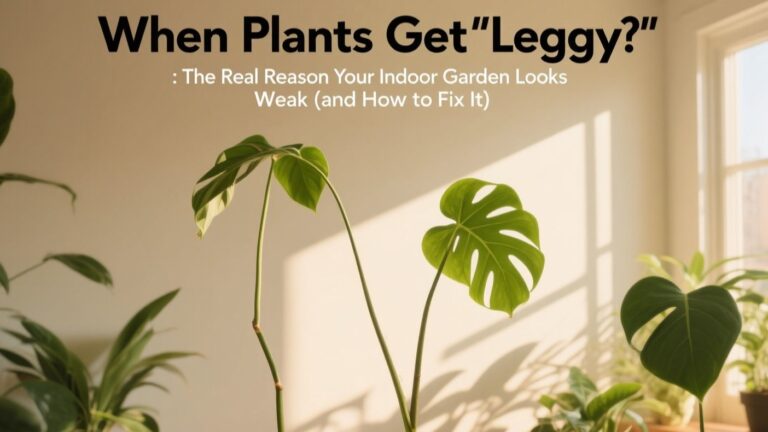
If you’ve ever noticed your indoor plants growing tall, thin, and floppy with long stems and sparse leaves, you’re witnessing what gardeners call “legginess.”
It’s one of the most common issues in indoor gardening — especially for people who love filling cozy corners with greenery but don’t realize how much light intensity truly matters.
Many Reddit gardeners in r/houseplants and r/IndoorGarden have shared the same story:
“My plant was fine for months, and suddenly it’s growing tall but looks weak.”
The culprit? Insufficient light. 🌤️
Let’s unpack why legginess happens, what it does to your plant, and how you can correct it — step by step.
🌿 What Does “Leggy” Mean, Exactly?

A “leggy” plant has:
- Long, stretched-out stems 📏
- Wide gaps between leaves 🌱
- Smaller, paler leaves than usual 🍃
- Weak or drooping growth
It’s the plant’s way of saying, “I’m not getting enough light — I need to stretch to find it.”
In the wild, plants compete for sunlight. Indoors, even a bright room can feel like shade compared to outdoor conditions. That’s why they elongate unnaturally — a survival mechanism known as phototropism (growth toward light).
☀️ The Science Behind Leggy Growth
Plants depend on light for photosynthesis, the process that converts sunlight into energy. When there isn’t enough light:
- The plant stretches upward or sideways toward the nearest light source.
- It invests energy into stem growth instead of leaf and root development.
- The result? A tall, weak, unstable plant that can’t support its own weight.
This often happens during:
- Winter months (shorter days and weaker sunlight) ❄️
- North-facing or shaded windows 🌥️
- Rooms with tinted glass or heavy curtains 🪟
Understanding this natural reaction helps you fix the cause — not just the symptom.
💡 The Real Fix: Better Light, Better Growth
Here’s how you can help your plants regain balance and strength:
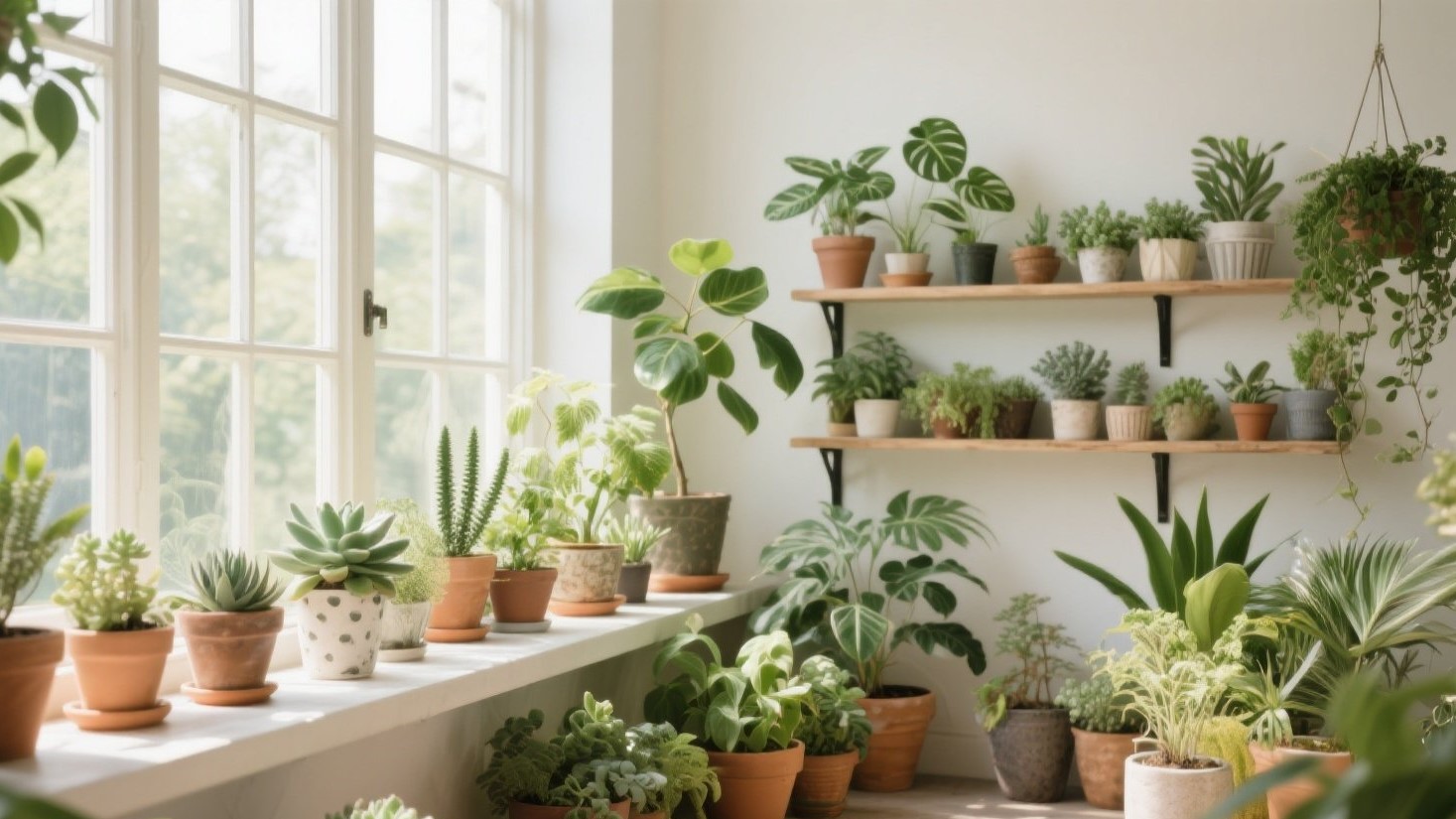
1. 🌤️ Move Plants Closer to the Light Source
Most houseplants thrive within 1–3 feet of a bright window.
✅ South-facing windows — best for sun-loving plants like succulents or cacti.
✅ East-facing — gentle morning light, great for ferns, pothos, and philodendrons.
✅ North-facing — lowest light; use grow lights for supplemental brightness.
Rotate your plants weekly so all sides receive even light. This prevents them from leaning toward one direction.
2. 💡 Invest in a Quality Grow Light
If natural sunlight is limited, a full-spectrum LED grow light is your best friend.
Look for:
- Color temperature: 5000–6500K (mimics daylight)
- Duration: 10–14 hours per day for most indoor plants
- Distance: 6–12 inches above your plant canopy
Reddit gardeners consistently recommend brands like GE Grow Light or Spider Farmer for affordability and performance.
🕯️ Tip: Set your grow light on a timer — consistency is more effective than intense but sporadic exposure.
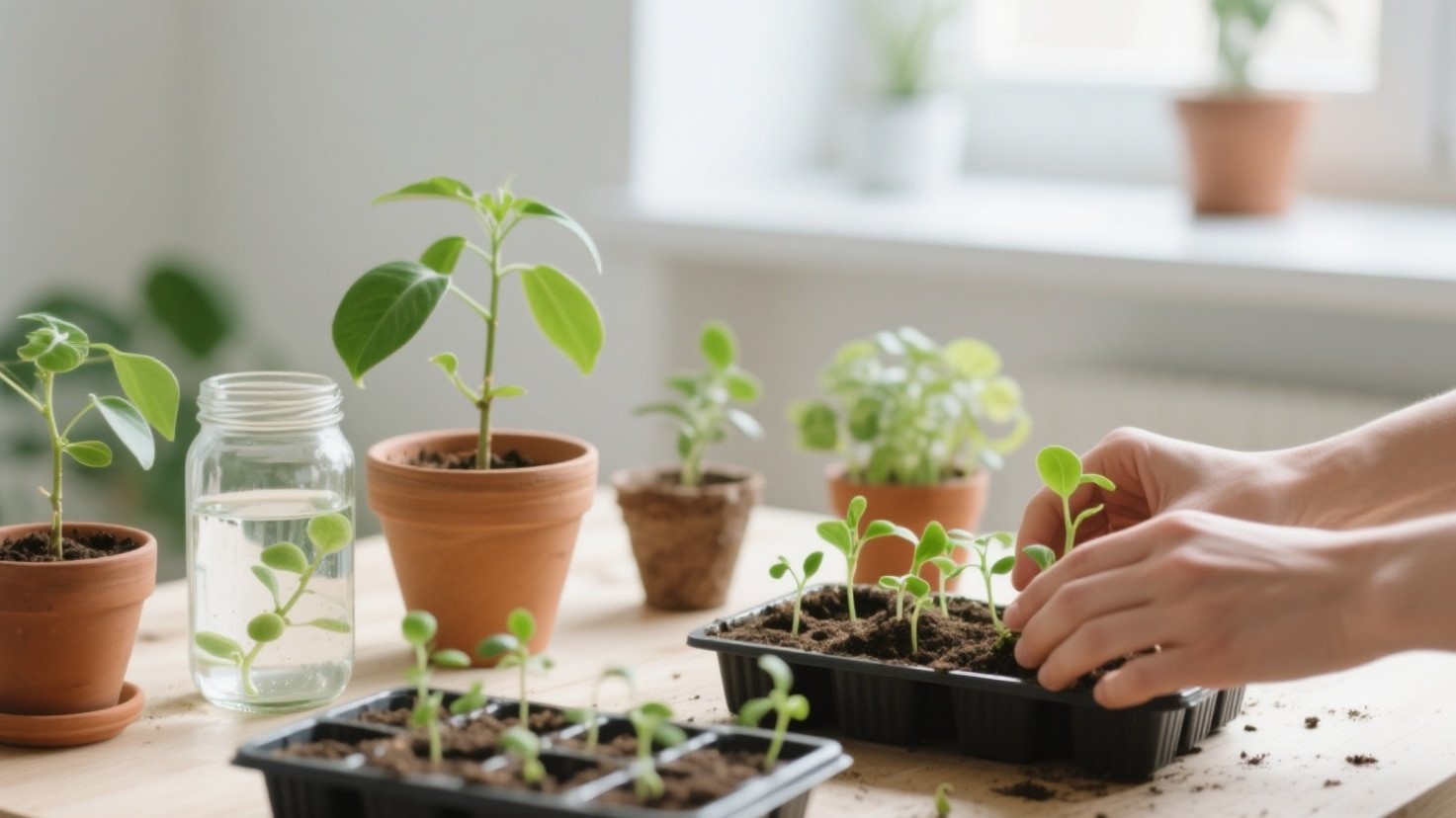
3. 🌿 Prune and Propagate
Once you’ve adjusted the light, prune leggy stems just above a leaf node. This encourages:
- New side shoots 🌱
- Bushier, balanced growth 🌿
You can even propagate the healthy cuttings in water or soil to grow new plants — giving your garden a fresh start.
4. 🪴 Support and Reshape
If the stems are too floppy, gently stake or tie them upright while new, stronger growth forms.
Avoid wire or harsh ties — soft plant ties or twine are ideal.
This temporary support helps your plant redirect its energy into thickening the stems and producing fuller leaves.
5. 🧭 Check for Environmental Balance
Light isn’t the only factor. Combine it with:
- Proper watering: Too much moisture weakens stems. Let the top inch dry before watering.
- Temperature stability: Avoid cold drafts or direct heat sources.
- Humidity: Many indoor plants (like pothos or calatheas) thrive in 50–60% humidity.
Balanced conditions = strong, compact growth. 🌸
🌾 Common Plants That Easily Get Leggy Indoors

- Pothos & Philodendron — stretch fast in dim corners
- Succulents — etiolate quickly without strong light
- Herbs (basil, mint) — tall and thin on windowsills with weak sunlight
- Fiddle Leaf Fig — sparse leaves when far from light
- Spider Plant — long, floppy leaves under low light
Knowing which plants are prone to legginess helps you plan better placement from the start.
🌸 Real Example: “From Spindly to Stunning”
One Reddit user shared their rescue story:
“My basil looked like green spaghetti. I moved it to a bright windowsill, added a grow light, and pinched the tops weekly. Within a month, it grew bushier, and I harvested more leaves than ever.”
This shows how small environmental tweaks — consistent light, gentle pruning, and patience — can completely transform plant health.
🌼 Final Thoughts: Legginess Isn’t Failure, It’s Feedback 🌞
When your indoor garden looks thin or weak, it’s not that you’re a bad plant parent — your plants are simply communicating their needs.
🌿 Legginess = Lack of light, not lack of love.
By improving light exposure, trimming wisely, and maintaining steady care, you can help your plants grow compact, lush, and strong again.
Every gardener learns that sunlight is more than beauty — it’s life. ☀️🌾