Introduction 🌸
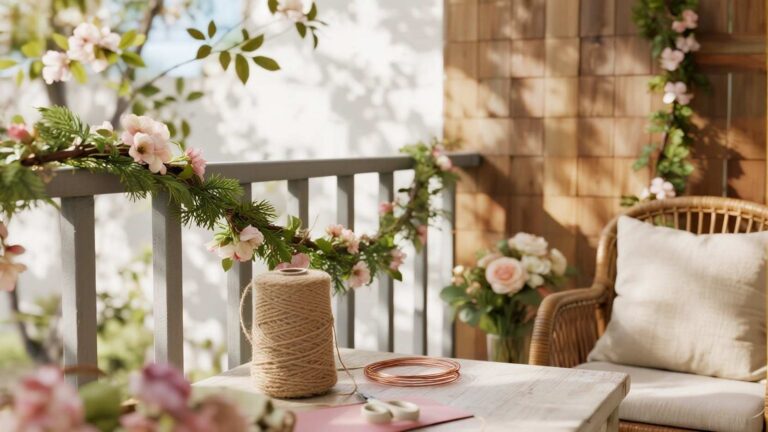
A balcony garland turns a small rail into a seasonal “welcome” banner—lightweight, weather-aware, and tuned to your décor. This guide breaks down materials, realistic costs at three budget tiers, and color palettes that won’t fight your foliage or cushions. You’ll also learn a pro trick: build a short “test strip” before committing to full length for perfect color and density.
Whether you favor faux, dried, or fresh greenery, the aim is the same—soft texture, anchored stems, and a palette that feels intentional. We’ll map where each material shines, where it struggles, and how to blend for price and longevity. By the end, you’ll know exactly what to buy, how much to spend, and how to hang it cleanly.
Materials & Cost Tiers: What You’ll Actually Spend 💸
Think in three tiers so you don’t overbuy: Budget, Mid, and Premium. For a 6–8 ft balcony rail, Budget (~$18–$40) covers basic faux greens ($6–$15), filler stems ($1–$4 each), jute twine ($3–$6), and floral wire ($2–$5). Mid (~$45–$85) adds nicer faux stems or a mix with dried bunches ($8–$18), stronger paddle wire, and low-profile hooks ($6–$12).
Premium (~$90–$160+) layers lifelike faux botanicals, select dried textures, and occasional fresh stems for scent, plus removable hooks and weather-friendly ties. Expect to buy 10–18 stems total for a dense look, fewer if your faux garland base is pre-wired. Budget 45–90 minutes for assembly and spacing checks.
Faux vs. Dried vs. Fresh: Where Each Shines 🌿
Faux is the set-and-forget backbone: durable, easy to re-shape, and color-stable in indirect light. It’s great for windy balconies because wired stems grip rails and hold form. Wipe dust monthly and you’ll reuse for years, which lowers cost per season.
Dried delivers artisanal texture and muted tones, perfect for balconies with neutral cushions. Keep it sheltered from direct rain and heavy wind to avoid shedding, and use light bursts sparingly along a faux base. Fresh brings scent and movement; use hardy greens (e.g., eucalyptus, ruscus) that tolerate brief outdoor exposure and swap weekly.

Fillers, Twine, and Floral Wire: The Invisible Heroes 🧵
Filler stems create rhythm and cover gaps; think baby’s breath, waxflower, mini eucalyptus, and grass plumes. Use odd numbers per cluster and vary stem lengths slightly so the garland reads “grown,” not “glued.” Tuck filler behind feature blooms so color feels sprinkled, not striped.
Twine vs. wire: jute twine is kind to rail finishes and easy to tie, but wire is slimmer and cleaner. For visibility, use jute in natural rails and green wire on metal rails, then micro-tie stems with 26–24-gauge floral wire. Add low-profile adhesive hooks every 12–18 inches for load sharing and tidy drape.

Three Spring Palettes That Won’t Clash with Your Balcony 🎨
Soft Pastel whispers rather than shouts: dusty eucalyptus, pale peach ranunculus, blush hellebore, and cream waxflower. This pairs beautifully with beige or grey cushions and terracotta pots because undertones stay warm and gentle. Keep greenery cool-to-neutral so pastels don’t turn saccharine in bright light.
Citrus Pop energizes with lemon and tangerine notes—marigold, Iceland poppy, mini daffodil, variegated pittosporum. It loves black or charcoal metal rails where contrast makes color read crisp. Temper the brights with white filler and mid-green eucalyptus so you get zest, not chaos.
Herb Garden leans botanical and calm: layered sages, rosemary sprigs, ruscus, white campanula, and soft thyme tufts. It’s ideal if your balcony already has planters; the palette echoes foliage rather than fighting it. Add one restrained accent (pale lavender) to avoid monochrome flatness.
Build Order & Time Plan: Dense but Airy 🛠️
Start with a flexible base rope of twine or a slim faux garland and mark your rail every 12 inches. Add greenery in alternating directions—left, right, forward—to avoid a directional “arrow,” then place feature blooms at eye-catching thirds. Finish by scattering filler in small trios to soften edges and hide mechanics.
For a standard rail, plan 15–25 stem ties and do a spacing pass before final tightening. Gently bend wires for natural droop and keep ends 1–2 inches inside the rail corners so the silhouette feels intentional. Step back five feet to confirm density and adjust any hot spots where color blobs.
Weather, Care & Safety: Make It Last ☔
Outdoors, think wind, wet, and sun: wire heavier pieces, face delicate dried elements inward, and avoid direct sprinkler zones. If storms are forecast, unhook the center and coil the garland on the floor under cover; it takes two minutes and saves hours of repair. UV-exposed balconies benefit from UV-resistant faux; rotate sections monthly to even fading.
Mind weight and rail rules if you’re renting—keep hardware removable and avoid drilling. Choose soft ties where guests lean, and keep stems trimmed flush on the back to prevent snags. A quick weekly shake and dusting keeps faux bright and dried from shedding.
The “Test Strip” Trick: Perfect Color Before You Commit ✅
Cut a 12–18 inch test strip of your base, wire on two greenery choices, one hero bloom, and one filler, then hold it against your rail and cushions. Check in morning and late afternoon light; pastel warmth and citrus brightness can shift with shadows. If anything feels too loud, swap the bloom for a softer neighbor or add more mid-green to calm the palette.
Snap a quick phone photo in your usual seating spot and view it at thumbnail size. If the mix still reads balanced and textured when small, the full garland will photograph beautifully. Once approved, repeat the test strip pattern down the line for a cohesive, pro finish.

Quick Buy List by Tier 🧺
Budget (~$18–$40): basic faux greens, 6–8 filler stems, jute twine, 26-gauge floral wire.
Mid (~$45–$85): higher-realism faux + small dried bundle, paddle wire, adhesive hooks.
Premium (~$90–$160+): lifelike faux, select dried accents, weekly fresh sprigs, low-profile hardware kit.
Final Touch 🌱
When in doubt, blend materials: faux for structure, dried for texture, fresh for scent. Keep palettes disciplined and let cushions and foliage guide undertones so nothing competes. Small decisions—wire gauge, hook spacing, and filler rhythm—turn a crafty strand into a styled feature.
Most importantly, build that test strip and trust the thumbnail check—if it sings small, it’ll wow full length. Take a photo, make one tweak, and then run the pattern down the rail. A one-hour craft session later, your spring balcony looks editorial-ready and uniquely yours.