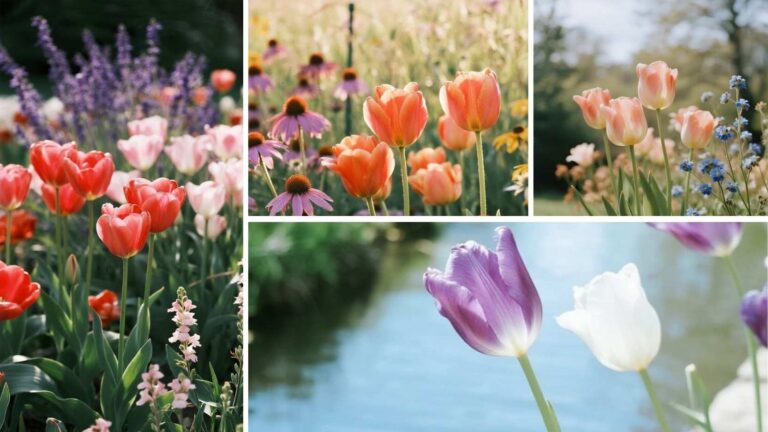
Introduction 🌷🎨
Tulips deliver a burst of spring color, but the show fades fast unless companions step in with height, texture, and staggered blooms. The five ready-made palettes below are designed so perennials rise as tulip foliage declines, keeping beds photogenic and low-maintenance. Plant tulip bulbs in fall at 6–8 inches deep, then weave in perennials at proper spacing so roots settle before heat arrives.
Each mini-recipe includes typical heights, spacing guidance, and bloom windows to extend color from spring into summer or fall. Let tulip leaves yellow naturally for about six weeks after flowering to recharge bulbs for next year. Think of tulips as your “opening act,” with companions as the headliners that carry the season. 😊
1) Dutch Meadow: Tulips + Salvia + Gaura 🇳🇱💜
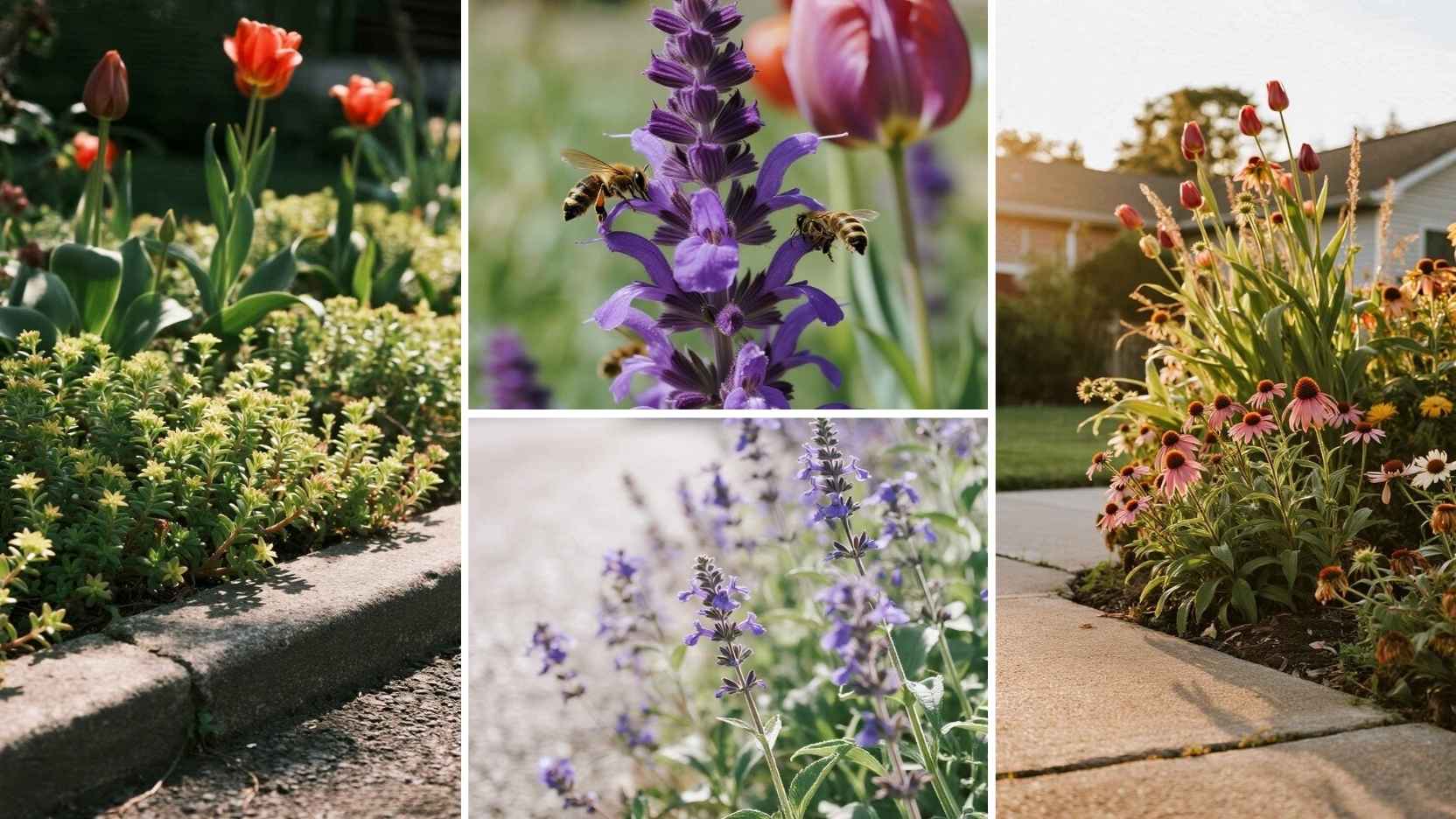
This airy meadow look pairs mid-height tulips (14–22 in / 35–55 cm) with Salvia nemorosa (18–24 in / 45–60 cm, space 12–18 in / 30–45 cm) and Gaura lindheimeri (24–36 in / 60–90 cm, space 18–24 in / 45–60 cm). Tulips blaze in spring; salvia spikes follow in late spring to early summer; gaura’s fluttering wands carry soft color into fall. Place tulips in clustered drifts, ring them with salvia for structure, and float gaura at the back for movement.
As tulip foliage flops, salvia’s mound hides the fade while gaura adds height and motion. Deadhead salvia after the first flush for a quick rebloom and shear gaura lightly to keep stems upright. Use gravel mulch to improve drainage around bulbs and reduce splash on salvia leaves. ✨

2) Sunset Prairie: Tulips + Coneflower + Black-Eyed Susan 🌅🧡
Choose warm tulips (apricot, coral, or orange; 16–24 in / 40–60 cm) to bridge into summer with Echinacea purpurea coneflower (24–36 in / 60–90 cm, space 18–24 in / 45–60 cm) and Rudbeckia fulgida black-eyed Susan (18–30 in / 45–75 cm, space 18 in / 45 cm). Tulips ignite spring, coneflower anchors mid-summer, and rudbeckia finishes the show late summer into fall. Mass in triangles: tulips front-middle, rudbeckia mid-belt, coneflower at the back for a gentle rise.
Cut tulip stems after bloom but keep leaves until they yellow; tuck emerging coneflower to mask the die-back. Deadhead coneflower selectively for fresh petals or leave late blooms for pollinators and seedheads. Rudbeckia tolerates heat and fills gaps fast, keeping the border saturated with color. 🌻

3) Soft Blue Drift: Tulips + Catmint (Nepeta) 🌊💙
Cool tulips (white, blush, or lilac; 14–20 in / 35–50 cm) look luxe floating over a river of Nepeta ‘Walker’s Low’ catmint (18–24 in / 45–60 cm, space 18–24 in / 45–60 cm). Catmint blooms late spring with repeat waves, cloaking spent tulip leaves in a soft blue haze. Curve the catmint in a serpentine band and nest tulip clusters along the edges for a designer “drift.”
Shear catmint by one-third after the first flush to trigger a tidy rebloom. Add a few taller, sparse tulip groups behind the catmint to create depth without crowding. This combo thrives in full sun with well-drained soil and is especially photogenic along paths. 😍

4) Woodland Edge: Tulips + Brunnera + Heuchera 🍃💎
For bright shade or morning sun, pair tulips (12–18 in / 30–45 cm) with Brunnera macrophylla (heartleaf brunnera, 12–18 in / 30–45 cm, space 15–18 in / 38–45 cm) and Heuchera (coral bells, 10–18 in / 25–45 cm, space 12–18 in / 30–45 cm). Brunnera’s forget-me-not blue clouds overlap late spring as tulips finish, while heuchera’s foliage (amber, burgundy, or silver) provides season-long color. Layer tulips in pockets ahead of brunnera mounds, then dot heuchera for foliage contrast.
Keep soil evenly moist with organic mulch; avoid waterlogged spots that rot bulbs. Divide brunnera every few years to maintain vigor and refresh heuchera as needed to keep crowns high. This composition reads luxe and calm, perfect along fences or under open canopies. 🌿

5) Coastal Glow: Tulips + Lavender + Yarrow 🌾💜
For hot, breezy sites, combine tulips (16–22 in / 40–55 cm) with Lavandula angustifolia lavender (18–24 in / 45–60 cm, space 18 in / 45 cm) and Achillea millefolium yarrow (24–30 in / 60–75 cm, space 18–24 in / 45–60 cm). Tulips star in spring; lavender perfumes early summer; yarrow’s flat umbels carry color well into the dry season. Arrange tulips in clumps between alternating lavender mounds; thread taller yarrow behind to lift the skyline.
Use sandy or gravelly soil, avoid over-watering, and provide maximum sun. Shear lavender lightly after bloom to keep domes tight, and deadhead yarrow to extend flowering. The silver foliage, sturdy stems, and layered heights make this palette driveway- and seafront-friendly. 🌬️

Practical Notes & Timing ⏱️🛠️
Plant tulip bulbs in fall (when soil is ~10–13°C / 50–55°F) at 6–8 inches (15–20 cm) deep and 4–6 inches (10–15 cm) apart. Space perennials per recipe so they can expand and cover tulip die-back without overcrowding bulbs. Aim for full sun on sun-loving palettes and ensure fast drainage with compost and a thin gravel top-dress.
For continuous color: tulips = early-mid spring, salvia/catmint = late spring–early summer, coneflower/rudbeckia/yarrow/gaura = mid- to late season. Deadhead strategically and shear where noted to trigger reblooms and maintain tidy mounds. Leave some seedheads for wildlife and winter structure if that fits your garden style. 🌱
Quick Reference (Heights & Spacing) 🧭
Tulips 12–24 in height; plant bulbs 6–8 in deep; cluster 4–6 in apart. Salvia 18–24 in tall (space 12–18 in); Gaura 24–36 in (space 18–24 in); Catmint 18–24 in (space 18–24 in). Coneflower 24–36 in (space 18–24 in); Rudbeckia 18–30 in (space 18 in); Brunnera 12–18 in (space 15–18 in); Heuchera 10–18 in (space 12–18 in); Lavender 18–24 in (space 18 in); Yarrow 24–30 in (space 18–24 in). 🌼
Closing Thoughts 🎯🌺
Treat these palettes like paint kits: same color harmony, predictable heights, and bloom handoffs already solved. Start with one palette, then duplicate it in repeating blocks for a professional, rhythmical look. With smart spacing and a quick mid-season shear, your border will stay vibrant long after tulips take a bow. 🙌
Note: If your climate runs very hot or very wet, nudge spacing up by 10–15% for airflow and bulb health. Rotate tulip color families each year to refresh the spring look without redesigning the whole bed. Enjoy the designer effect with weekend-level effort. 💪