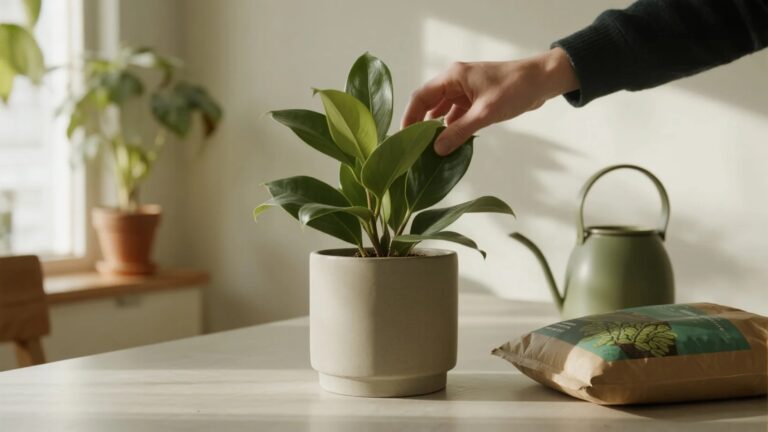
Hi everyone! In this guide, we’ll go over the simple secrets to keeping your ZZ Plant (Zamioculcas zamiifolia) thriving. Known for its waxy, green leaves and incredible toughness, the ZZ Plant is a favorite for both beginners and expert gardeners. Let’s dive in!
1. Light: It Loves Bright Light (Despite the Myth!)
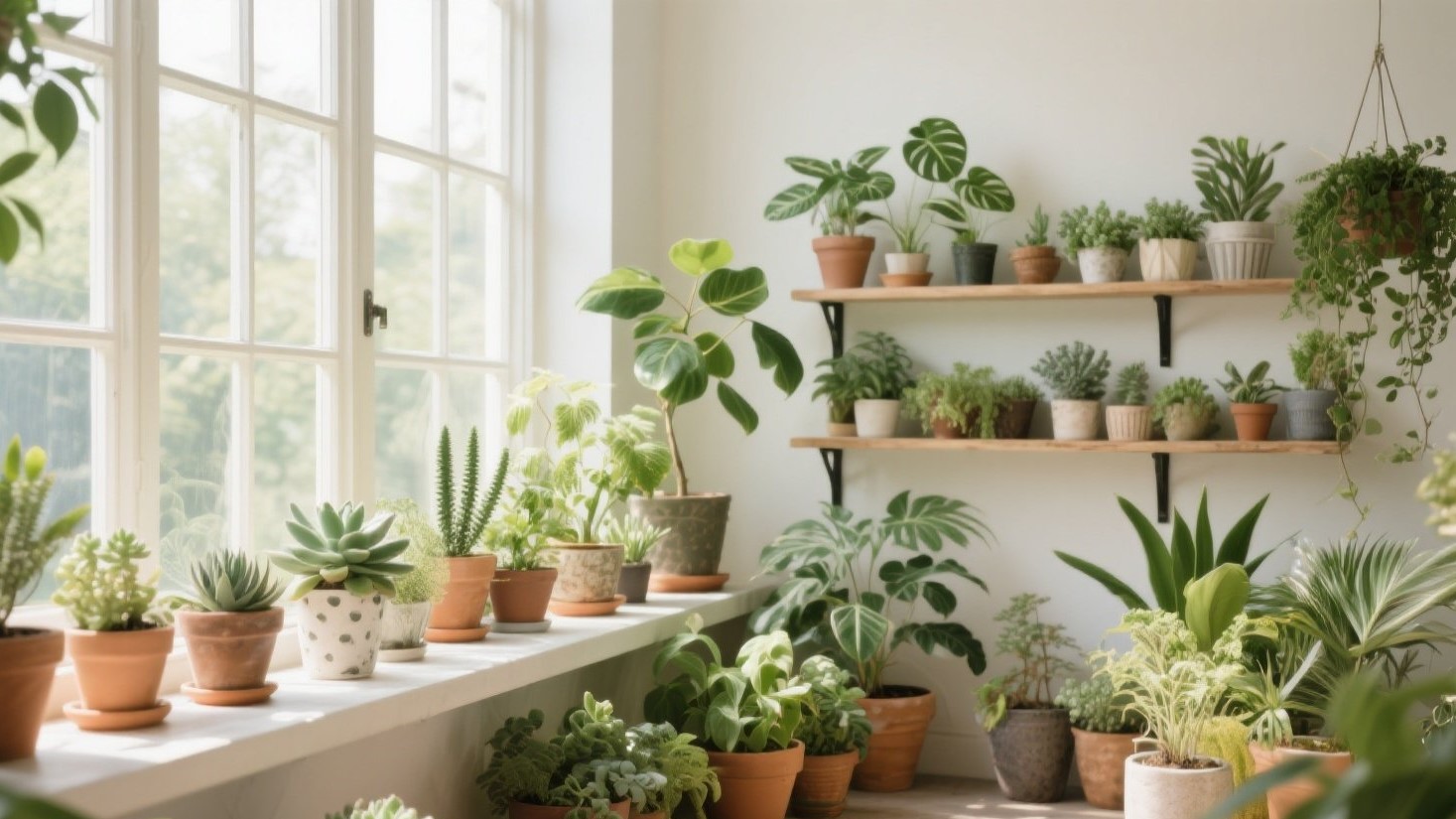
There’s a common myth that ZZ Plants love dark corners. While they can survivein low light, they truly thrive in bright, indirect light.
- Ideal Spot: A spot near an east or west-facing window is perfect. It gets plenty of gentle light without the harsh, direct afternoon sun that can scorch the leaves.
- The Truth About Low Light: Keeping it in a dark room for too long will cause it to grow very slowly, become leggy (with long spaces between leaves), and be more susceptible to health problems. For a lush, vibrant plant, give it as much light as you can!
2. Watering: The #1 Rule is Don’t Overwater!
The ZZ Plant is a succulent. It stores water in its thick stems and potato-like roots (called rhizomes), making it very drought-tolerant. Overwatering is the easiest way to harm it.
- The Soak and Dry Method: Do not water on a schedule. Instead, wait until the soil is completely dry all the way through the pot. You can check this by sticking your finger or a wooden chopstick into the soil. If it comes out clean and dry, it’s time to water.
- How to Water: When the soil is dry, water the plant thoroughly until water runs out of the drainage hole. Then, let all the excess water drain away completely. Do not let the plant sit in a saucer of water.
3. Soil and Repotting: Less is More
- The Right Soil: Use a well-draining potting mix. A standard cactus or succulent mix is an excellent choice because it allows water to flow through quickly, preventing root rot.
- Repotting Tips: ZZ Plants actually like to be a little snug in their pots. You only need to repot every 2-3 years, or even longer for large floor plants.
- Pot Size: When you do repot, choose a new pot that is only 1-2 inches larger in diameter than the old one. A pot that is too big holds too much wet soil and can lead to root rot.
- Easy Solution: If you buy a ZZ Plant in a basic nursery pot but want to use a prettier decorative pot, simply “double-pot” it. This means placing the plastic nursery pot directly inside the decorative pot without actually repotting the plant.
4. Fertilizing for Growth
Feed your ZZ Plant during its main growing season (spring and summer).
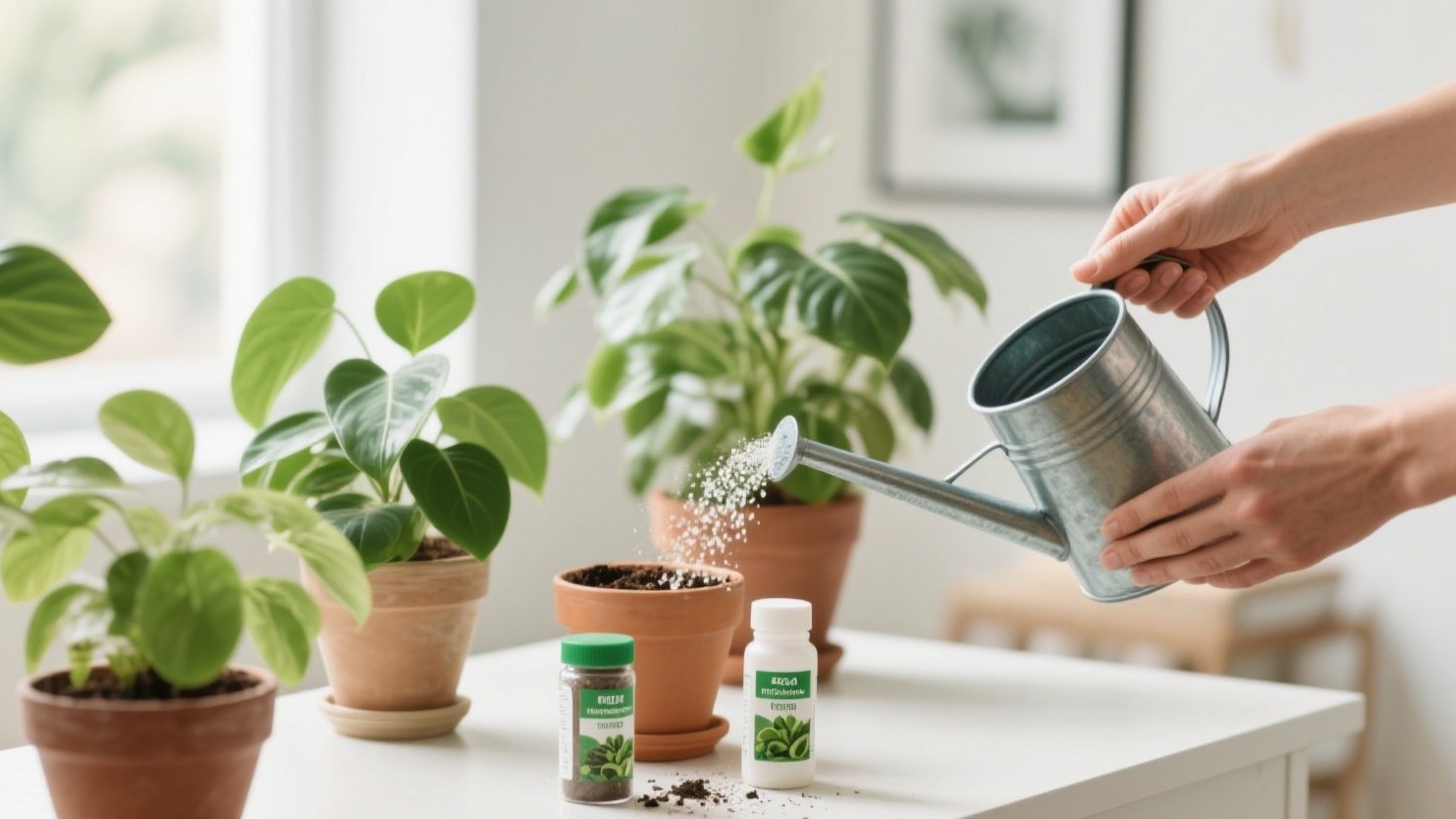
- What to Use: A balanced all-purpose liquid houseplant fertilizer works great.
- How to Feed: Dilute the fertilizer to half the strength recommended on the bottle and apply it every 4-6 weeks. Stop fertilizing completely in the fall and winter when the plant’s growth naturally slows down.
5. Winter Care: Keeping It Cozy
As a tropical plant, the ZZ Plant dislikes the cold.
- Temperature: When outdoor temperatures drop below 50°F (10°C), it’s time to bring your plant indoors. Keep it in a room where the temperature stays consistently above 60°F (15°C).
- Watering in Winter: During the winter, the plant needs even less water. Water much less frequently, allowing the soil to stay dry for longer periods.
6. Simple Pruning and Propagation
- Pruning: ZZ Plants require very little pruning. Simply use clean scissors to trim away any yellow or brown leaves at the base of the stem. This keeps the plant looking tidy and healthy.
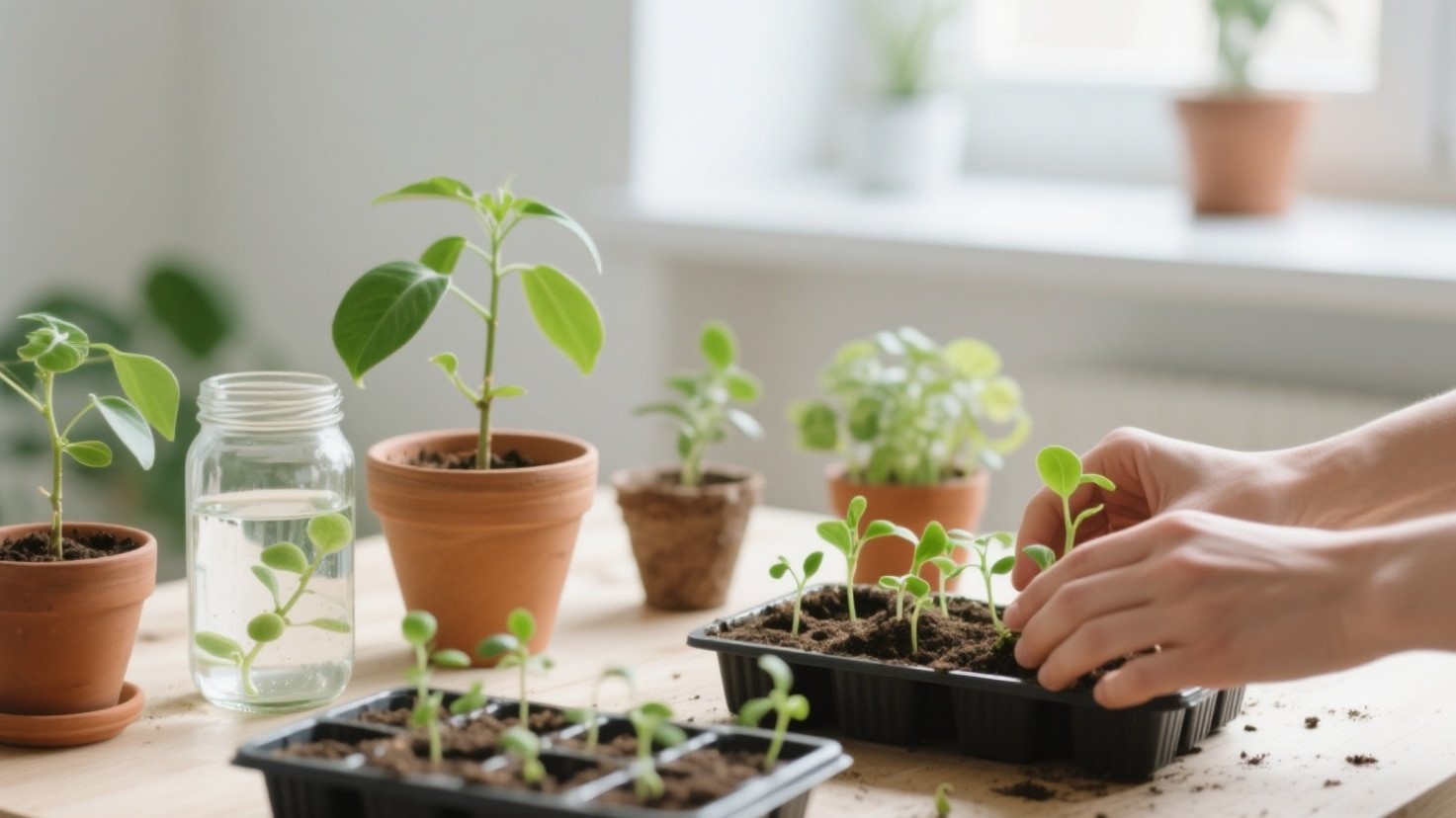
- Propagation: The easiest way to make new plants is by leaf cuttings.
- Gently twist a healthy leaf off a stem.
- Let the cut end dry and “heal” for a few hours.
- Place the cut end into a small pot with moist succulent soil.
- Be patient! It can take several months for new roots and a small rhizome to form.
7. Pest and Disease Problems
ZZ Plants are very resistant to pests, but occasionally can have issues.
- Common Pests: Watch for mealybugs (they look like small white cottony spots) or scale (small, brown, bumpy insects). You can wipe them off with a cotton swab dipped in rubbing alcohol.
- Fungal Issues: Yellowing leaves are usually a sign of overwatering. If you see spots, improve air circulation and let the soil dry out. For a severe issue, a spray with a general houseplant fungicide can help.
By following these simple tips, your ZZ Plant will be a beautiful, low-maintenance part of your home for years to come! Enjoy your gardening.