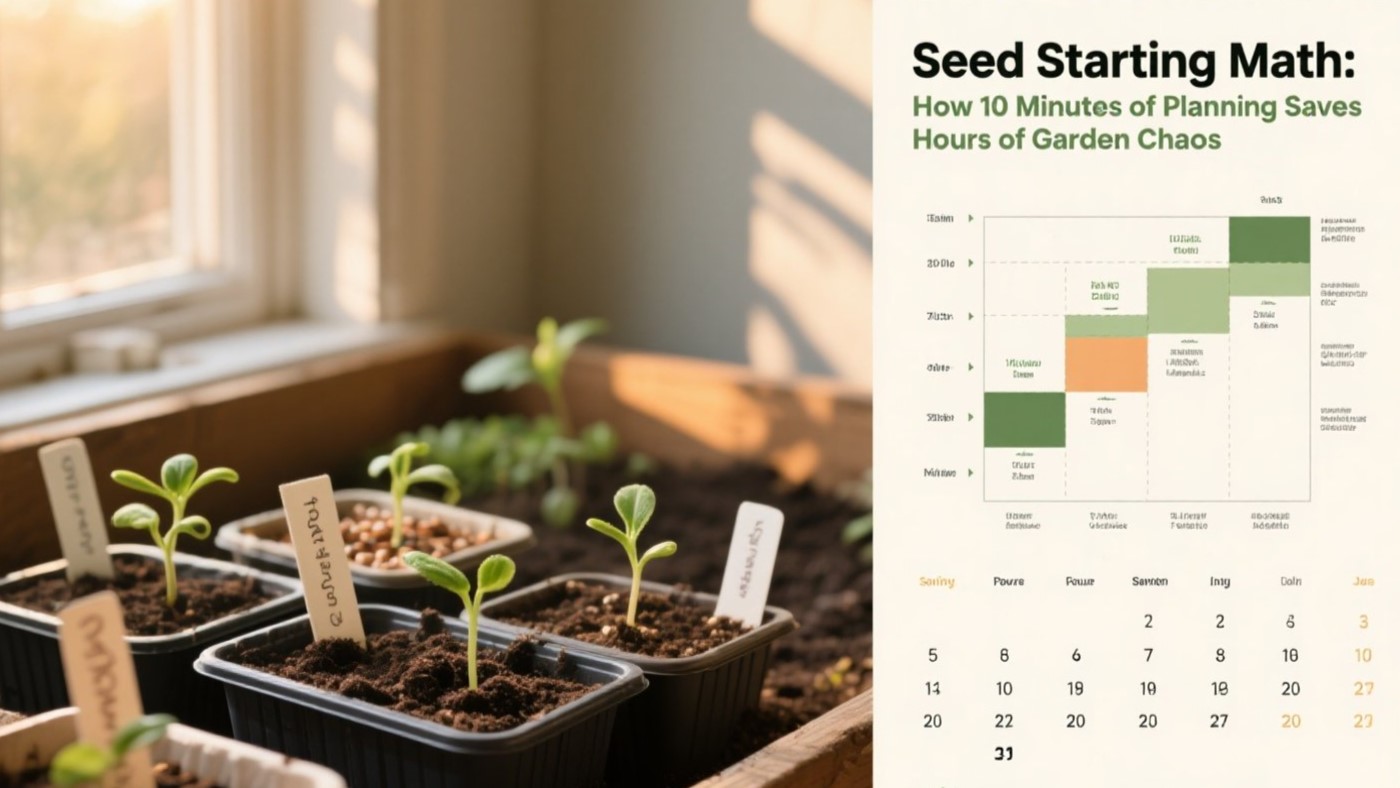
Spring gardening can quickly turn chaotic if you start seeds without a plan. Seeds may sprout too early, too late, or in the wrong quantities. The solution? a simple planning session that costs just 10 minutes but saves 10 hours of frustration later.
Gardeners on Reddit and online plant communities often emphasize this principle: a small upfront investment in sow dates, quantities, and spacing makes all the difference. Let’s break down how to make seed starting efficient, effective, and stress-free.
Why Planning Matters
- Timing Is Everything
- Seeds have different germination rates and optimal sowing times.
- Starting too early can lead to leggy seedlings.
- Starting too late may prevent plants from maturing before frost.
- Prevent Seed Waste
- Random sowing often results in too many seedlings for your available space.
- Some seeds may fail to germinate if started incorrectly, wasting money and time.
- Avoid Logistical Chaos
- Without planning, you may scramble to find trays, soil, or light setups at the last minute.
- Labeling, spacing, and scheduling sowing dates prevent confusion and lost seedlings.
The 10-Minute Planning Method
Step 1: List Your Crops
Write down every plant you want to grow this season. Include:
- Variety
- Seed count (approximate)
- Days to germination
Step 2: Determine Sow Dates
- Research your region’s last frost date.
- Work backward based on each seed’s germination and transplant timeline.
- Create a simple calendar showing which seeds go into trays each week.
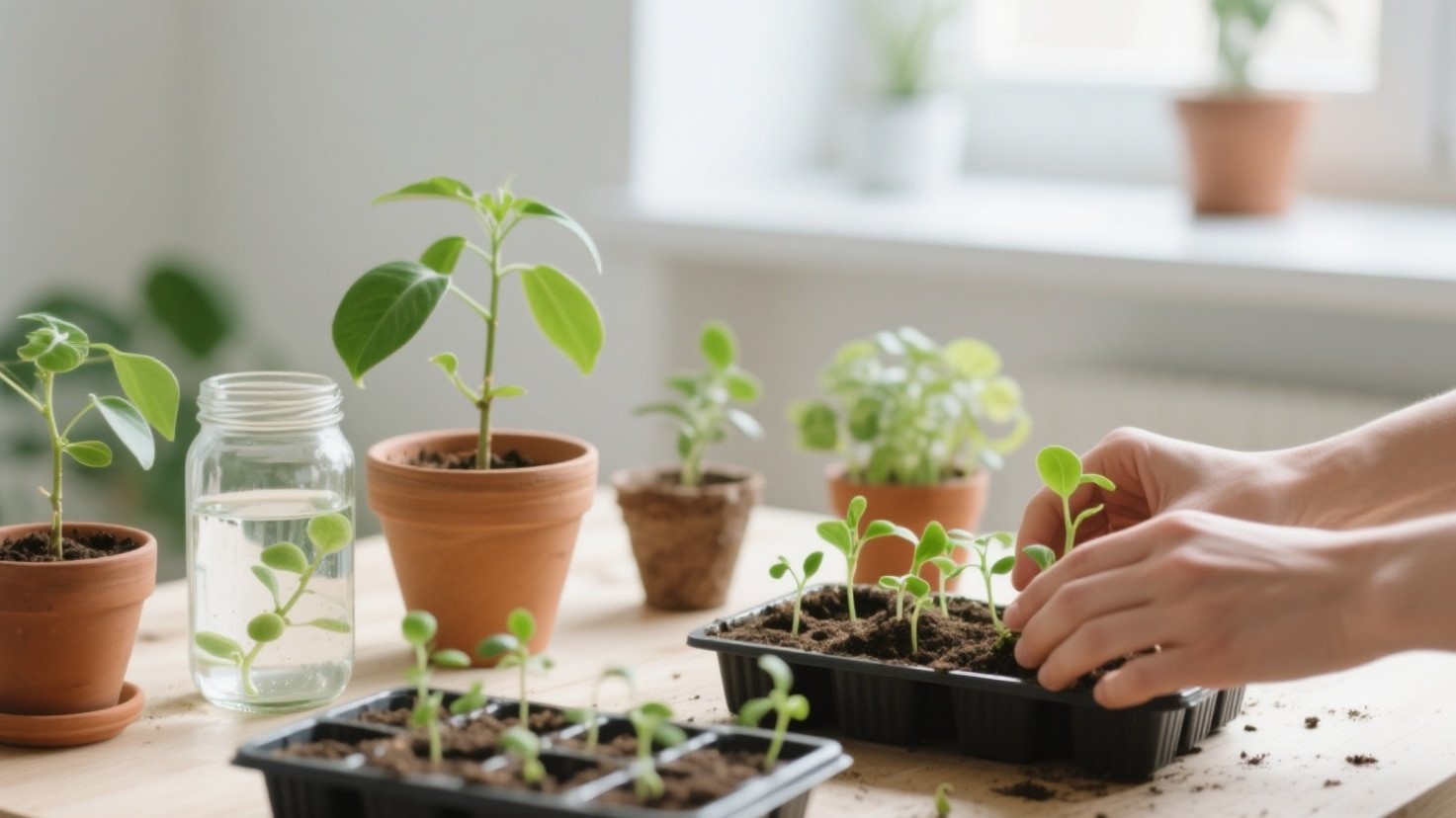
Step 3: Map Out Space & Containers
- Check tray availability and pot sizes.
- Decide how many seedlings per container.
- Ensure enough room under grow lights or windows.
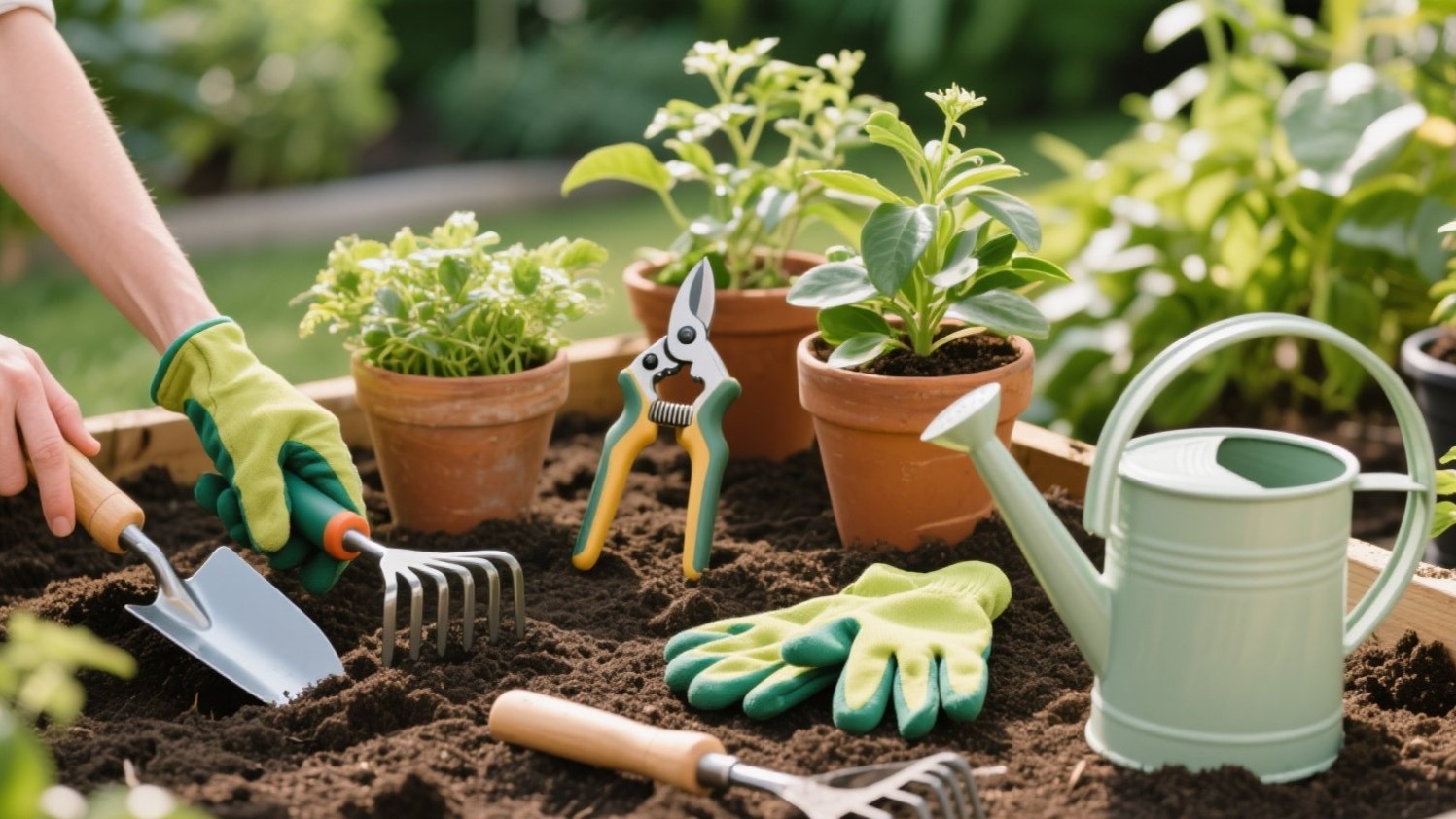
Step 4: Prep Materials Ahead of Time
- Soil mixes
- Labels
- Trays or containers
- Watering tools
Step 5: Track Progress
- Use a small notebook or spreadsheet.
- Record sow date, germination, and transplant dates.
- This record becomes your reference for future seasons.
Real-Life Benefits
- Less waste: Only sow what you can handle and transplant.
- Stronger seedlings: Plants get optimal light, warmth, and nutrients.
- Stress-free transplanting: Seedlings are ready on time, reducing shock.
- Efficiency: No last-minute runs to the garden store or frantic potting.
Reddit gardeners often report that this small planning habit eliminates the common “too many, too little, or too late” mistakes that plague first-time seed starters.
Pro Tips
- Color-code sow dates on your calendar for quick reference.
- Group seeds with similar germination needs.
- Always start a few extra seeds as backup for inevitable losses.
- Keep a seasonal seed-starting template for repeated use.
Final Thoughts
Spending just 10 minutes planning your seed-starting schedule is a classic example of front-loaded efficiency. By organizing sow dates, quantities, and containers in advance, you save hours of corrective work, reduce stress, and increase your harvest success.
In gardening, a little math upfront leads to a lot of calm and productivity later. 🌱