🌿 Introduction: The Hidden Factor That Determines Plant Success

Every gardener knows that sunlight, water, and nutrients are essential — but there’s another crucial element that quietly governs how your plants grow: soil pH.
The pH level of your soil determines how easily plants can absorb nutrients from it. Even if you add fertilizer or compost regularly, your plants may still struggle if the pH is off balance. That’s why understanding soil acidity isn’t just “science talk” — it’s a core gardening skill that directly affects root health, growth rate, and even flower color.
Let’s dig into what soil pH really means, how to test it accurately, and how to naturally correct imbalances without harming your garden ecosystem.
🧪 What Is Soil pH, Exactly?
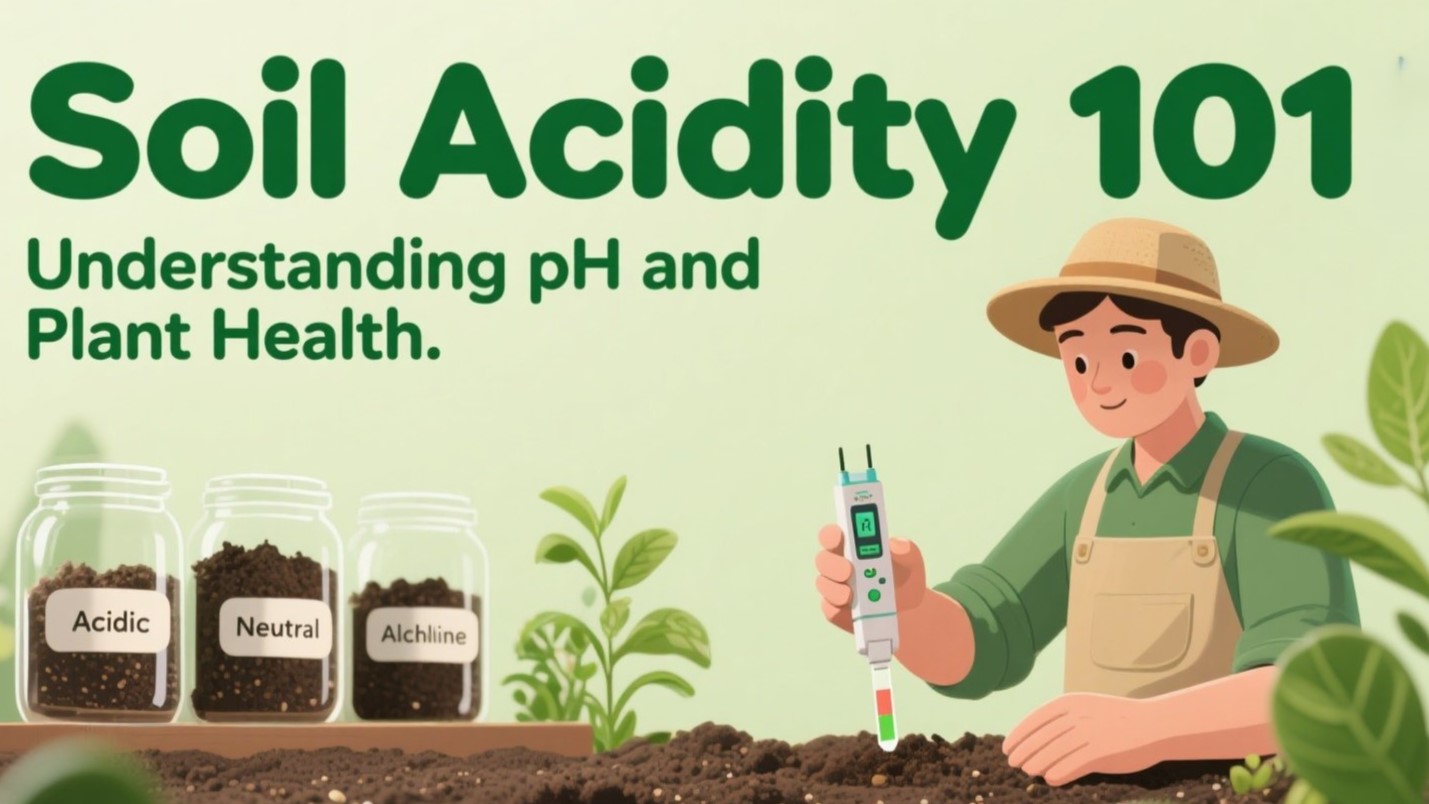
Soil pH is a scale that measures how acidic or alkaline your soil is, ranging from 0 to 14:
- 0–6.9: Acidic soil
- 7: Neutral
- 7.1–14: Alkaline (basic) soil
Most plants prefer slightly acidic to neutral soil (pH 6–7), but not all species are the same. For example:
- Acid-loving plants (like blueberries, azaleas, and hydrangeas) thrive at pH 4.5–6.
- Neutral to alkaline-loving plants (like lavender, herbs, and cabbage) do better around pH 7–8.
When pH levels drift too far from a plant’s ideal range, it can’t absorb key nutrients — even if they’re present in the soil. That’s why gardeners often mistake nutrient deficiency symptoms (yellowing leaves, stunted growth) for lack of fertilizer, when the real issue is a locked-out nutrient due to pH imbalance.
🌾 Why pH Matters So Much for Plant Growth
Soil pH affects:
- Nutrient Availability –
Each mineral (like iron, nitrogen, or phosphorus) dissolves differently depending on the pH. Acidic soil can make some nutrients overly available (and toxic), while alkaline soil locks them away entirely. - Microbial Activity –
Beneficial microbes that break down organic matter prefer a slightly acidic to neutral environment. If the soil is too acidic or too alkaline, these organisms slow down — reducing natural nutrient recycling. - Root Function –
Roots absorb nutrients through chemical exchange. If pH is too extreme, that exchange becomes inefficient, and the plant’s overall metabolism weakens. - Soil Structure –
pH can even affect soil texture. Very acidic soils tend to lose structure and drain poorly, while alkaline soils can become compact and hard.
🔍 How to Test Your Soil’s pH (Accurately and Affordably)

Testing your soil’s pH is easier than you might think. Here are three reliable ways to do it:
- Home Test Kits (pH Meters or Strips)
Available at garden centers, these kits give instant results. Simply mix a bit of soil with distilled water, dip the test strip or meter probe, and read the color or number. - DIY Vinegar and Baking Soda Test(For Quick Estimates)
- Place 2 tablespoons of soil in one cup. Add vinegar. If it fizzes, your soil is alkaline.
- Place 2 tablespoons of soil in another cup. Add water and baking soda. If it fizzes, your soil is acidic.
While not precise, this method helps you understand general soil tendencies.
- Laboratory Testing (Most Accurate)
For gardeners managing vegetables, fruit trees, or large gardens, sending a sample to a local agricultural extension or soil lab provides exact pH readings and nutrient breakdowns.
🌱 How to Balance Soil pH Naturally
If your test shows your soil is too acidic or alkaline, don’t worry — there are eco-friendly ways to bring it back into balance:
👉 If Your Soil Is Too Acidic (Low pH):
- Add Garden Lime (Calcium Carbonate): The classic fix. It neutralizes acidity over time.
- Use Crushed Eggshells: A gentle, slow-release calcium source.
- Incorporate Wood Ash: In moderation, this raises pH naturally while adding potassium.
👉 If Your Soil Is Too Alkaline (High pH):
- Add Sulfur or Aluminum Sulfate: These lower pH gradually.
- Mix in Compost or Peat Moss: Organic matter slightly acidifies soil while improving structure.
- Use Coffee Grounds or Pine Needles: Mild, natural acidifiers that work well for potted plants and garden beds.
🌤️ Important Tip:
Adjust soil pH gradually. Drastic changes can shock plants and disturb microbial balance. Re-test your soil a few weeks after applying amendments to ensure steady progress.
🌸 Examples of pH Preferences (Know Your Plants!)
| Plant Type | Preferred pH | Notes |
|---|---|---|
| Blueberries | 4.5–5.5 | Requires acidic soil for fruiting |
| Azaleas | 4.5–6.0 | Loves humus-rich, slightly moist soil |
| Hydrangeas | 5.0–6.5 | pH affects flower color (blue in acidic, pink in alkaline) |
| Tomatoes | 6.0–6.8 | Neutral to slightly acidic |
| Lettuce | 6.0–7.0 | Grows best in balanced soil |
| Lavender | 6.5–8.0 | Prefers alkaline, well-draining soil |
| Beans | 6.0–7.5 | Fairly tolerant but prefers neutral soil |
🧭 Maintaining Balanced pH Over Time
Once you achieve the right pH, your job isn’t done — soil naturally changes over time due to:
- Rainwater leaching minerals away
- Fertilizer use
- Organic matter breakdown
- Plant root activity
To maintain balance:
✅ Test soil twice a year (early spring and mid-fall).
✅ Use compost regularly — it buffers pH naturally.
✅ Rotate crops or container plants to avoid nutrient depletion.
Healthy soil is a living system, not a static one. Monitoring its pH helps you stay in tune with that living rhythm.
🌿 Final Thoughts: Healthy Soil, Happy Roots
Understanding soil pH is like learning the language of your plants. Once you can “read” what your soil is saying, you’ll know exactly what your garden needs — no more guesswork, no wasted fertilizer, and no struggling plants.
Whether you’re tending a single windowsill herb pot or an entire backyard garden, mastering soil acidity will help your plants thrive from root to leaf. Because when the chemistry beneath the surface is right, everything above it flourishes. 🌾