Introduction 🌾
It’s often praised across gardening blogs, YouTube tutorials, and Reddit threads as a “superfood for plants.” Gardeners everywhere swear by it — a magical brown liquid said to revive weak plants, boost soil life, and grow lush greenery almost overnight. But the big question remains: does compost tea actually work, or is it just another internet gardening fad?
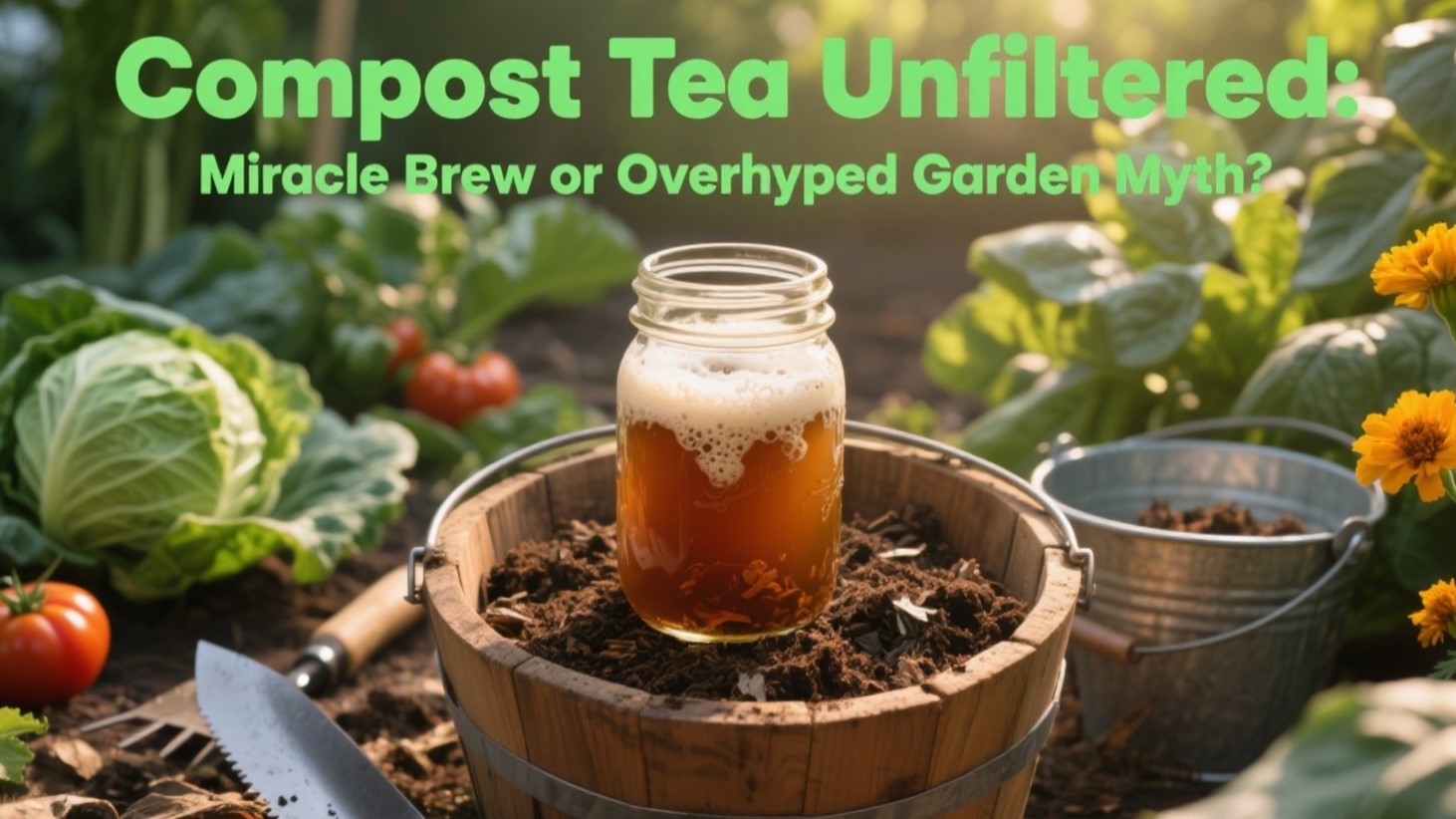
Compost tea — not something you’d drink yourself — is a liquid extract made by steeping compost in water, much like brewing a cup of tea. It’s believed to deliver a concentrated dose of beneficial microbes and nutrients straight to the soil and plant roots. But between anecdotal success stories and scientific skepticism, it’s easy to get lost in the mix.
This guide dives deep into what compost tea really is, how to make it safely, and what research (and real gardeners) say about its actual benefits.
What Is Compost Tea? 🍵

At its simplest, compost tea is a nutrient-rich liquid fertilizer created by soaking quality compost in water. The goal? To extract beneficial microorganisms, enzymes, and soluble nutrients that can be applied directly to plants or soil.
There are two main types of compost tea:
- Aerated Compost Tea (ACT) – Actively bubbled using an air pump to promote aerobic (oxygen-loving) microbes. It’s typically brewed for 24–36 hours.
- Non-Aerated Compost Tea – A simpler version where compost is soaked without aeration for several days. However, this method can sometimes produce anaerobic (oxygen-poor) conditions, leading to unwanted bacteria or foul smells.
Gardeners who favor compost tea often describe it as “probiotic water” for plants — a way to deliver life and nutrients in liquid form.
How to Make Compost Tea (Step-by-Step) 🧑🌾

Here’s a reliable and safe way to make aerated compost tea at home:
What You’ll Need:
- 1 part high-quality compost (preferably homemade or organic-certified)
- 5 parts non-chlorinated water (rainwater is ideal)
- 1–2 tablespoons of unsulfured molasses (microbe food)
- A clean 5-gallon bucket
- An aquarium air pump with air stones
- A mesh bag or old pillowcase (to hold compost)
Steps:
- Fill the bucket with water and let it sit for 24 hours to dechlorinate if using tap water.
- Place compost into the mesh bag and submerge it in the bucket.
- Add molasses — this feeds beneficial microbes during brewing.
- Attach the air pump and let it bubble continuously for 24–36 hours.
- Strain and use immediately. Compost tea loses its potency quickly once oxygen flow stops.
How to Apply:
- Soil drench: Pour directly around the plant base to nourish roots.
- Foliar spray: Apply on leaves early in the morning or evening for potential disease prevention.
The Science (and Debate) Behind Compost Tea 🔬
The internet may call it “liquid gold,” but scientists are more cautious. Research shows mixed results:
✅ Potential Benefits (When Done Right):
- Can introduce beneficial microbes that suppress harmful pathogens.
- May boost nutrient availability for plant roots.
- Some gardeners notice improved soil structure and moisture retention.
- Encourages microbial diversity, especially in poor or sterile soils.
❌ Limitations and Risks:
- Inconsistent results: Studies find benefits vary depending on compost quality, brewing time, and oxygen levels.
- Risk of contamination: Poorly brewed tea can harbor E. coli or Salmonella, especially if animal manure compost is used.
- Short shelf life: Once brewing stops, oxygen levels drop fast, turning the liquid anaerobic (harmful to plants).
In 2021, several agricultural studies concluded that while compost tea can support soil microbiology, it’s not necessarily more effective than applying solid compost directly. Still, many home gardeners continue to report healthier growth, especially for container and indoor plants.
What Reddit Gardeners Are Saying 🌐
Across subreddits like r/gardening and r/composting, discussions show a similar theme: “It works — if you do it right.”
Some real-world observations from gardeners:
- “My tomato leaves looked greener after a few weeks of weekly compost tea drenches.”
- “It revived my tired houseplants faster than any store fertilizer.”
- “Honestly, I think it helps more with soil life than plant growth directly.”
The consensus? Compost tea won’t perform miracles, but it’s a great companion practice for those who already maintain healthy soil.
How to Brew Compost Tea Safely 🌸
To avoid contamination or weak results, keep these key points in mind:
- Always use well-aged compost — no fresh manure or unfinished scraps.
- Avoid overbrewing — more than 48 hours without enough aeration can lead to anaerobic bacteria.
- Clean equipment thoroughly before and after every batch.
- Use within 6–8 hours of brewing completion for best results.
- Test small batches on a few plants before widespread application.
Eco-Friendly Bonus: Compost Tea Alternatives 🌎
If brewing sounds too complicated, you can still enrich your soil naturally with:
- Worm castings tea – similar process, gentler, and less risk of bad bacteria.
- Liquid seaweed or kelp extract – boosts trace minerals and plant resilience.
- Compost leachate (the liquid from bins) – dilute it heavily (1:10) and use cautiously.
Final Thoughts 🌼
Compost tea isn’t a magic potion, but it is a meaningful expression of mindful gardening. It embodies the cycle of renewal — turning waste into nourishment and microbes into vitality. When brewed safely and used as part of a balanced soil care routine, it can genuinely enhance your plants’ resilience and root health.
Think of it as your garden’s morning coffee: energizing, effective when used in moderation, and best enjoyed fresh. ☕🌱