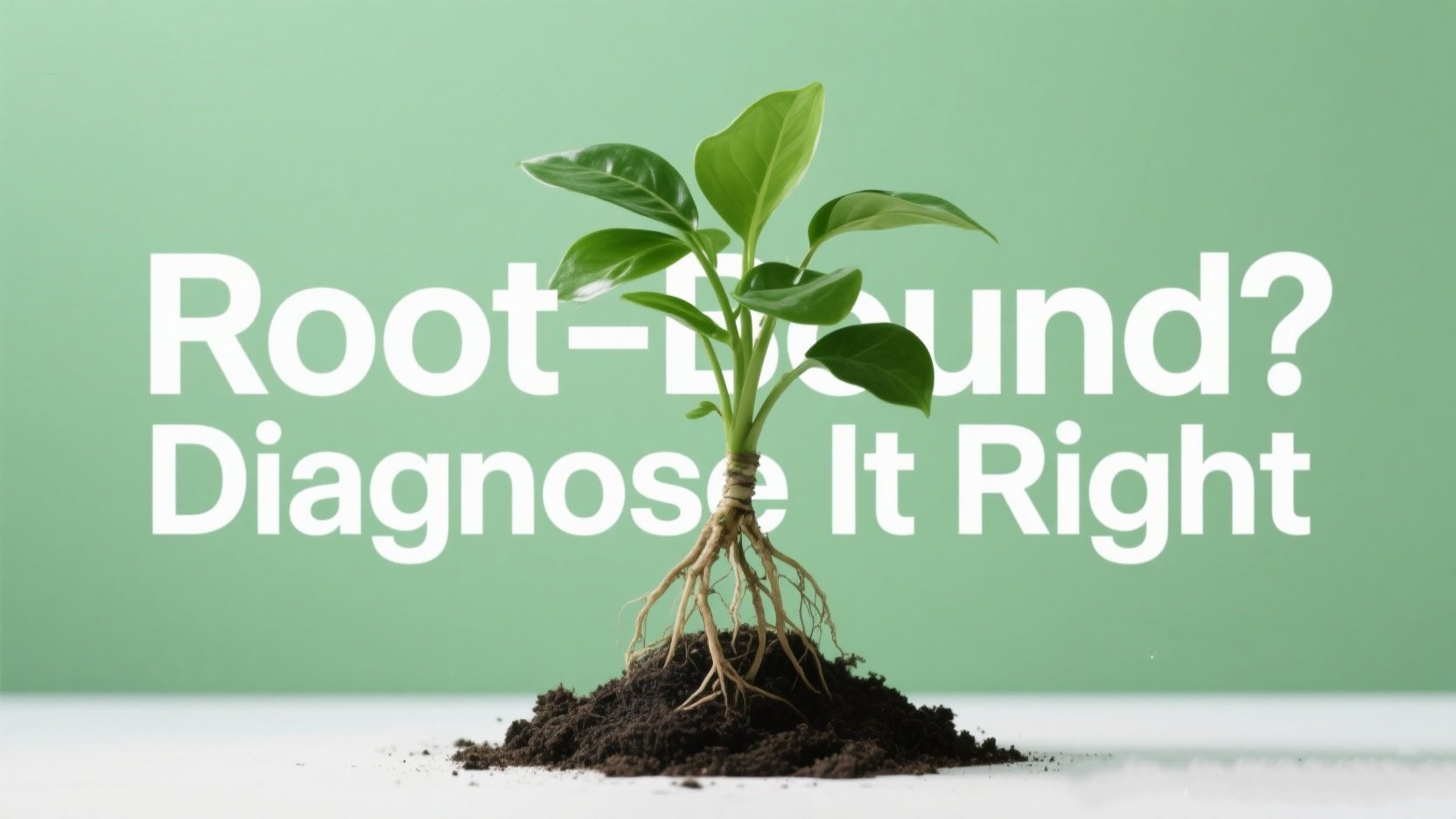
Root-bound issues are consistently cited as the most misdiagnosed problem by indoor gardeners.
What “root-bound” actually means
- A plant is root-bound when its roots outgrow the container, circling around the pot and often creating a dense, tangled mass.
- This limits water retention, nutrient absorption, and overall growth potential.
- Many beginners (and even experienced gardeners) mistake the visible symptoms for overwatering, underwatering, or nutrient deficiency.
The most common misread symptoms
Reddit discussions reveal these frequent misinterpretations:
| Symptom | Common Misdiagnosis | Reality |
|---|---|---|
| Yellowing leaves | Overwatering | Nutrient stress due to constricted roots |
| Drooping foliage | Underwatering | Roots cannot uptake water efficiently |
| Stunted growth | Low light / poor soil | Root confinement limits expansion |
| Leaf curling or brown tips | Fertilizer burn | Roots circling pot or damaged roots |
Users repeatedly report: “I kept changing watering schedules, repotting soil, adjusting light… nothing worked. Turns out the roots had nowhere to grow.”
How to diagnose a root-bound plant
1. Check for surface roots
- Look at the top of the soil for roots growing above the surface or poking out of drainage holes.
- This is usually the first clear indicator.
2. Lift the plant gently
- Remove the plant from its pot.
- If you see dense roots wrapped around the soil ball with little loose soil, it’s root-bound.
3. Inspect root health
- Healthy roots: white or light tan, firm, slightly flexible.
- Problematic roots: brown, mushy, or dry/brittle.
- Root-bound doesn’t automatically mean dying — just restricted.
Solutions and preventive measures
1. Repotting
- Choose a pot 1–2 inches larger in diameter than the current one.
- Avoid oversizing; too large a pot can lead to waterlogging.
2. Root pruning
- Gently tease apart circling roots.
- Trim excessively long or damaged roots.
- This encourages new, healthy root growth.
3. Refresh soil
- Use fresh, well-draining potting mix suitable for the plant type.
- Remove old, compacted soil that inhibits nutrient flow.
4. Maintain a repotting schedule
- Most indoor plants benefit from repotting every 1–2 years, depending on growth rate.
- Fast growers like Monstera, Pothos, or Fiddle Leaf Fig may need yearly checks.
Why this is critical
- Root-bound issues are the #1 hidden cause of persistent plant stress, according to Reddit gardeners.
- Addressing the roots, rather than repeatedly adjusting water, fertilizer, or light, solves the problem at its source.
As one Reddit user put it: “My plant looked sad for months. As soon as I repotted and pruned the roots, it bounced back in a week.”
Final Thought 💡
Your plant isn’t dying — it’s screaming for space. Understanding and checking for root-bound conditions can save countless hours of frustration and prevent unnecessary chemical adjustments.
Healthy roots = thriving plants. Always start there.