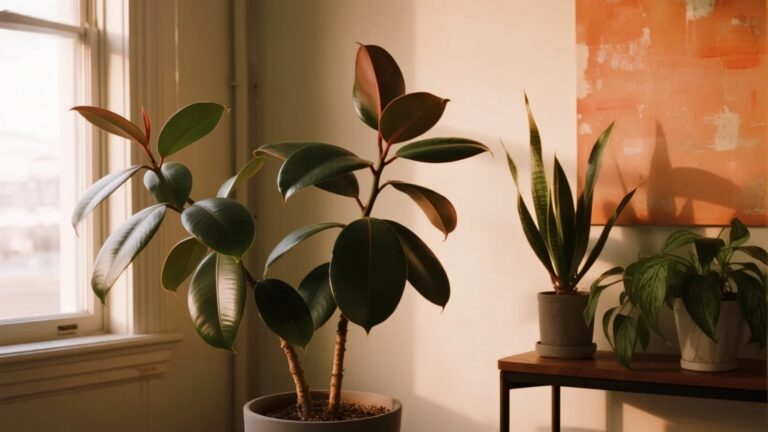
The Rubber Plant (Ficus elastica) is a classic houseplant known for its large, glossy leaves and architectural form. With its deep green or burgundy foliage, it makes a striking statement in any interior space. While it has a reputation for being low-maintenance, understanding its specific needs will help your plant thrive for years.
1. Light: Bright, Indirect Light is Ideal
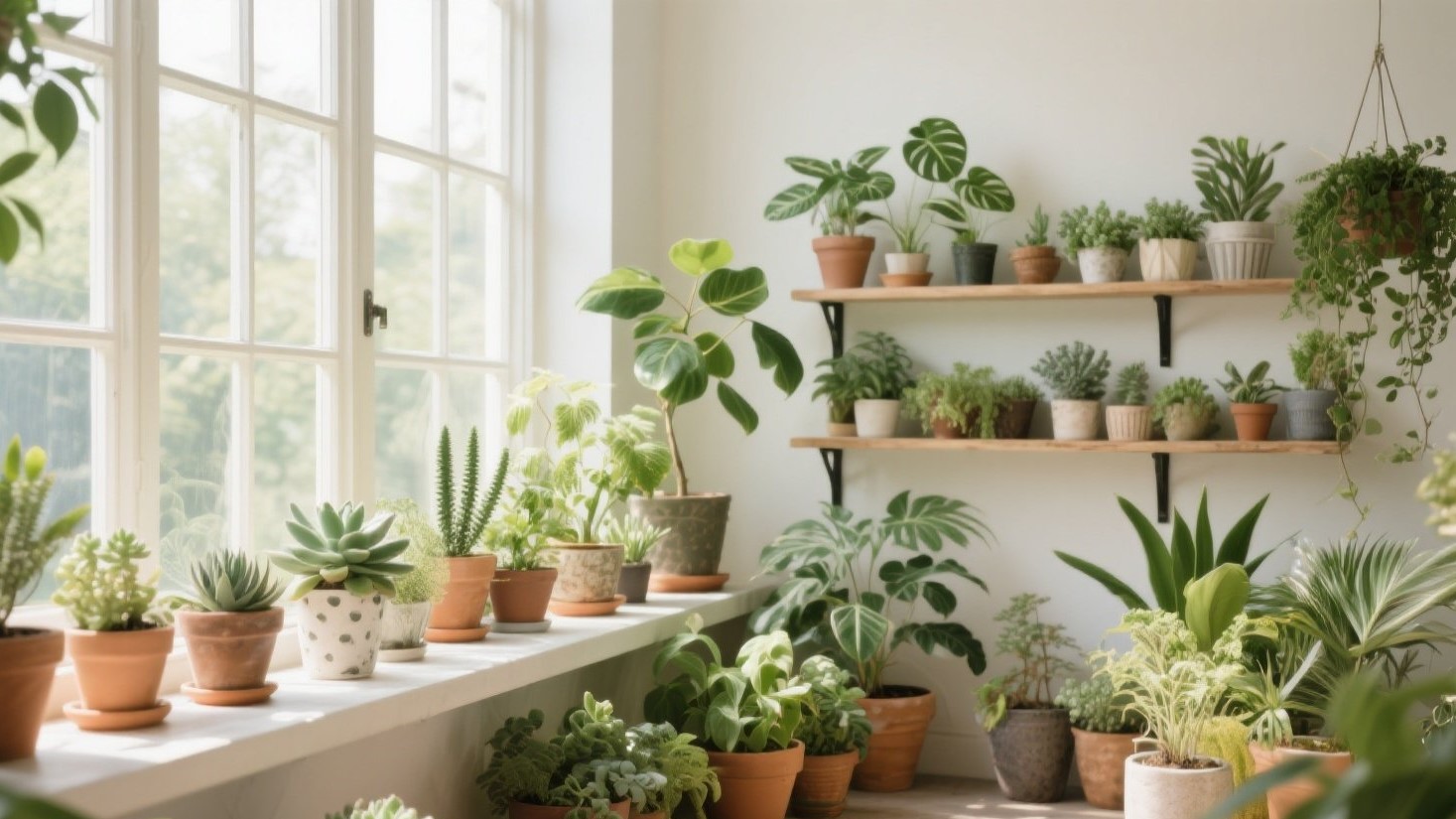
- Perfect Spot: Near an east or west-facing window with filtered sunlight
- Light Range: Tolerates medium to bright indirect light
- Avoid: Direct afternoon sun that can scorch leaves, or deep shade that causes leggy growth
- Pro Tip: Wipe leaves monthly with a damp cloth to maintain photosynthesis efficiency
2. Watering: The “Soak and Dry” Method
- Watering Rule: Water when the top 2-3 inches of soil feel dry
- Method: Water thoroughly until it drains from the bottom, then empty the saucer
- Seasonal Adjustment: Water more frequently in summer (every 7-10 days) and reduce in winter (every 2-3 weeks)
- Signs of Overwatering: Yellowing leaves and leaf drop
3. Soil and Repotting
- Soil Type: Use a well-draining potting mix with added perlite
- Repotting: Repot every 2-3 years in spring when roots circle the pot
- Container Size: Move to a pot only 2-3 inches wider than the root ball
4. Temperature and Humidity
- Ideal Temperature: 60-75°F year-round
- Humidity: Prefers 40-50% humidity – use a pebble tray if air is dry
- Winter Care: Keep away from cold drafts and heating vents
5. Feeding for Lush Growth
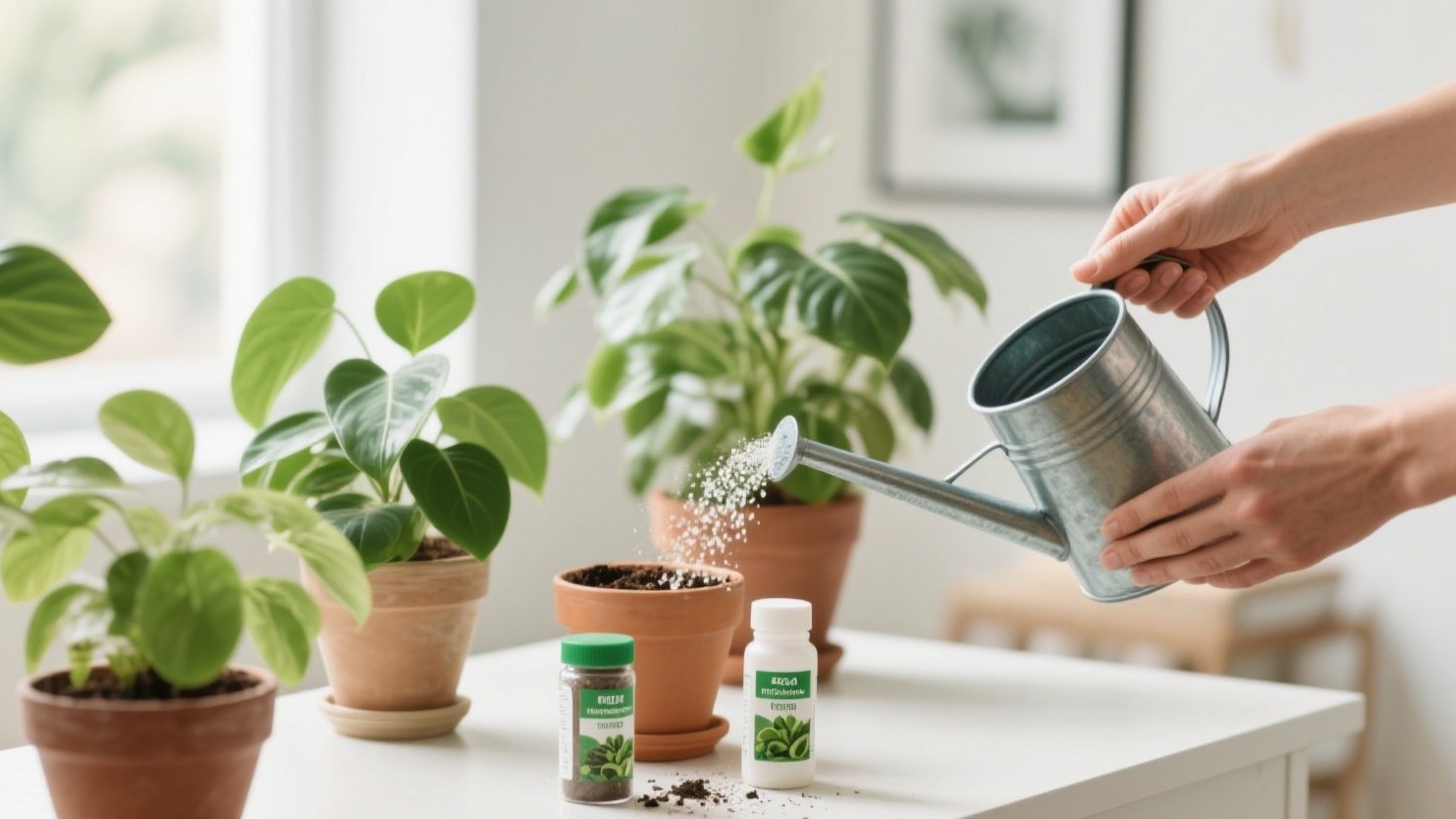
- Growing Season: Feed monthly with balanced liquid fertilizer (spring-fall)
- Dormant Season: Reduce feeding to every 6-8 weeks in winter
- Organic Option: Use worm castings as a gentle nutrient source
6. Pruning and Shaping
- Pruning: Cut back leggy stems just above a leaf node to encourage bushiness
- Air Layering: Propagate large plants by air layering for guaranteed success
- Branching: Remove top growth to encourage side branching
7. Troubleshooting Common Issues
- Leaf Drop: Usually caused by overwatering or sudden temperature changes
- Brown Edges: Low humidity or chemical sensitivity to tap water
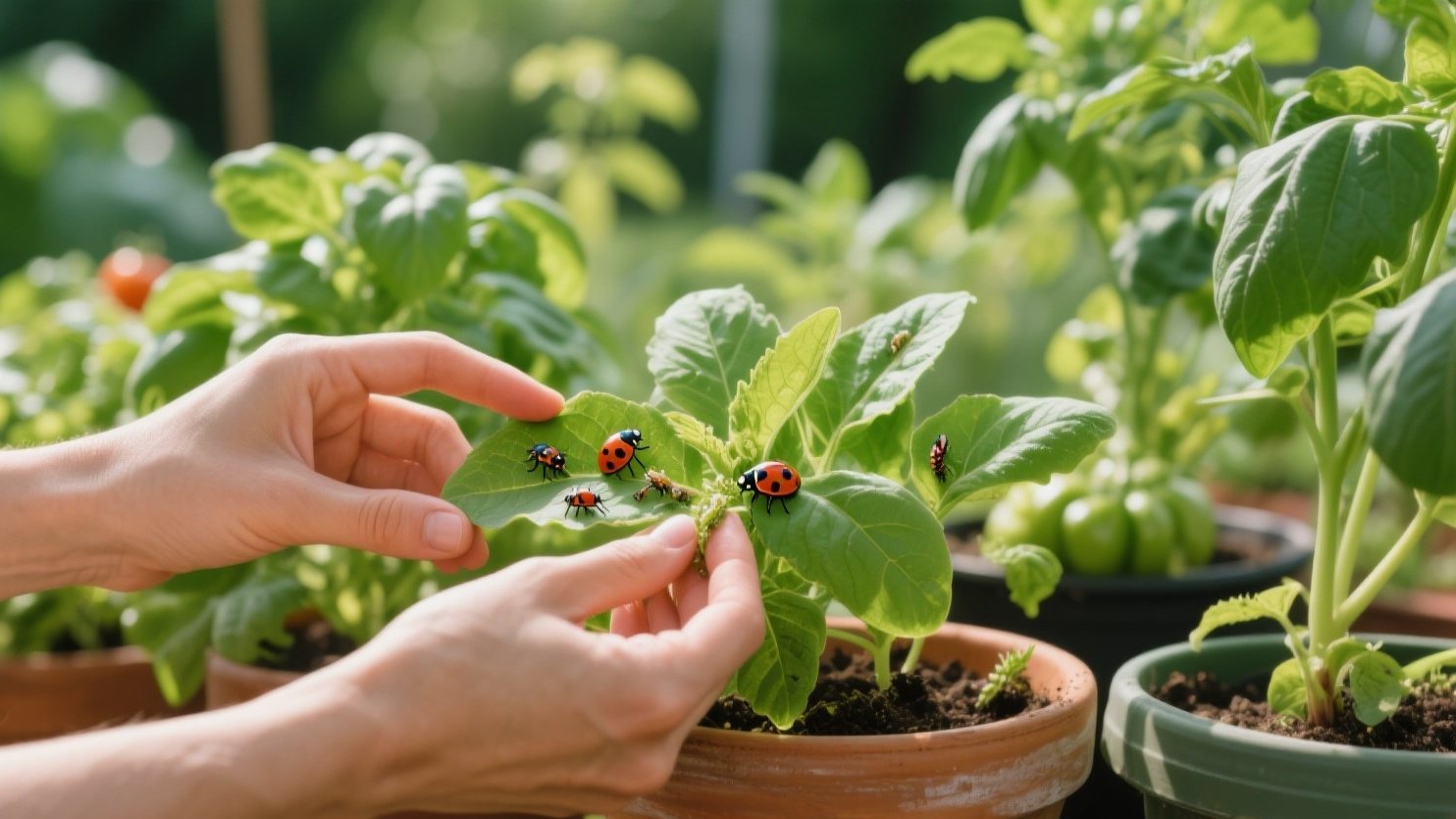
- Pests: Watch for scale insects; treat with horticultural oil
- Dust Accumulation: Wipe leaves regularly to maintain plant health
8. Propagation Made Easy
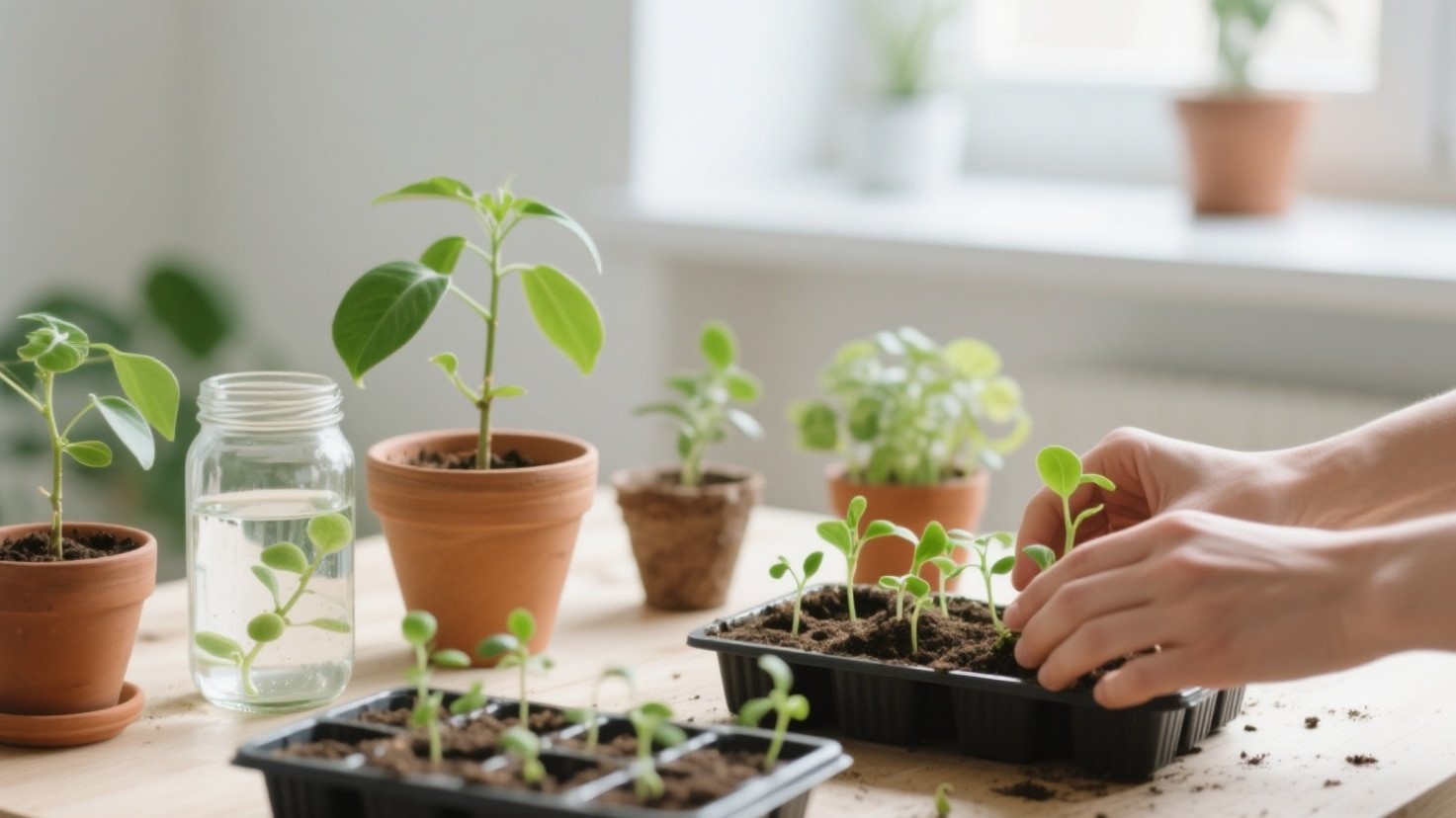
- Stem Cuttings: Take 6-inch cuttings with at least 2 leaves
- Rooting: Place in water or moist soil, keeping in bright, indirect light
- Timing: Best done in spring when growth is most active
Why Rubber Plants are Excellent Houseplants:
- Air Purifying: NASA-certified to remove indoor toxins
- Adaptable: Tolerates various light conditions
- Low Maintenance: Forgiving of occasional care mistakes
- Long-Lived: Can become a family heirloom with proper care
Pro Tip: Rotate your rubber plant quarterly to ensure even growth and prevent leaning toward the light source. This simple habit maintains a balanced, attractive shape.
With consistent care and the right conditions, your rubber plant will grow into a magnificent indoor tree that brings a touch of the tropics to your home. Remember that patience is key – these plants grow slowly but the results are well worth the wait!