Discover Cornwall’s Hand-Pie Masterpiece 🇬🇧
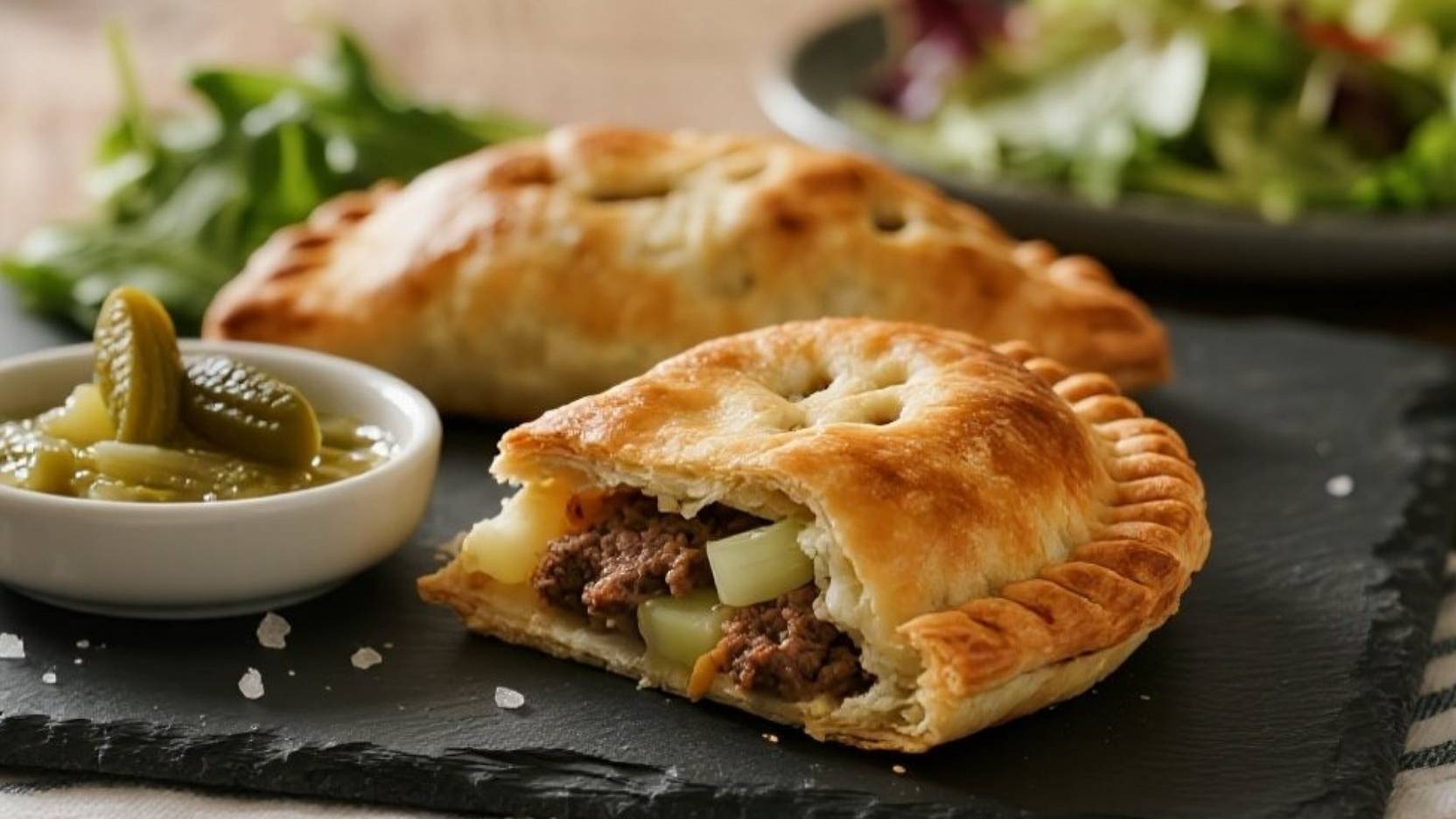
The Cornish pasty—golden, crimped, and deeply savory—is more than comfort food; it’s a slice of British heritage. Born in Cornwall as a portable meal for miners and farm workers, it’s designed to travel and satisfy. Since 2011, “Cornish Pasty” has held PGI status, protecting its name and tradition. 🛡️
Why This Classic Stands Out 💛
-
Portable & filling — a balanced, one-hand meal you can take anywhere.
-
Protected tradition — authentic pasties must be made in Cornwall.
-
Flexible at home — swap proteins or veg while honoring the spirit of the original.
Ingredients 📝 (Makes 4 large pasties)
For the Pastry
| Ingredient | Quantity | Purpose |
|---|---|---|
| All-purpose flour | 450g (≈ 3⅔ cups) | Structure |
| Unsalted butter (cold, cubed) | 125g | Flaky layers |
| Egg yolks | 2 | Richness & binding |
| Cold water | 125ml (½ cup + 1 tsp) | Hydration |
| Baking powder | 2 tsp | Lightness |
| Salt | 1 tsp | Flavor |
For the Filling
| Ingredient | Quantity | Traditional Role |
|---|---|---|
| Skirt/sirloin steak (finely chopped) | 300g | Tender, meaty base |
| Potatoes (peeled, diced) | 450g | Hearty texture |
| Swede/rutabaga (peeled, diced) | 150g | Sweet earthiness |
| Onion (finely chopped) | 150g | Aromatic depth |
| Butter (chopped) | 3 tbsp | Juiciness |
| Salt & black pepper | To taste | Seasoning |
Optional tweaks:
• Add turnips or carrots for sweetness 🥕 (not traditional).
• Swap beef for lamb or chicken for a different but tasty profile 🍗.
Step-by-Step Instructions 👩🍳
1) Make the Pastry
-
Whisk flour, baking powder, and salt.
-
Cut in the cold butter until it looks like coarse breadcrumbs.
-
Mix in egg yolks and cold water just until a dough forms; wrap and chill 1 hour.
2) Prepare the Filling
-
Combine potato, swede, onion, and steak in a bowl.
-
Season boldly with salt and black pepper.
3) Assemble
-
Roll dough to ~3mm thick; cut 6–7 inch circles.
-
Spoon filling onto one half; dot with butter.
-
Fold into a “D,” crimp firmly along the side, brush with egg wash, and snip a small vent.
4) Bake
-
Bake at 180°C/350°F for ~50 minutes until deep golden.
-
Rest 10 minutes before serving—filling will be very hot. 🔥
Pro Tips for Success ⭐
-
Keep the butter very cold for flakier layers. 🧈
-
Dice ingredients small so everything cooks through inside the crust. 🔪
-
Crimp tightly to prevent leaks and hold the iconic shape. ✨
-
Freeze unbaked up to 3 months; bake from frozen and add 10–15 minutes. ❄️
Nutrition & Serving 🍽️
-
Balanced comfort — protein from beef, carbs from pastry and veg.
-
Estimated calories: ~600–700 per large pasty (varies by filling).
-
Serve with a crisp salad or tangy pickles for brightness and contrast. 🥗
Good to Know (Helpful Facts) 📚
Under Protected Geographical Indication (PGI), a true “Cornish pasty” must be produced in Cornwall and baked from raw ingredients. The traditional filling is diced or minced beef, potato, swede (often called “turnip” locally), onion, and a light pepper seasoning—carrots mean it’s not PGI-compliant. Its hallmark is a side crimp that seals in steam and creates the classic D-shape.
For make-ahead ease, chill baked pasties up to 3 days or freeze up to 3 months; cool completely before storing. Reheat at 160°C/320°F until hot in the center (aim for 74°C/165°F for food safety) and crisp on a rack. Avoid the microwave if possible—it softens the crust.
Final Bite 🥟✨
A Cornish pasty is heritage in a crust—sturdy, comforting, and proudly regional. Keep the method simple, season with confidence, and crimp like a pro. Whether you go classic or try a smart swap, you’ll bake a pasty worth sharing.